Using AI Glasses Can Bar You From Taking TOPIK for Up to Five Years
- Input
- 2026-09-29 13:44:03
- Updated
- 2026-09-29 13:44:03
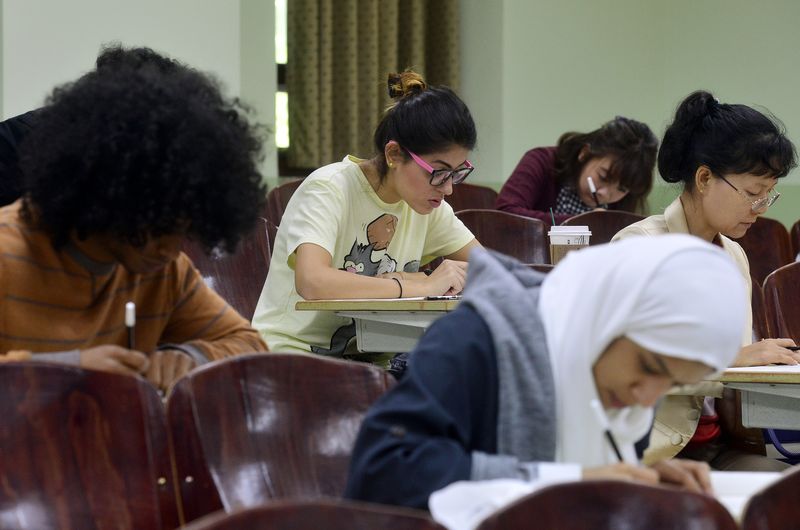
Proxy test-taking, leaking test papers and forging identification documents will be treated as extremely serious interference with test administration and will result in the highest-level sanction: a five-year suspension of eligibility to take the test. This extends the previous maximum suspension period of four years. During the suspension, individuals will be completely barred from submitting language scores to universities. TOPIK scores are widely used for studying abroad, obtaining a status of stay and employment.
NIIED said, "Attempts to solve questions using AI devices during the test, or collusion with brokers, will be treated as serious cheating and result in a suspension of eligibility to take the test for up to five years." Merely possessing an AI device or cellphone, or attempting to search on one's own, will result in a two-year suspension. AI glasses and ultra-small earphones are also subject to bans and sanctions.
A Ministry of Education official explained, "Cheating methods using advanced equipment are becoming increasingly sophisticated." According to NIIED, there have been three cases to date in which test-takers were caught wearing smart glasses. The most common violations have involved failing to turn off a cellphone or simply bringing one into the test room.
To prevent proxy test-taking, acceptable identification will be limited to physical passports, alien registration cards and similar documents. Mobile IDs will not be accepted. NIIED explained that this was because cases had been found in which identification screens were forged or altered. Radio signal detectors that can detect signals from AI glasses and similar devices have been fully deployed at domestic test sites, and their use will be expanded overseas next year. Different test papers will be administered according to the time zones of each country to prevent cheating that exploits time differences.
Regulations on cheating will be upgraded from an enforcement decree to a statute, with separate responses for minor and serious violations. The timing of implementation, however, has not been finalized. NIIED said the government's legislative process is underway and that it would move forward with the measure as soon as possible.
The government will also ease the criteria for new domestic test sites and increase group registrations by schools and companies with large numbers of students from immigrant backgrounds or foreign workers. There are currently five internet-based test sites in South Korea, which have mainly been operated by universities.
The Ministry of Education also unveiled plans to shift TOPIK to an AI- and digital-based format starting in 2029. AI will create and grade the questions, but experts will be required to review the results. Home testing will be introduced gradually, beginning with lower levels whose scores are not directly used for purposes such as studying abroad. The goal is to reach 1 million applicants by 2030. As of September, this year's number of applicants stood at 564,606, up 10.2% from the same period last year.
Choi Kyo-jin, Minister of Education, said, "By introducing AI technology and further modernizing test administration, we will continue supporting the wider international use of Korean."
[email protected] Kim Man-gi Reporter