Asian Games Reignite Debate Over Military-Service Benefits: “Reward for Raising National Prestige” vs. “Outdated Privilege” [What Do You Think?]
- Input
- 2026-09-29 16:08:45
- Updated
- 2026-09-29 16:08:45
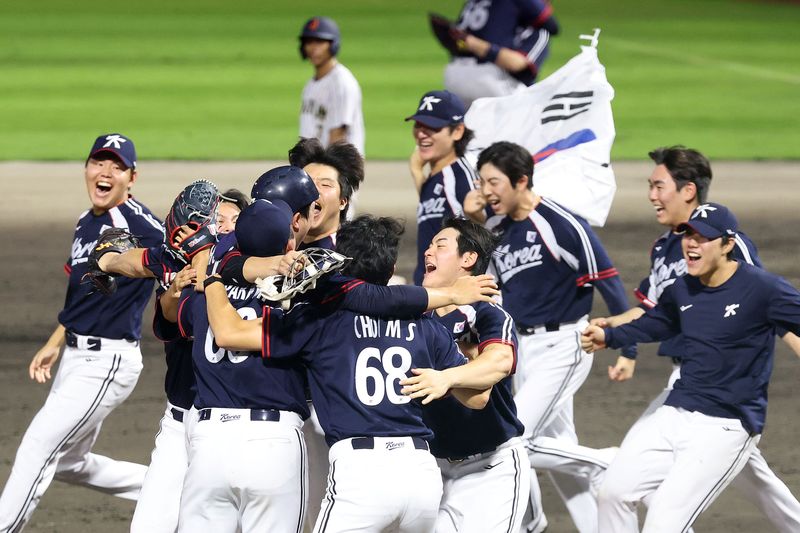
[Financial News] As South Korean athletes continue their gold-medal run at the 2026 Aichi-Nagoya Asian Games, debate over the fairness of military-service benefits granted to medalists is once again heating up.
According to the Asian Games Organizing Committee, the South Korean team had won 93 medals as of 4 p.m. on the 29th, including 23 gold, 26 silver, and 44 bronze medals. Under the current system, Olympic bronze medalists and above, as well as Asian Games gold medalists, are assigned to sports personnel, allowing them to continue their athletic careers instead of serving as active-duty soldiers.
However, the issue of fairness in special military-service treatment has resurfaced after the baseball team struggled against Japan, whose roster consisted of amateur players, at this year's competition. Critics questioned whether it is appropriate to grant highly paid professional athletes military-service benefits simply because they won a tournament in which other countries did not field their strongest teams. The South Korean baseball team lost 0–5 to Japan in the Super Round on the 25th, then won 3–1 in a closely fought final on the 27th. Sixteen of the 24 players who had not yet completed their military service will receive the benefit.
Among young people in their 20s and 30s, supporters argue that the system is necessary to recognize national team players' contributions to raising the country's standing and to prevent interruptions to their careers. Critics, however, say that applying different military obligations based solely on medals is outdated and unfair.
Choi, 33, who works at an information technology (IT) startup, said, "No victory in this world is easy, no matter how weak the opponent may be. I believe it was a result earned through blood, sweat, and tears." He added, "Considering that they strengthened the country's soft power by raising its standing, I believe they deserve military-service benefits. Continuing their careers and achieving good results at the next competition would also benefit the country."
Park, 28, a former professional soccer player who now works in the sports industry, also said, "I have often seen cases in which players enlisted at a young age, experienced a gap of more than a year, and then struggled in their careers after their performance declined. An athlete's prime does not wait until military service is over." He continued, "We also need a culture that respects the achievements of athletes who make the national anthem ring out frequently on the international stage. That is how we can produce global stars like Son Heung-min and further enhance the country's image."
At the same time, he noted, "The FIFA World Cup and the World Baseball Classic (WBC), which are considered higher-level competitions than the Asian Games, do not qualify for military-service benefits under the current system, even if a team wins." He added, "We need to revisit which competition results should be recognized as the basis for granting benefits."
In contrast, Shin, 25, a university student majoring in political science and diplomacy, said, "It seems that we are still holding on to standards from a time when Korea had to make itself known to the world through medals. Even the BTS members who led the global K-pop boom fulfilled their military obligations as active-duty soldiers or social service personnel." Shin criticized the system, saying, "As the ways of contributing to the community have diversified, military-service benefits should also be granted according to consistent and fair standards that young people can accept. Young people who feel that military service restricts their opportunity to prepare for the future for one or two years have no choice but to be sensitive about this issue."
A, 28, a graduate student in science and engineering, likewise said, "I recognize the comfort and inspiration that sports provide, but in the age of artificial intelligence (AI), we also need to recognize that a single technology can become a source of future growth for the country. Opportunities for young scientists to build research careers instead of serving in the military are also important." A added, "In particular, specialized research personnel in doctoral programs face the difficulty of having to serve as active-duty soldiers if they fail to earn their degrees within a set period. The interruption of an athlete's career is not the only social issue."
Experts called for reforms to improve fairness in the military-service benefit system for athletes. Hanbeom Kim, a professor in the Division of Design, Arts and Sports at Hankyong National University, advised, "The system should be improved in a way that the majority of people can understand and consider reasonable." He added, "One option would be to return some of the economic benefits athletes receive through special military-service treatment to society and use the funds to develop sports or improve the welfare of service members." As alternatives to the current system, in which eligibility can hinge on a single medal, Kim also proposed introducing a cumulative-points system, expanding opportunities to fulfill service by allowing enlistment delays and expanding athletic units, and allowing social service personnel to work for company-sponsored sports teams.
[email protected] Park Seong-hyeon Reporter