Earnings Estimates Cut, but Target Price Doubled... What Backs the Brokerage's ₩560,000 Call for Samsung Electronics?
- Input
- 2026-09-29 13:42:25
- Updated
- 2026-09-29 13:42:25
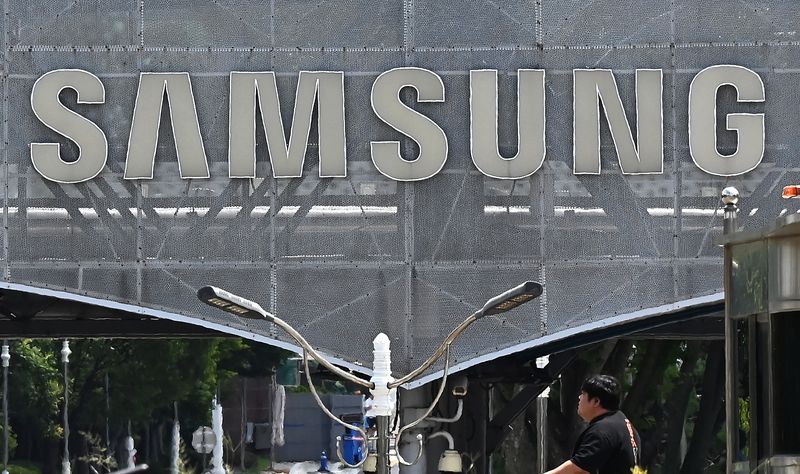
[Financial News] Samsung Electronics and SK hynix plunged together, but brokerages maintained their Buy ratings even after lowering their earnings outlooks. Despite exchange-rate pressure, they expect fourth-quarter memory price increases, higher high-bandwidth memory (HBM) sales and shareholder returns to support the stock prices.
Earnings outlook lowered due to exchange rates, but Buy ratings maintained
According to the Korea Exchange (KRX) on the 29th, Samsung Electronics closed at ₩270,000 on the 28th, down 5.43% from the previous trading day. SK hynix finished trading at ₩1,768,000, down 5.05%. Samsung Electronics rose for three consecutive trading days from the 21st to the 23rd, but gave up most of those gains after plunging on the 28th. SK hynix also rose 1.20% on the 23rd before falling more than 5% on the next trading day, the 28th.The common factor that led both companies to lower their short-term earnings outlooks was the exchange rate. Eugene Investment & Securities and DS Investment & Securities lowered their estimates for Samsung Electronics' and SK hynix's third-quarter earnings, respectively, after adjusting their won-dollar exchange-rate assumptions.
Eugene Investment & Securities lowered its third-quarter operating-profit estimate for Samsung Electronics to ₩103.6 trillion. Although this represents a 16% increase from the previous quarter, the estimate reflects the stronger won and higher costs. The brokerage nevertheless maintained its ₩560,000 target price, citing expectations for higher server memory prices and expanded HBM4 production. That is more than double Samsung Electronics' closing price of ₩270,000 on the 28th.
Injun Son, a research analyst at Eugene Investment & Securities, said, "Memory stocks are expected to continue their gradual upward trend over the medium to long term as investors confirm the sustainability of the industry cycle and factor in consistent shareholder returns."
Analysts also focused on a recovery after the fourth quarter rather than on SK hynix's short-term earnings. DS Investment & Securities lowered its third-quarter revenue and operating-profit estimates to ₩89.5 trillion and ₩70.1 trillion, respectively, reflecting adjustments to its exchange-rate assumptions, but maintained its Buy rating.
Surim Lee, a research analyst at DS Investment & Securities, said, "The key variables for the stock price are now the improvement in the high-value product mix in the fourth quarter and the potential for upward revisions to 2027 earnings estimates, rather than third-quarter earnings." Lee added, "Expectations for additional shareholder returns to be disclosed when third-quarter results are announced, along with a recovery in fourth-quarter earnings, remain catalysts for the stock price."
The U.S. finds it difficult to halt investment, while China rushes toward self-reliance... HBM leadership is key
Another factor in assessing the sustainability of memory demand is the AI rivalry between the United States and China. The United States must continue investing in infrastructure to preserve its technological edge, while China is under pressure to accelerate semiconductor self-reliance. For South Korean semiconductor companies, this presents an opportunity to expand demand as well as a challenge to maintain their technology gap.Park Sung-woo, a research analyst at DB Securities, said, "In the AI competition between the United States and China, calibrated regulation targeting the other side has become a key tool, in addition to technological superiority."
The United States is using advanced chips and software as bargaining tools, while China is leveraging rare earths and its vast domestic market. However, both countries face the burden that increasing pressure could accelerate the other's technological self-reliance and the development of alternative supply chains.
Some analysts also point out that improved performance by China's AI models does not mean the country has achieved semiconductor self-reliance. Kim Sun-young, a research analyst at DB Securities, said, "China has rapidly narrowed the performance gap between its models, but that pursuit has still taken place on U.S. chips, and a substantial gap remains in computing production capacity."
[email protected] Do-seon Choi Reporter