AI Makes Game Development Easier, but 'Game Slop' and Copyright Pose New Challenges
- Input
- 2026-09-29 15:36:07
- Updated
- 2026-09-29 15:36:07
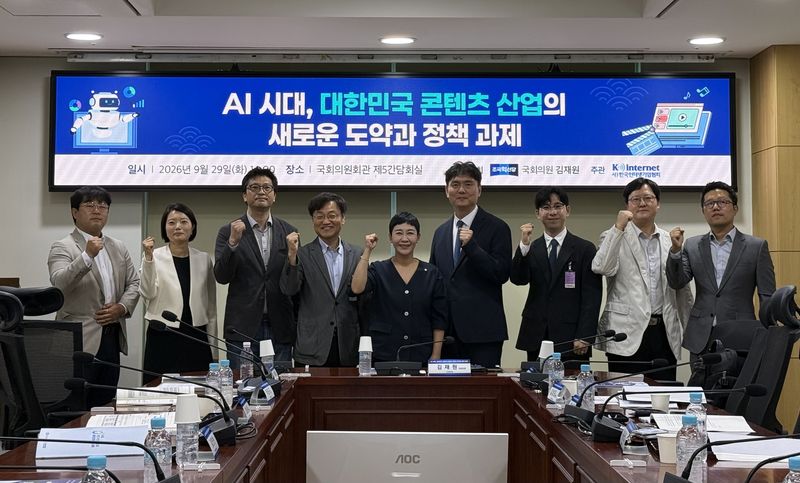
[Financial News] Artificial intelligence (AI), which has reduced the time and cost of game development, is changing the equation for growth in the game industry. As game companies use AI to improve development efficiency and expand into Physical AI businesses such as robotics and defense using technologies they have accumulated, calls are growing for new industry rules to address low-quality content such as "game slop" and copyright issues.
Kang Seung-mi, a managing director at Samjong KPMG, emphasized at the forum "The New Leap Forward of Korea's Content Industry and Policy Challenges in the AI Era," held at the National Assembly of the Republic of Korea on the 29th, "AI can improve the efficiency of game development and create new business opportunities, but it also raises concerns, including the mass production of low-quality games." She added, "We need to examine both the opportunities and risk factors so that AI can lead to tangible growth."
The game industry is already embracing AI in earnest. Krafton is using "Studio Agent" to apply AI agents to game development, while Nexon operates "AI Style Finder," which recommends items to MapleStory users. NC has also applied AI throughout the game development process—including visual art, text, and audio—through its generative-AI-based creative tools platform, VARCO Studio.
Users also showed a relatively high level of acceptance of AI-generated content. Kang explained, "In a survey of domestic game users, 49.8% responded positively to the introduction of AI content in games, while 33.8% said they had used a game that utilized AI." She noted, "The scope of AI use is also expanding from character and image creation and code writing to interactions between users and game characters."
Technologies developed in the game industry are also expanding into Physical AI. Krafton is incorporating game technology into the creation of virtual environments for robot training, while NC AI is expanding into mobility, shipbuilding, and defense through partnerships with affiliates of Hyundai Motor Group, Hanwha Ocean, and others. Technologies used to create virtual worlds through game engines, three-dimensional (3D) graphics, and simulations are being used as a foundation for training AI systems that operate in the real world.
However, the possibility that low-quality content could be mass-produced as AI lowers the barriers to development was identified as a challenge. Kang emphasized, "The number of new games registered annually on the global game platform Steam rose from 9,378 in 2020 to 15,491 last year." She added, "Game slop—the mass production of low-quality games with limited costs and manpower by using generative AI—is a major concern surrounding the spread of AI." The point is that standards and an environment are needed to ensure that AI-driven production efficiency leads not only to an expanded supply of content but also to improved quality.
Copyright standards concerning training data are also a key issue. Lee Yong-min, an attorney at Yulchon who participated in the discussion, pointed out, "Generative AI training inevitably involves a reproduction stage in which data, including copyrighted works, is collected and stored on servers." He added, "The current Copyright Act does not provide clear standards on how far AI should be allowed to go in collecting vast amounts of data, nor does it contain a separate provision addressing the issue."
The interests of AI developers and creators also diverge. Developers argue that training AI on data constitutes "fair use" because it does not directly replace the value of existing copyrighted works, while creators counter that it amounts to commercial use without consent. Lee said, "Maintaining copyright policies in a way that could unconditionally hinder AI development could weaken the country's competitiveness in AI technology. Conversely, unlimited permission could undermine the foundation of the content industry by dampening creators' motivation to create." He explained that the system should be revised based on social consensus balancing innovation with the protection of creators.
Kim Min-cheon, a director at the Korea Internet Corporations Association, added, "The game industry can develop as a technology-based sector that connects AI, content, and other industries." He continued, "While addressing challenges such as creator protection and game slop, it is important to create an environment where creators can actively use AI rather than restricting its use."
[email protected] Choi Hye-rim Reporter