Saudi Arabia, Hamstrung by Yemen’s Ansar Allah (Houthis), Seeks to Repair Ties with Estranged United Arab Emirates (UAE)
- Input
- 2026-09-29 12:46:40
- Updated
- 2026-09-29 12:46:40
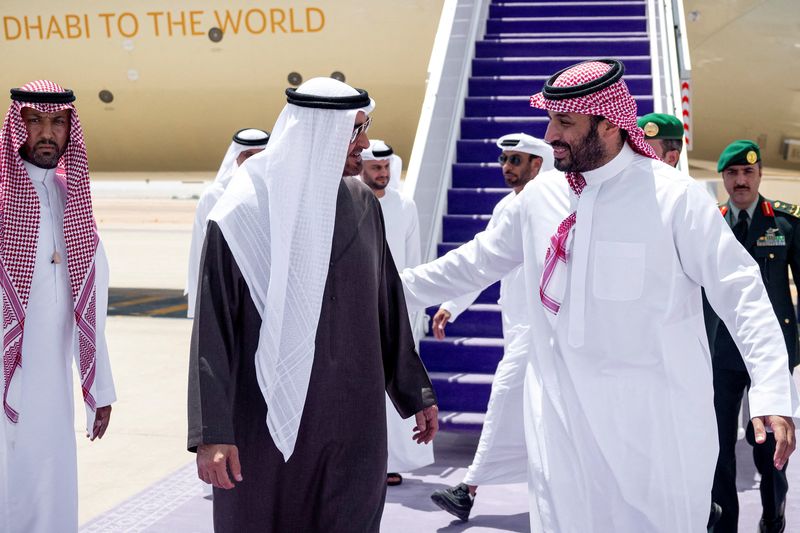
[Financial News] Saudi Arabia, which resumed active hostilities with Ansar Allah (Houthis) in Yemen this month for the first time in about four years, has recently moved to improve ties with the neighboring United Arab Emirates (UAE), with which it has been at odds politically and economically.
Foreign media outlets, including Saudi English-language newspaper Arab News, reported on the 28th local time that Saudi Defense Minister Khalid bin Salman had formally invited UAE Vice President and Deputy Prime Minister Mansour bin Zayed Al Nahyan. The UAE state news agency WAM also reported that day that the UAE government had accepted the invitation and that Sheikh Mansour would make a goodwill visit to Saudi Arabia on the 29th.
Following nearly 30 years of authoritarian rule, Yemen saw President Ali Abdullah Saleh ousted in 2011, after which a transitional government was established. Abdrabbuh Mansour Hadi was elected to head the transitional government. However, Ansar Allah (Houthis), an armed group affiliated with the Shia branch of Islam, joined forces with remnants of Saleh’s government and launched an uprising, seizing the capital in 2014. The Hadi government fled to Saudi Arabia, the leading Sunni Muslim power.
Saudi Arabia, the leader of the Sunni Muslim world, formed a coalition with eight Middle Eastern countries, including Egypt, to oust the Shia forces backed by Iran and began airstrikes against the rebels in March 2015. After the United States announced in 2021 that it would stop supporting airstrikes, Saudi Arabia entered a truce with Ansar Allah (Houthis) through UN mediation in April 2022.
The UAE was on Saudi Arabia’s side when the Arab coalition was formed in 2015, but the two countries later came into conflict over postwar arrangements in southern Yemen. Saudi Arabia recognized Yemen’s existing transitional government and sought to focus on defeating Ansar Allah (Houthis). The UAE, however, concentrated its support on armed forces affiliated with the Southern Transitional Council (STC), which advocates southern Yemen’s independence, and pursued an independent expansion of its influence. Relations deteriorated further early this year when southern separatist forces fought Yemeni government troops. Saudi Arabia accused the UAE of being behind the clashes, while the UAE withdrew its forces stationed in Yemen.
The UAE also urged Saudi Arabia and other Middle Eastern countries to take a tough response to Iran’s missile and unmanned aerial vehicle (drone) attacks after the war with Iran broke out this year, but Saudi Arabia did not respond. Saudi Arabia also rejected the UAE’s request for air defense support. On May 1, the UAE withdrew from the Saudi-led Organization of the Petroleum Exporting Countries (OPEC).
Observers inside and outside Saudi Arabia believe that Saudi Arabia reached out first to the UAE to contain the risk of a wider war and promote unity in the Middle East as it clashed with Ansar Allah (Houthis) this month.
[email protected] Jong-won Park Reporter