"Are You Brainwashing Them?" vs. "Students Overwhelmingly Chose It": Heated Debate Over High School Group Screening of *Assassin(s)*
- Input
- 2026-09-29 10:38:39
- Updated
- 2026-09-29 10:38:39
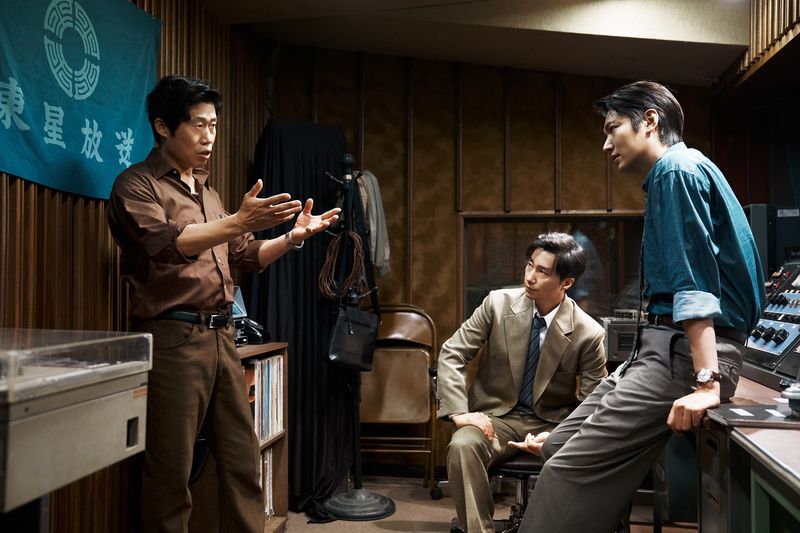
[Financial News] The historical distortion controversy surrounding the film *Assassin(s)* has spread to the education sector. After reports emerged that a high school in Ulsan was planning a group screening, online communities became sharply divided over the issue.
After a suggestion to "have parents file complaints," a student posted a rebuttal: "Students chose voluntarily"
Recently, a post appeared on the social media platform Thread saying that students at a high school in Ulsan were scheduled to watch the film *Assassin(s)* as a group after finishing their exams.
The poster said, "Let's file a complaint with the education office," and argued, "If parents do not want to see their children being brainwashed by historical distortion, they need to show it through action." Some responded that the film's educational appropriateness should be assessed because the school, rather than individuals, was organizing the group screening. Others said the work should be viewed as a creative endeavor because it is a dramatic film that adds cinematic imagination to a real event.
Amid the dispute, a student who identified themselves as a first-year student at the school where the group screening is scheduled explained that the students had voted for the film they wanted to watch after their exams, and that *Assassin(s)* received an overwhelming number of votes.
In response to claims that the school had effectively forced students to attend, the student emphasized, "There was no intervention or pressure of any kind from the teachers" and said it had been the students' voluntary choice.
The student also said, "Most students know that the film is the subject of political controversy and a historical distortion debate," adding, "They are not accepting the film as historical fact, but simply viewing it as entertainment." The student then appealed, "Please stop filing complaints to prevent the screening," since the students had chosen the film because they wanted to see it.
Film based on the shooting of First Lady Yuk Young-soo sparks a "historical distortion" controversy
*Assassin(s)* is based on the shooting of First Lady Yuk Young-soo during a Liberation Day ceremony on August 15, 1974. In the film, detectives and reporters question discrepancies between what they witnessed or investigated and the announcements made by the investigation headquarters, and pursue the truth behind the incident.
At the time, the Special Investigation Headquarters concluded that Mun Se-gwang, acting on orders from North Korea and the General Association of Korean Residents in Japan (Chongryon), had failed in an attempt to shoot former President Park Chung Hee, while First Lady Yuk Young-soo was struck by a bullet and killed in the process. The film, however, follows reporters and detectives investigating the incident and suggests the possibility of an accomplice and the involvement of powerful institutions, prompting controversy over historical distortion.
Political circles later criticized the film's narrative for leaving open possibilities that differed from the official conclusion reached by investigators.
People Power Party lawmaker Joo Jin-woo wrote on Facebook on the 27th, "*Assassin(s)* distorted the incident by suggesting that former President Park Chung Hee, rather than North Korea, was behind the assassination of First Lady Yuk Young-soo," adding, "This is not cinematic imagination but a morally reprehensible crime that tears at the hearts of the bereaved family." He continued, "If a film came out claiming that Kwon Yang-sook had ordered the death of former President Roh Moo-hyun, would that also be freedom of expression?" He argued that those responsible should be punished for defaming the deceased.
People Power Party leader Jang Dong-hyuk and chief spokesperson Park Sung-hoon also condemned the film, saying, "If you touch President Roh Moo-hyun, you will face a string of lawsuits and criminal complaints. Insulting President Park Chung Hee is called 'freedom of expression.' Is freedom of expression the exclusive preserve of the left?" They also stated, "I believe this goes beyond the limits of cinematic imagination and freedom of expression and constitutes historical distortion and incitement."
Kim Doo Young, a former Blue House secretary who once assisted the late First Lady Yuk Young-soo, also criticized the film, saying, "It is nothing more than the demonization of Park Chung Hee. President Park Chung Hee grabbed me and wept bitterly at Mrs. Yuk's bier, and he visited the bier alone at night to pay his respects and weep. There is no way such a man would have caused his wife's death to maintain his hold on power."
The Park Chung-hee Presidential Memorial Foundation also took action. In a statement issued on the 28th, it called for an official apology. The foundation said, "We demand that the film's production company officially apologize for distorting historical facts and halt screenings of the film," adding, "We are deeply concerned about the use of a national tragedy as material for commercial success and entertainment while distorting historical facts and causing social conflict and division in public opinion."
As the controversy intensified, the production team of *Assassin(s)* issued a statement that same day. It explained, "*Assassin(s)* is a fictional film reconstructed with cinematic imagination based on various records written about the incident, using the historical event that occurred in 1974 as its motif. This work was not made to establish a new specific historical conclusion or to deny or distort existing facts. The film does not identify any particular person as being behind the incident, nor does it present the hypotheses and dramatic settings depicted in the film as historical facts."
The team continued, "Because this is a work based on historical events and real people, it may be subject to various interpretations and criticisms, and the production team respects those opinions. However, we wish to make clear that the film was not produced with a specific political purpose that goes beyond its own creative intent and nature."
Director Hur Jin-ho, who directed the film, previously explained, "This incident was, by its nature, not a story that could reach a definitive conclusion. When asked why we should tell this story, I wanted to tell the stories of the different people who lived passionately through that era."
The film topped the box office after its release on the 23rd and had drawn 1.56 million moviegoers by the 27th.
[email protected] An Ga-eul Reporter