Saudi Arabia Restores Drone-Hit Oil Pipeline, Resumes Exports via Red Sea and Strait of Hormuz
- Input
- 2026-09-29 11:04:46
- Updated
- 2026-09-29 11:04:46
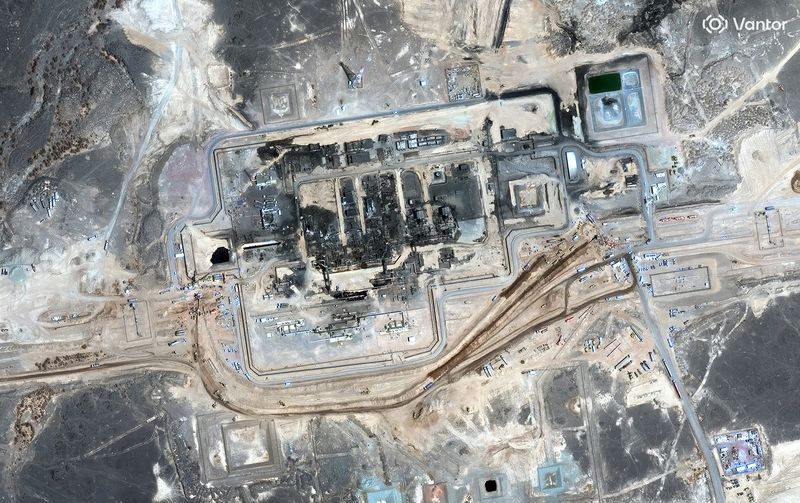
[Financial News] Saudi Arabia, whose oil exports through the Red Sea had been disrupted by a drone attack by a pro-Iranian militant group, has repaired the damaged pipeline and resumed exports.
The Wall Street Journal (WSJ) reported on the 28th (local time) that Saudi Aramco had resumed oil exports the previous day via the East-West Pipeline to Yanbu port on the Red Sea coast.
Saudi Arabia, the leader of the Organization of the Petroleum Exporting Countries (OPEC) and the world's largest oil exporter as of last year, has faced difficulties with its exports and production as the Iran war has intensified. Located between the Red Sea to the west and the Persian Gulf to the east, Saudi Arabia extracted oil from its eastern oil fields and exported it to Asia through the nearby Strait of Hormuz before the Iran war in February. However, the Strait of Hormuz became dangerous again after the United States and Iran resumed clashes in July.
Saudi Arabia therefore used the pipeline running across the country from east to west to transport oil extracted from its eastern oil fields to Yanbu in the west. From Yanbu, the oil traveled south through the Red Sea and passed through the Bab el-Mandeb Strait on its way to Asia. That route also became dangerous after Yemen's pro-Iranian Houthi rebels declared a blockade of the Bab el-Mandeb Strait in July.
The Houthi rebels seized Mocha, a key port city on the Red Sea, on the 10th of this month and completely took control of the entire Bab el-Mandeb Strait the following day. Saudi Arabia also said that it had temporarily suspended operations of the East-West Pipeline after a drone launched by an Iraqi pro-Iranian militia attacked it on the 10th.
The 1,200-kilometer East-West Pipeline can transport up to 7 million barrels per day. Its current throughput stands at approximately 3.5 million barrels per day. Before the drone strike on the pipeline on the 10th, Saudi Arabia moved approximately 4 million barrels of crude oil through it each day. That volume accounted for about 4% of global crude oil supplies.
After the pipeline strike, Saudi Arabia had been increasing exports through the Strait of Hormuz again. With the pipeline restored, it can now also use the Red Sea route. According to Kpler, a global maritime data provider, crude oil shipments loaded at Ras Tanura in eastern Saudi Arabia and exported through the Strait of Hormuz surged from 1.5 million barrels per day in early September to 6.5 million barrels per day recently.
Hamad Hussain, chief economist at the British market research firm Capital Economics, said it remained to be seen whether Saudi Arabia could maintain high volumes of shipments through the Strait of Hormuz while also restoring exports through Yanbu port. He forecast that global oil prices would fall further if Saudi Arabia could maintain both export routes. However, Hussain argued, "Considering the threats posed by the Houthi rebels to energy infrastructure, crude oil exports from Yanbu will be more difficult than before."
[email protected] Park Jong-won Reporter