The 'Assassin(s)' Controversy Spreads into a Partisan Political Battle
- Input
- 2026-09-29 11:44:35
- Updated
- 2026-09-29 11:44:35
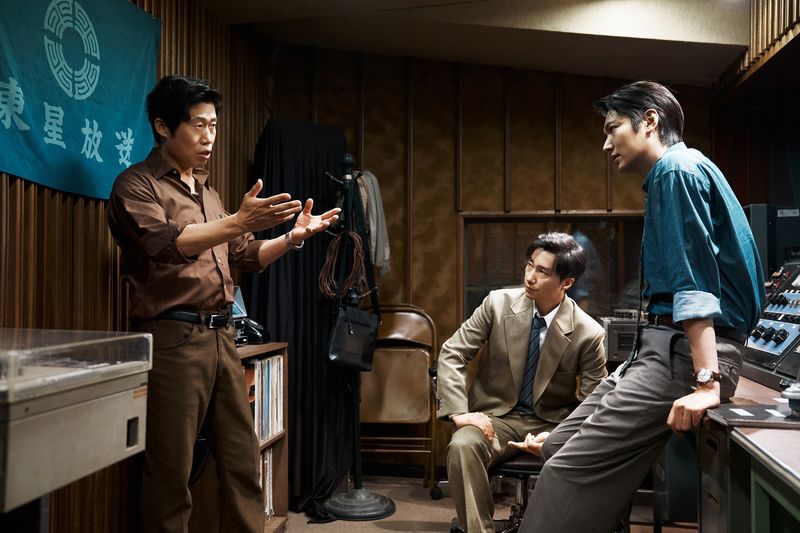
[Financial News] The controversy surrounding the film 'Assassin(s)' is spreading into a partisan battle in political circles. The opposition bloc, including the People Power Party, has criticized the film as historical distortion that goes beyond freedom of expression and as an insult to the bereaved families. The Democratic Party of Korea, however, maintains that it should be accepted as a work of fiction. Some have also argued that the issue should be left to the public, saying that political intervention itself amounts to censorship.
According to political circles on the 29th, opposition backlash has intensified since Assassin(s) was released. People Power Party leader Jang Dong-hyuk said on social media that day, "There is only one reason the left-wing camp constantly attacks President Syngman Rhee and President Park Chung-hee. It is to deny the legitimacy of the Republic of Korea," adding, "The film's historical distortion is an attack on the liberal democratic system and our history." Yoo Young-ha, a lawmaker and close aide to former President Park Geun-hye, said, "There will certainly be consequences."
Some have also called for legal action to be considered. Koo Ja-geun and Kang Myung-gu, lawmakers representing Gumi, North Gyeongsang Province, held a press conference and said, "Relevant authorities, including the police, should thoroughly examine whether laws, including those concerning defamation of the dead, have been violated."
The opposition bloc, which has recently shown discord during personnel confirmation hearings and other political confrontations, appears to be speaking with one voice over Assassin(s). Independent lawmaker Han Dong-hoon said on the 28th, "It is reasonable to criticize the people who made a commercial film that distorts historical facts, deliberately provokes outrage to attract attention, and makes money." He added, "If a film claiming that the May 18 events were carried out by North Korea or that the Sewol ferry disaster was carried out by the Democratic Party had been released, it would have faced heavy criticism. Likewise, this film deserves criticism."
The Democratic Party of Korea reacted by calling this the People Power Party's "conspiracy DNA." Chief spokesperson Park Seong-jun said on the 28th, "It is absurd to expect political gains by stoking security anxieties through conspiracy theories and political operations," adding, "The film The Spy Gone North is connected to the Grand National Party's North Wind tactics. Isn't the DNA of political operations flowing through the party?" Lawmaker Park Ji-won defended Assassin(s), saying, "Assassin(s) is not a nonfiction film, but a fiction film."
The People Power Party attempted to have director Hur Jin-ho designated as a witness or reference witness at next month's parliamentary audit by the Culture, Sports and Tourism Committee, but the effort fell through. Ruling-party committee secretary Lee Jeong-moon, a Democratic Party lawmaker, said it reflected "cinematic imagination" and that "calling him as a witness or reference witness would seriously restrict freedom of expression." The People Power Party protested, saying this contrasted with last year, when director Kim Deog-young of Geonguk Jeonjaeng 2 was called as a reference witness.
Meanwhile, some have argued that political circles should not encroach on the cultural and artistic sphere. They say that politics engaging in excessive criticism of a film could itself amount to prior censorship. Lee Ki-in, interim leader of the Reform Party, criticized the film while stating, "If there is freedom to make a film, there is also freedom to criticize that film's irresponsibility," and added, "This is an issue that should be left to the collective intelligence of the public." A political source expressed concern, saying, "Films should be evaluated by the public, not politicians," and, "If political circles appear to overreact by calling people in as witnesses at a parliamentary audit, for example, it could become an oppression of the cultural sector."
[email protected] Lee Hae-ram Reporter