"Achoo, Is It a Cold or Allergic Rhinitis?"... Your Nose Feels Fall Coming First [Health Talk]
- Input
- 2026-09-29 10:17:53
- Updated
- 2026-09-29 10:17:53
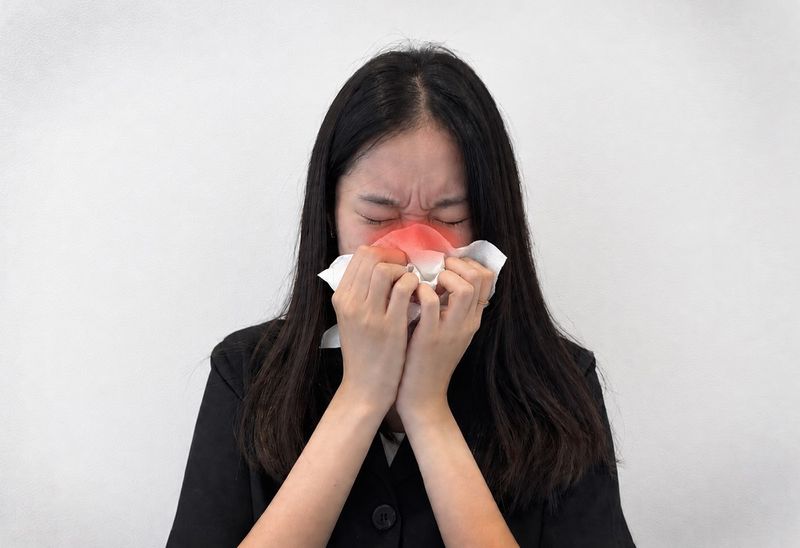
[Financial News] If you toss and turn at night because of a stuffy nose and start each morning sneezing, don't blame it all on the change of seasons. Allergic rhinitis affects one in five adults and can disrupt daily life by impairing sleep and concentration.
According to the Korea Disease Control and Prevention Agency's (KDCA) Korea National Health and Nutrition Examination Survey (KNHANES), the rate related to allergic rhinitis among adults aged 19 and older was approximately 20.9% in 2024. The number of patients rises sharply as autumn begins. Statistics from the Health Insurance Review and Assessment Service (HIRA) show that the number of patients treated for allergic rhinitis in 2025 increased from approximately 680,000 in August to approximately 1.15 million in both September and October—an increase of nearly 1.7 times in a single month.
Allergic rhinitis is a condition in which an overreaction to specific allergens causes inflammation of the nasal lining. Its main symptoms include a clear runny nose, bouts of sneezing, nasal congestion and an itchy nose. It may also cause itchy eyes or throat and postnasal drip, in which mucus runs down the back of the throat.
Although it is not life-threatening, allergic rhinitis can significantly reduce quality of life. Nasal congestion can interfere with restful sleep, leading to daytime fatigue and difficulty concentrating. It may also occur alongside conditions such as sinusitis and otitis media. That is why appropriate treatment is needed when symptoms persist.
Suspect Rhinitis If a Runny Nose and Sneezing Continue for More Than Two Weeks Without a Fever
The problem is that allergic rhinitis is easily confused with a cold. A cold may involve systemic symptoms such as fever, a sore throat and body aches, and it usually clears up within one to two weeks. Allergic rhinitis, by contrast, causes recurring clear nasal discharge, sneezing, nasal congestion and itching without a fever, with symptoms becoming more pronounced in the morning or in certain environments. If symptoms last for more than two weeks or recur at about the same time every year, it is advisable to seek an accurate diagnosis.
Shin, Jae Min, a professor in the Department of Otorhinolaryngology at Korea University Anam Hospital, said, "Because allergic rhinitis has symptoms similar to those of a cold, some people dismiss it as insignificant or repeatedly take cold medicine. If sneezing, a clear runny nose, nasal congestion and itching recur without a fever and worsen during a particular season or in a specific environment, it is advisable to check whether allergic rhinitis is the cause."
The main causative substances include dust mites, pollen, mold and pet dander. The condition is classified as perennial rhinitis, which occurs regardless of the season, or seasonal rhinitis, which worsens during certain seasons. In autumn, exposure to pollen from plants such as mugwort and ragweed increases. Large daily temperature swings and dry air can also irritate the sensitive nasal lining and aggravate existing symptoms.
Don't Just Suppress the Symptoms—Find the Cause First
Treatment generally involves identifying the causative allergens and aggravating factors, reducing exposure to them, and using medication according to the symptoms and their severity. Antihistamines and intranasal corticosteroids may be used. If the causative allergen is identified and symptoms persist or require long-term control, allergen immunotherapy may be considered.
Managing the living environment is also important. If dust mites are the cause, bedding should be kept clean and the home should be vacuumed regularly to prevent dust from accumulating indoors. Those sensitive to pollen should reduce prolonged outdoor activities on days when pollen levels are high and wear a mask when going outside. After returning home, it is advisable to wash the hands and face and shake dust and pollen from clothing.
Professor Shin advised, "Because allergic rhinitis repeatedly improves and worsens, it is important to identify aggravating environments and causative allergens and manage them consistently rather than simply suppressing symptoms as they arise. If it interferes with sleep or daily life, or if symptoms recur, you should identify the cause through a specialist consultation and allergy testing, then choose an appropriate treatment such as medication or immunotherapy." He added, "Rather than viewing allergic rhinitis as a seasonal symptom that must simply be endured, people should identify the exact cause and manage it consistently."
[email protected] Jung Myung-jin, medical writer Reporter