Moody's Mark Zandi Warns That Federal Reserve Rate Hikes Will Hurt U.S. Economy
- Input
- 2026-09-29 10:52:18
- Updated
- 2026-09-29 10:52:18
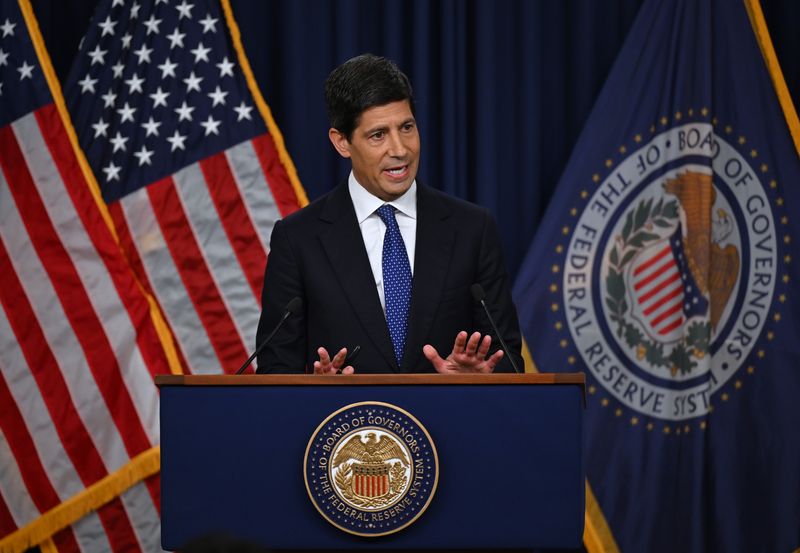
[Financial News] Moody's chief economist strongly warned that the continued rate-hike policy of the United States' central bank, the Fed, is beginning to inflict real damage on the U.S. economy.
Mark Zandi said in a 28th (local time) interview with Yahoo Finance, "The U.S. economy will begin to falter under the impact of the Fed's rate hikes." Even before this month's Federal Open Market Committee (FOMC) meeting, he had warned that raising the policy rate would be "a serious policy mistake" by the Fed.
The problem is that not only the Fed's policy rate but also long-term Treasury yields, which directly affect borrowing costs, are rising together. The yield on the 10-year U.S. Treasury note reached a 20-year high last week before climbing to 5.22% on the 28th. The 30-year fixed mortgage rate also reached 7.5%, its highest level since spring 2024. On the 16th, the Fed raised its policy rate by 0.25 percentage points to a range of 3.75% to 4.00%, marking its first rate hike in three years.
Economist Zandi identified the duration of the high-rate environment as the key variable. If high rates end within a few months, the conflict with Iran is resolved, oil prices fall, and the additional hikes expected by the market are abandoned, the economy could avoid a recession even if it suffers some damage. However, he forecast that the economy would face serious difficulties if the high-rate policy continues through next year.
Financial markets currently expect one more rate hike this year, followed by three to four additional hikes next year.
Zandi warned that if this market outlook becomes reality, a wave of bankruptcies could hit companies carrying excessive debt. Private equity owners have helped them hold on by extending maturities, but they may soon reach their limits. He added that households with credit card debt and home-equity loans would also face serious pressure as their interest burdens increase.
The only exception cited was big tech companies making large-scale investments in artificial intelligence (AI). Even if they issue bonds to build data centers and AI infrastructure, their high profit margins allow them to absorb elevated borrowing costs. Zandi explained, "AI is moving under its own momentum, and expectations for future profits are very high." He added, "Big tech companies can withstand even higher rates than they face now, so they will not take a major hit."
There are also differing views on what is driving the rise in long-term Treasury yields. Fed officials, including Chair Kevin Warsh, interpret the increase as a sign of robust economic growth, while Zandi identified geopolitical conflicts and market uncertainty as the main causes. Zandi also said that because Warsh no longer provides forward guidance, a premium of several basis points (bp) has been reflected in Treasury rates as compensation for market uncertainty.
Zandi identified debt-ceiling negotiations scheduled for next fall as a future risk. If the U.S. midterm elections in November result in a divided Congress, political deadlock could emerge and negatively affect the Treasury market.
However, he forecast that rising Treasury yields alone would not cause a sudden stock-market crash. Zandi said, "Rising interest rates gradually erode asset values; they are not an event that sends them plunging off a cliff." He added, "It will take a long time to erode the marble floor represented by AI, but when the floor itself begins to shake—for example, if NVIDIA falls short of earnings expectations—the stock market's direction could turn."
[email protected] Yoon Jae-jun Reporter