Small Businesses’ Economic Outlook “Turns Down After Three Months”
- Input
- 2026-09-29 12:00:00
- Updated
- 2026-09-29 12:00:00
[Financial News] The business outlook index (SBHI) seen by small businesses turned downward after three months. The SBHI had previously risen for two consecutive months in August and September as some industries, including semiconductors, continued to enjoy strong performance. However, it is believed to have declined again amid concerns over weak domestic sales.
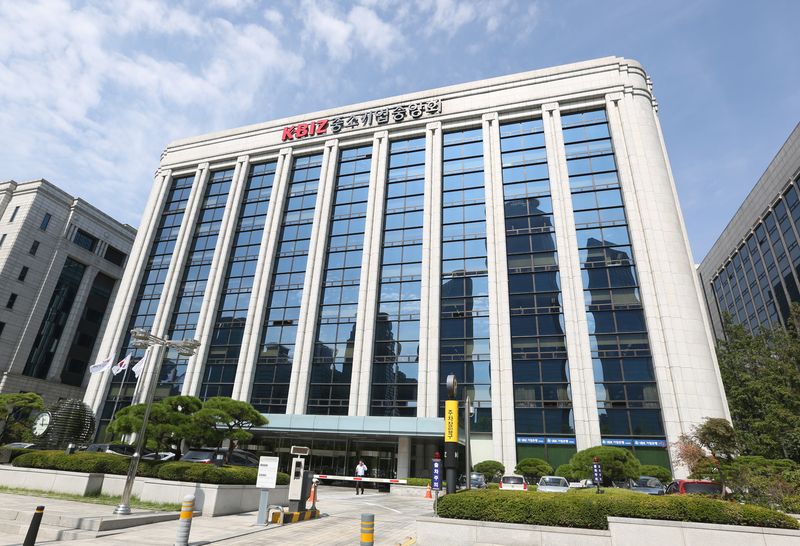
The Korea Federation of SMEs announced on the 29th the results of its survey on small businesses’ economic outlook for October 2026, conducted among 3,073 small and medium-sized enterprises nationwide from the 10th to the 16th. The October SBHI stood at 83.3, down 1.5 points from the previous month.
An SBHI above 100 means that more companies have a positive economic outlook than those that do not, while a figure below 100 indicates the opposite.
The small-business SBHI rose for two consecutive months, reaching 80.0 in August, up 1.8 points, and 84.8 in September, up 4.8 points. However, the October outlook turned downward again as concerns over weak domestic sales came to the fore.
The manufacturing outlook for October stood at 87.3, up 0.2 points from the previous month. By industry, nine sectors, including “Furniture” (79.8, up 14.3 points) and “Repair of Industrial Machinery and Equipment” (89.1, up 12.9 points), posted increases from the previous month. Meanwhile, 14 sectors, including “Beverages” (75.8, down 31.7 points) and “Printing and Reproduction of Recorded Media” (63.5, down 8.9 points), declined.
The non-manufacturing outlook fell 2.3 points over the same period to 81.4. The construction sector rose 4.1 points from the previous month, from 65.7 to 69.8, while the services sector fell 3.6 points, from 87.3 to 83.7. Within services, four sectors posted increases, including transportation (91.9, up 9.2 points) and arts, sports and recreation services (100.1, up 6.4 points). In contrast, six sectors declined, including education services (84.9, down 6.0 points) and wholesale and retail trade (80.7, down 5.4 points).
Among the management difficulties faced by small businesses, weak sales, or product sales, accounted for the largest share at 54.7%. This was followed by rising raw-material prices (38.8%), intensifying competition among companies (33.5%), and rising labor costs (28.2%).
Noh Min-seon, executive director at the Korea Small Business Institute (KOSBI), said, "With the domestic economy remaining sluggish, rising oil prices resulting from recent uncertainty in the Middle East appear to have had a negative impact on small businesses to some extent."
[email protected] Kang Kyung-rae Reporter