Rear-Facing Cameras and Wireless Shunting to Reduce Exposure to Hazardous Areas... MOLIT Draws Up Shunting Safety Measures
- Input
- 2026-09-29 11:00:00
- Updated
- 2026-09-29 11:00:00
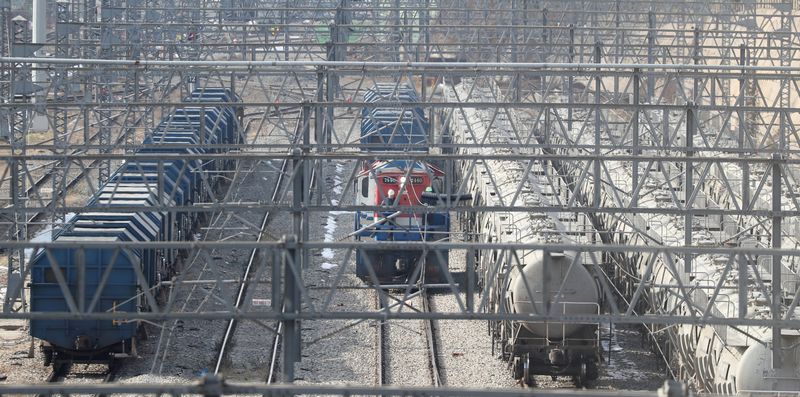
[Financial News] The government is overhauling work practices that expose workers to hazardous areas in an effort to prevent a series of safety accidents during railcar shunting operations.
The Ministry of Land, Infrastructure and Transport (MOLIT) said on the 29th that it would implement measures to strengthen safety during railcar shunting operations. The measures aim to minimize workers' exposure to hazardous areas, including riding outside freight wagons, and enable them to monitor and guide vehicle movements from safe locations using advanced technologies.
Shunting involves coupling, uncoupling and moving railcars, and is carried out an average of about 1,370 times a day at 115 stations nationwide. Of these operations, 41.4% involve workers riding directly on the vehicles. Over the past 10 years, shunting-related accidents have caused three deaths and seven injuries. All three fatal accidents occurred when workers were riding outside freight wagons while railcars were being reversed, making it difficult for locomotive engineers to see, or when communication was inadequate. A fatal accident also occurred at Uiwang Station last August.
MOLIT decided to pursue measures to: △separate workers from hazardous areas as much as possible; △improve technology so that reversing railcars can be monitored and communicated from safe locations; and △strengthen management and inspections.
First, workers will in principle be prohibited from riding outside freight wagons when railcars are being reversed, and walking will become the standard procedure. When riding is unavoidable, they must board inside the locomotive or confirm with the locomotive engineer whether they will board or disembark before moving. Safety fences and marking lines will be installed at work sites, lighting for night work will be expanded, and obstacles such as discarded sleepers and rails around the tracks will be cleared. Manual track switches will be automated in stages, with 174 switches at 19 stations scheduled for automation by December 2027.
Technology-based safety systems will also be introduced on a pilot basis. Detachable rear-facing cameras will be installed at the rear of vehicles so locomotive engineers can monitor conditions behind them in real time without workers riding outside. Pilot operation will begin at Obong Station this November. Remotely controlled shunting will also be expanded to reduce signal errors between locomotive engineers and workers. The system is being introduced in stages at 10 sites across eight of the 16 freight stations equipped with locomotives dedicated to shunting, with completion scheduled by July 2027. It is also scheduled to be introduced at Uiwang Station, where the accident occurred last August, by the first half of 2028. In addition, systems that use AI CCTV along the tracks to detect workers falling or entering hazardous areas, as well as hands-free wireless microphones that display workers' voices as text, will be introduced beginning in the first half of 2027.
Management and inspections will also be strengthened to ensure that the measures take hold at worksites. Managers such as station chiefs will regularly inspect work areas, while railway safety inspectors from MOLIT will conduct focused checks on implementation. Effective best practices identified in the field will be standardized and expanded to other worksites.
An MOLIT official said, "These measures focus on changing work practices in which workers had to go directly into hazardous areas to conduct inspections." The official added, "We will separate workers from hazardous areas as much as possible and create a safe working environment by actively using technologies such as rear-facing cameras, remote control, and AI CCTV."
[email protected] Jung Kyung-soo Reporter