Republic of Korea Joint Chiefs of Staff (ROK JCS): "Highly Likely a North Korean Military Mine"... Suspected Resin Anti-Personnel Mine
- Input
- 2026-09-28 21:14:35
- Updated
- 2026-09-28 21:14:35
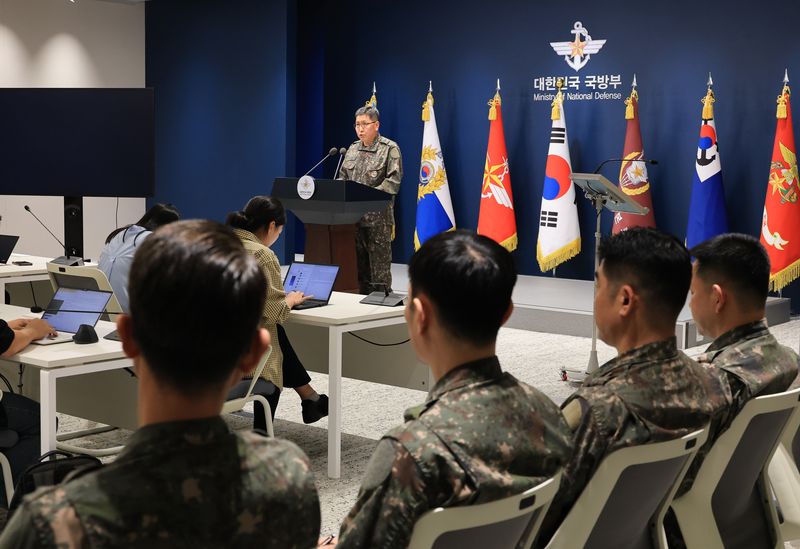
Kwon Dae-won, deputy chief of the ROK JCS, said during an emergency briefing on the 28th that the accident was believed to have been caused by a North Korean military mine. Kwon said, "We have determined that it is highly likely that the cause of this mine explosion was a North Korean military mine." He added, "If the final investigation determines that the cause of the damage to our military was a mine planted by North Korean forces, all responsibility will lie with North Korea, and our military will take appropriate and commensurate measures."
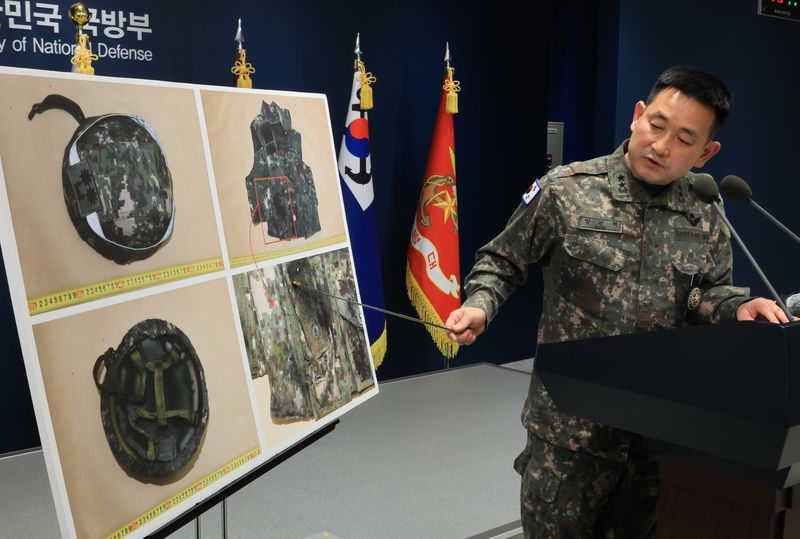
The ROK JCS received the National Forensic Service's initial analysis of equipment collected from the wounded at the time of the mine explosion. The analysis detected traces of explosive material, including TNT, as well as brownish foreign substances.
Kwon said, "Considering personnel's accounts of the flames at the time of the explosion and the extent of the damage, we believe that the explosion was not caused by a mine belonging to our forces." He added, "Based on those accounts, it is believed to have been a brown resin anti-personnel mine similar to a North Korean wooden-box mine." Two mines exploded, and one additional unexploded mine was found, bringing the estimated total to three.
The South Korean military also obtained accounts from several service members who said they saw an object resembling a wooden-box mine and apparently made of plastic near the site of the DMZ explosion. Wooden-box mines are elongated, box-shaped explosives that North Korean forces have buried near the DMZ. If confirmed to be a North Korean mine, it would appear that the traditional wooden material had been replaced with plastic.
It was confirmed that several service members who were at the site of the DMZ explosion provided accounts of seeing an object resembling a wooden-box mine.
Hwang Ju-bong, chief of Operations Division 1 at the ROK JCS, said at a Ministry of National Defense briefing on the 28th, "There were accounts to the effect that the object looked similar to a wooden-box mine and appeared to be made of plastic, while another person gave an account suggesting it was a different type." Hwang added, "There are several mines that resemble wooden-box mines in terms of shape and color," but said, "We will verify the matter clearly at the site."
The service members who reported seeing an object resembling a wooden-box mine had received specialized training in identifying the shape and material of both enemy mines and South Korean military mines.
However, the ROK JCS said that additional on-site investigation was needed to determine whether the objects believed to be mines had been buried or washed away by flooding.
Reports that the three military officers involved in the DMZ explosion might not have been wearing mine overboots, a form of protective equipment, were said to be unfounded. The military gave this account to lawmakers who visited the site under the jurisdiction of the 25th Infantry Division, where the accident occurred.
It was also found that footage of the accident scene had been recorded by body cameras attached to the service members. A military investigator said, "As for the bodycam footage, I understand that it is being passed along through the video evidence collection process," adding, "The bodycams do not transmit video; they only record it."
Kim Min-seok, leader of the Democratic Party, visited a GOP unit under the 25th Infantry Division with lawmakers from the National Assembly's Defense Committee. Chun Ha-ram, floor leader of the Reform Party (RP) and a member of the committee, also inspected the unit with ruling-party lawmakers.
The People Power Party, however, boycotted the visit, calling the Democratic Party-led trip to the DMZ a mere political show. Instead, People Power Party leader Jang Dong-hyuk met with Minister of National Defense Kang Shin-chul, who had visited the National Assembly, and called for transparent disclosure.
Jang Dong-hyuk said, "If the mine explosion in the DMZ was caused by a mine newly planted by North Korea, it is an unmistakable act of aggression. It cannot be overlooked." The People Power Party also stepped up its attacks on President Lee Jae Myung's policy toward North Korea. At a supreme council meeting that day, Jang claimed, "A deliberate investigation, delay, downplaying of the accident or cover-up would all be impossible without the president's instructions."
Minister Kang Shin-chul told reporters, "There are also accounts saying that it was not a wooden-box mine." He added, "That makes it difficult to identify the object with certainty, but since an on-site investigation is under way, we will explain the findings transparently to the public as soon as they are organized."
Responding to opposition accusations that the accident had been downplayed and covered up, as well as criticism of a delayed response, Minister Kang said, "That is not the case. How could the military cover anything up? We will proceed transparently." He added, "There has been absolutely no deliberate delay or cover-up."
In response, the Democratic Party protested that the People Power Party was politicizing the matter, even though the South Korean military and the United Nations Command (UNC) had agreed to conduct a joint investigation in the area suspected of being where North Korean forces crossed the Military Demarcation Line (MDL).
[email protected] Kim Kyung-soo, Lee Jong-yoon and Song Ji-won Reporter