Another String of Gang-Rape Cases in New Delhi and Elsewhere... Protests Flare Across India
- Input
- 2026-09-28 17:05:17
- Updated
- 2026-09-28 17:05:17
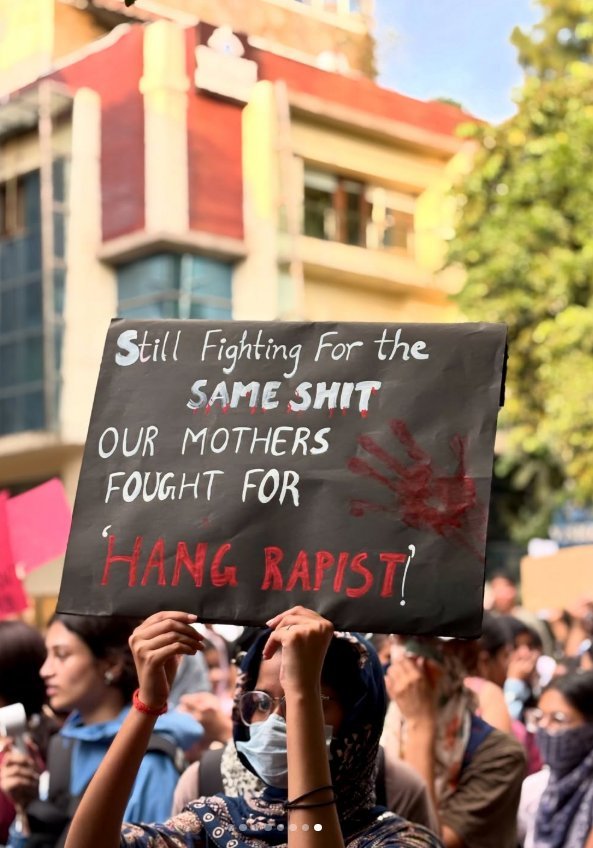
【NEW DELHI, India—Correspondent Pragya Awasthi】Public anger over women's safety is once again erupting as a series of violent crimes, including gang rapes, has occurred recently in New Delhi, India's capital, and other parts of the country. Despite a 2012 legal amendment that dramatically increased penalties for perpetrators, sex crimes in India have not declined at all. Calls are growing for greater accountability in the justice system and fundamental reform of social attitudes.
Local media outlets reported on the 28th that the Supreme Court of India had initiated suo motu proceedings into a recent series of sex crimes, including a gang rape in a public park in New Delhi and the rape of a minor on a moving night bus.
The Supreme Court bench said, "We cannot hide our dismay at reports of repeated sex crimes in the capital region," referring to the 2012 tragedy. The bench continued, "These incidents clearly demonstrate the systemic failures of investigative agencies and administrative authorities, which have failed to guarantee even the basic safety of citizens," issuing a strong criticism.
The bench stressed, "We can no longer allow public parks, buses and subway stations to become crime-risk zones because of preventable administrative shortcomings, such as inadequate street lighting, a lack of surveillance cameras and insufficient patrols." It added, "Rather than stopping at expressions of solidarity or public outrage, we must hold the authorities responsible for public safety and order clearly accountable and develop measurable response measures."
The Supreme Court proceedings took place amid large-scale protests that continued throughout the weekend. Following a student street march that began in New Delhi last Wednesday, more than 200 University of Delhi students protested around August Kranti Marg on Friday, demanding safety measures for women and children. The protests spread nationwide over the weekend, and rallies continued in various places on Monday. The shocking incidents that recently occurred in the heart of the capital prompted citizens to return to the streets.
On the 19th, three men posing as police officers gang-raped a 17-year-old girl in a park in central New Delhi. Earlier, on a rainy day, a 17-year-old girl walking along the street was raped by a bus driver and conductor who approached her while offering to help. In another case, a 16-year-old girl was raped and murdered, and her decomposing body was found. In Bihar, a video of a teenage girl being raped was also circulated. Sexual crimes are plaguing not only the capital region but India as a whole.
The latest developments have revived memories of the 'Nirbhaya (the Fearless One)' case, which shook India in 2012. A 23-year-old physical therapy student was gang-raped on a bus and later died, sparking massive nationwide protests. In response, the Indian government amended the law to broaden the scope of rape offenses and significantly toughen penalties for gang rape, setting the punishment at a minimum of 20 years and up to the death penalty. However, experts and women's rights activists point out that tough laws alone have limitations.
According to official statistics from the National Crime Records Bureau, India recorded an average of 80 rape cases per day in 2024, up from 68 in 2012, before the legal amendment. Considering cases that go unreported because of patriarchal social attitudes and the stigma attached to victims, the actual number of crimes is estimated to be much higher.
The lack of capacity in law enforcement agencies and judicial delays are also cited as major reasons rape cases continue in India. Criminal lawyer Shilpi Jain noted, "A typical rape trial can take seven to eight years to reach a verdict at the trial court level, and it can take as long as 20 years if it goes all the way to the Supreme Court." More than 200,000 rape cases were pending in courts as of 2024, while fewer than 10% of cases were concluded that year. The conviction rate has also remained at around 25% since 2012. Calls are growing for fundamental changes in social attitudes.
Women's rights activist Yogita Bhayana criticized the situation, saying, "The patriarchal belief that blames women for going out late or being accompanied by men remains widespread." Activist Poonam Mutreja said, "Crime prevention must begin before a crime occurs—in the home and at school, in the community, in digital spaces and within the police system."
[email protected] Pragya Awasthi, correspondent Reporter