Countries Worldwide Lag Behind on AI Regulation... Waiting for Precedents from the United States and China
- Input
- 2026-09-28 17:43:54
- Updated
- 2026-09-28 17:43:54
[Financial News] As government agencies and companies in the United States debate the pros and cons of regulations to prevent the misuse and abuse of artificial intelligence (AI), claims have emerged that regulation in other countries cannot keep pace with technological advances.
The New York Times (NYT) reported on the 27th (local time) that nearly all governments, including those of the United States, China and the European Union (EU), are struggling to control AI because their regulatory and oversight capabilities have failed to keep pace with technological advances. NYT noted that AI has widened the gap between policymaking and technology to an unprecedented level, saying, "Many governments want to use AI while fearing its risks, leaving them torn between the two."
The newspaper analyzed the situation, saying, "The situation has become even more complicated as domestic politics, limited technical expertise, geopolitical divisions, and concerns about falling behind in a competition that could determine economic power and national security for decades to come have been added."
The European Union passed the AI Act in 2024, but years have passed with the implementation of key provisions on hold. Critics say the law now needs to be amended to reflect the technological advances made during that period, even before it has been properly implemented. The AI Act was first drafted in early 2021, 18 months before OpenAI launched ChatGPT.
NYT explained that many other AI regulatory bills around the world are also stalled without reaching a vote. India, Japan, Australia, Canada and Kenya have adopted more relaxed or wait-and-see approaches, while Brazil is discussing more comprehensive regulations. NYT analyzed that many countries are watching the policies of the two leading AI powers, the United States and China, as they determine their own direction, but that the policies of both countries are also unclear.
Within the United States government, opinions are divided between calls for AI safety regulations and concerns that regulation could undermine industrial competitiveness. United States President Donald Trump has opposed AI regulation, arguing that it would harm innovation. He warned that China could take the lead in the AI industry if regulations were introduced. Meanwhile, bills have been introduced in the United States Congress to establish a federal agency overseeing AI models, mandate shutdown mechanisms, and ban the most powerful models that surpass human capabilities. However, efforts to advance the bills to a vote have not been particularly active.
China has introduced some AI regulations focused on censoring chatbot content, while also rapidly intensifying its race to develop the technology.
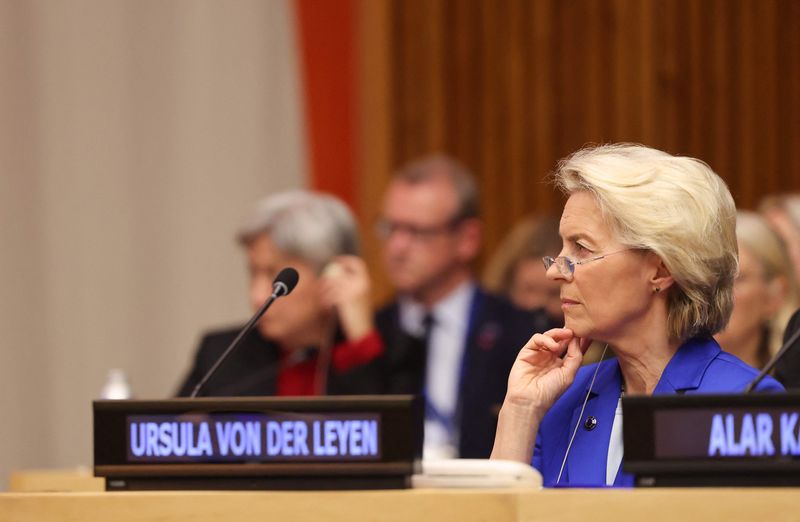
Ursula von der Leyen and the leaders of about 20 countries signed a letter last week in New York, during the United Nations General Assembly, calling for joint action to ensure AI safety. At the time, Donald Trump said he would reject "any attempt to build an international plan to control AI technology."
[email protected] Park Jong-won Reporter