'Wrap Up or Hand Over?' Prosecution Moves to Resolve Final Cases... Will MBK, Petrochemical Price-Fixing Cases Face '90-Day Continued Investigations'?
- Input
- 2026-09-28 15:43:39
- Updated
- 2026-09-28 15:43:39
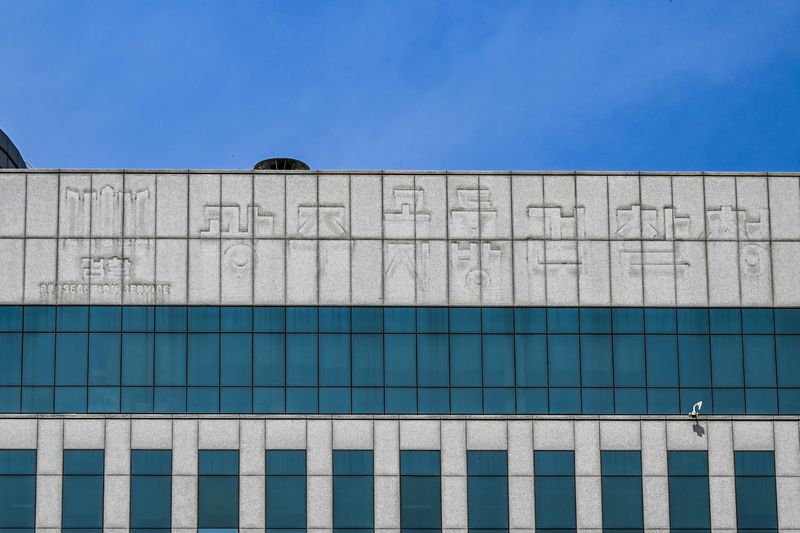
[Financial News] With the Public Prosecution Office set to launch on Oct. 2, prosecutors are accelerating efforts to wrap up cases they have investigated directly. Cases in which investigations are largely complete are expected to receive an indictment or non-indictment decision before the office opens. Cases that are difficult to halt may remain under investigation for up to 90 days under transitional provisions. Attention is also focused on the disposition of major cases, including the Homeplus crisis and price-fixing by petrochemical companies.
Legal sources said on the 28th that prosecutors are processing pending cases one by one ahead of the Public Prosecution Office's launch. On the 3rd, the Supreme Prosecutors' Office of the Republic of Korea (SPO) instructed frontline offices to classify cases under investigation by type, promptly resolve those that could be handled, and, when unavoidable given the nature of a case, continue investigating it within the 90-day grace period under the amended Criminal Procedure Act or transfer it to another investigative agency.
In practice, rather than creating a comprehensive list of cases subject to transfer and processing them accordingly, prosecutors in charge have reportedly been deciding whether to issue a disposition or transfer each case based on its progress. A frontline prosecutor explained, "There is no reason to delay cases in which the investigation is complete and only a decision remains until after Oct. 2. Cases requiring additional investigation can continue to be investigated, but using the grace period will be an exceptional measure."
Cases in which compulsory investigative measures, such as search and seizure, have been carried out and the investigation is well advanced may remain subject to 90 days of continued investigation. Another legal source said, "It may not be appropriate to halt an investigation that is underway after conducting a search and seizure and send the case to another agency. For cases that are still actively being investigated, the investigative team will decide whether to continue, doing so only when unavoidable."
A lawyer who formerly worked for the prosecution also predicted, "There is a tendency within the prosecution to handle, whenever possible, cases it investigated itself. For cases where investigative steps such as a search and seizure or a warrant application have already begun, prosecutors will likely tend to carry them through to a conclusion rather than hand them to another investigative agency, including from the standpoint of accountability."
Accordingly, attention is also focused on the fate of major cases initiated through investigations by the Seoul Central District Prosecutors' Office. In connection with the Homeplus crisis, prosecutors who summoned Kim Byung-joo, chairman of MBK Partners, for questioning are reviewing how to dispose of the case. The Seoul Central District Prosecutors' Office recently said that the investigation was proceeding with the investigative team and its leadership in agreement, adding that it would explain the results soon. The price-fixing case involving petrochemical companies is also in its final investigative stage, with executives of major companies and others being questioned, making the question of whether the case will be disposed of before the Public Prosecution Office launches a key issue.
The key question is how smoothly investigations can continue after cases are transferred. Even if the prosecution transfers a case, time will be needed to hand over the actual files and seized materials and for a new investigative team to review them. In particular, cases that are not completed even during the 90-day grace period must be transferred to the investigative agency with jurisdiction around the end of the year, raising concerns about delays in processing them.
Detailed internal work guidelines for the Public Prosecution Office are still being finalized just four days before its launch. Following the recent confirmation of its organizational structure, the SPO is reportedly revising detailed guidelines on the duties of newly established and integrated departments, case-processing procedures, and the handling of cases involving special judicial police officers. Frontline officials believe the criteria for handling cases under the new system must be clarified as quickly as possible to reduce confusion during the transition.
[email protected] Choi Eun-sol Reporter