Construction Industry Rebounding? Industry Says, "It Should Be Viewed as a Temporary Phenomenon"
- Input
- 2026-09-28 15:26:15
- Updated
- 2026-09-28 15:26:15
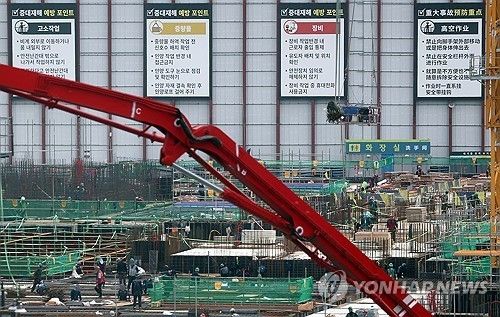
[Financial News] Construction contract value in the construction industry rose significantly in the second quarter of this year compared with the same period last year. Industrial facilities such as semiconductor and energy plants, rather than residential and commercial construction projects that had been the industry's main sources of revenue, drove the increase. Some observers said the figures could signal a rebound in the construction industry, but industry officials took a cautious view, saying, "We still need to wait and see." They explained that headwinds remain, including rising material and labor costs amid the recent high-interest-rate environment and the continued increase in unsold homes.
According to the Ministry of Land, Infrastructure and Transport (MOLIT) on the 28th, construction contract value totaled 80.9 trillion won in the second quarter of this year, from April through June. This was a 27.3% increase from 63.5 trillion won during the same period last year.
In the private sector, civil engineering works, including construction of production facilities, drove the increase. More specifically, private-sector contract value reached 59.6 trillion won, up 29.1% from the previous year. Building construction, including housing and mixed-use business projects that account for the largest share, rose 16.9% to 45.9 trillion won. Civil engineering works involving the construction of production facilities for semiconductors and energy projects increased 98.3% to 13.7 trillion won. Within civil engineering, industrial facilities posted the largest increase, rising 128.4% to 12.1 trillion won.
The latest contract value has recovered to a level close to the previous peak. The highest figure in the past 10 years was 82.8 trillion won in the second quarter of 2022, meaning the latest figure has recovered to 97.8% of that level. Some observers said this could indicate that the construction industry has entered a recovery phase.
However, the industry remains cautious and says the situation needs to be monitored for the time being. The August Construction Business Survey Index (CBSI), released by the Construction Economy Research Institute of Korea on the 10th, stood at 72.7. The figure was down 0.1 point from July. The CBSI quantifies construction companies' perceptions of business conditions; a reading below the benchmark of 100 is interpreted as indicating difficult conditions in the construction industry. Although the index rebounded after hitting a low of 62.5 in February, it remains well below the benchmark, analysts said.
A construction industry official said, "We view the increase in construction work positively, as projects that had been postponed over concerns about profitability are moving forward again as real estate prices rise." The official added, "However, it takes time for these movements to translate into actual construction starts and home sales."
The fact that cost increases have not been fully resolved is also a concern. Raw material prices continue to rise amid the high-interest-rate environment in Korea, led by the Bank of Korea (BOK), and around the world. Rising labor costs resulting from increases in the minimum wage are also putting pressure on companies.
Unsold homes are also weighing on the construction industry. As of July, the number of unsold homes nationwide stood at 68,217 units. Unsold homes after completion, which have a major impact on construction companies, totaled 29,152 units. About 85% of the nearly 30,000 completed but unsold homes were concentrated in provincial areas, clearly highlighting the construction industry downturn caused by polarization in the housing market.
The official said, "Since the response of end users in the presale market varies depending on the region and location, we need to watch a little longer to see whether the improvement in order intake will lead to a broader recovery in the construction industry." Another industry official explained, "This should be viewed as a temporary phenomenon resulting from increased facility construction for semiconductors and growth in the public sector."
[email protected] Jeong Gyeong-su Reporter