"Korea Media and Communications Commission Has Rolled Back TV Home Shopping Standards for Protecting SMEs," Says Lee Hoon-gi
- Input
- 2026-09-28 15:47:18
- Updated
- 2026-09-28 15:47:18
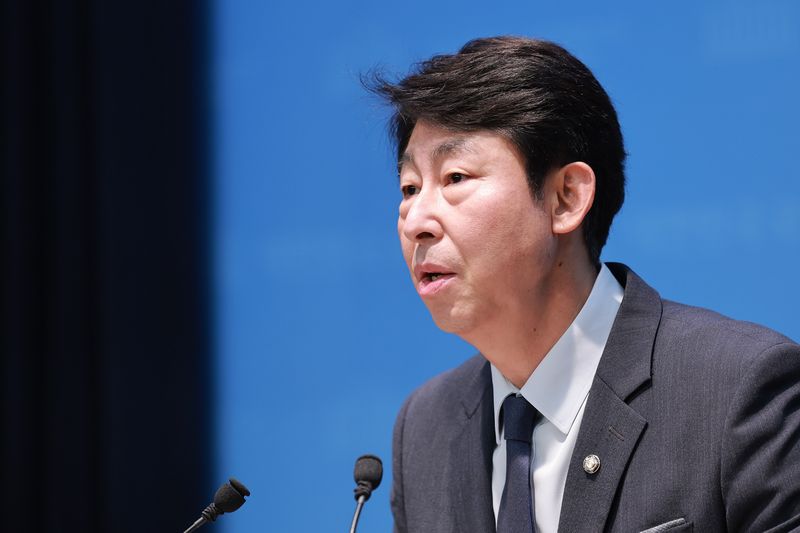
Data that Lee Hoon-gi, a Democratic Party of Korea lawmaker and member of the Science, ICT, Broadcasting, and Communications Committee of the National Assembly of South Korea, received from the KMCC on the 28th showed that the combined direct-purchasing target for 11 of the home-shopping channels reapproved this year was 160.5 billion won. That was down 27.2% (59.868 billion won) from last year's target of 220.368 billion won. Home and Shopping, which manages its direct-purchasing target as a percentage of sales, was excluded from the total.
This year's target is also below the channels' actual direct purchases last year. The 11 channels directly purchased SME products worth a combined 238.489 billion won last year. This year's target is 77.989 billion won, or 32.7%, lower than that amount.
By operator, KT alpha's direct-purchasing target fell from 25 billion won last year to 13 billion won this year. Its actual purchases last year amounted to 13.189 billion won, falling short of the target at the time, while this year's target was set even lower. TRN directly purchased 28.101 billion won worth of products last year, exceeding its target of 25 billion won, but its target for this year was reduced to 10 billion won.
The standards for programming SME products and setting sales commissions have also changed. The average target programming ratio for the 12 channels reapproved this year is 61.2%, down 9.7 percentage points from last year's target of 70.9%. The gap widens to 13.9 percentage points when compared with last year's actual average programming ratio of 75.1%.
By contrast, the average target sales commission rate for SME products rose 2.8 percentage points, from 31.7% last year to 34.5% this year. It is 5.2 percentage points higher than last year's actual average rate of 29.3%. Because the requirement is considered met when the actual rate is at or below the target, raising the target eases the commission standard operators must meet.
For Lotte Homeshopping and Home and Shopping, which had violated their previous reapproval conditions, all three indicators were adjusted in directions favorable to the operators. Lotte Homeshopping's target programming ratio for SME products was lowered from 70% to 55%, while its direct-purchasing target fell from 70 billion won to 45 billion won. Its target sales commission rate rose from 30.9% to 35.0%. Home and Shopping's target programming ratio was lowered from 80% to 70%, and its direct-purchasing target as a percentage of sales fell from 25% to 20%. Its target sales commission rate increased from 22.2% to 25.3%.
However, these figures show changes in the reapproval conditions. They do not mean that actual programming or direct purchases of SME products declined this year, or that the sales commission rate increased.
Lee said, "There is no valid basis for setting operators that actually made nearly 238.5 billion won in direct purchases last year a target of only 160.5 billion won this year. It is effectively a license to backslide." He questioned, "If they failed to meet the existing targets, they should be held accountable. Why lower the targets for them?" He continued, "The authorities reduced SMEs' broadcast opportunities and direct-purchasing volume while raising only the ceiling on the commission rates they can be required to bear. To ease the burden on home-shopping operators, they have turned the purpose of the reapproval system—protecting SMEs—on its head."
[email protected] Yoon Hong-jip Reporter