For Integrated Korean Air, "customer safety" comes first; KRW 750 billion to be invested in maintenance infrastructure
- Input
- 2026-09-28 15:41:50
- Updated
- 2026-09-28 15:41:50
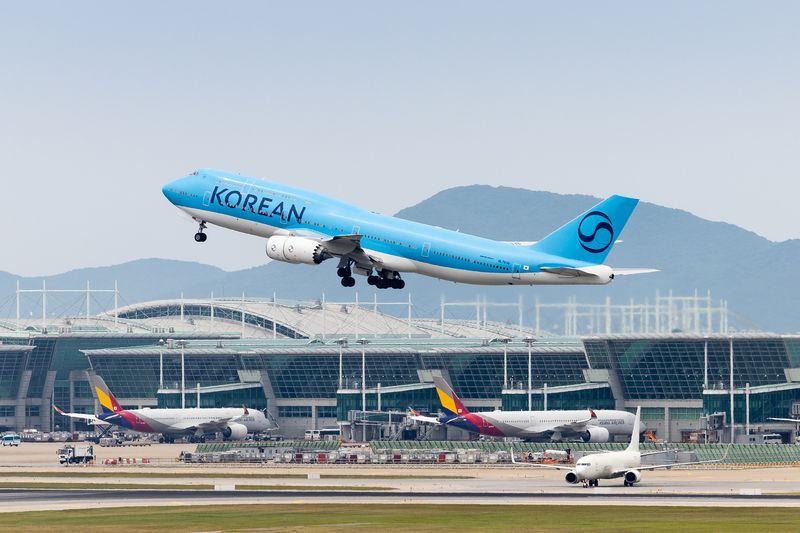
[Financial News] Korean Air is enhancing its safety capabilities ahead of its integration with Asiana Airlines in December. Integrated Korean Air is making large-scale investments in maintenance infrastructure with customer safety as its top priority, while a joint safety system between the two airlines is also being established smoothly.
KRW 578 billion engine maintenance plant next to the ETC... KRW 176 billion maintenance hangar beside the runway
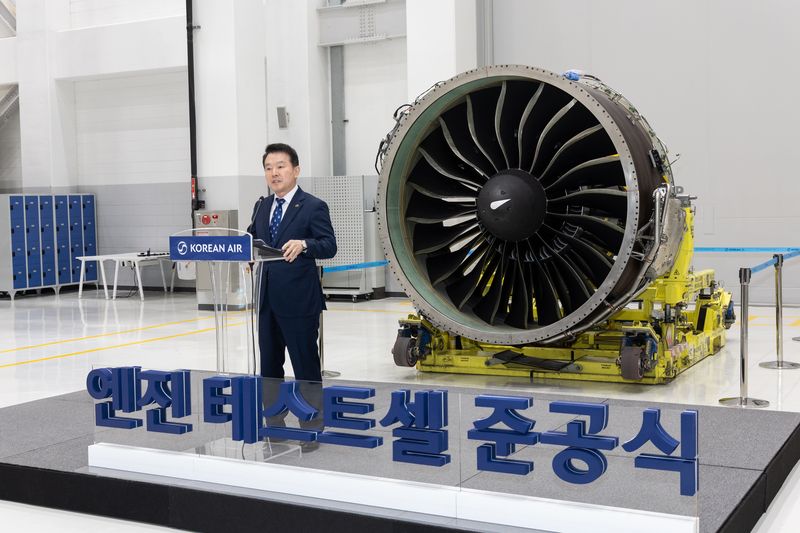
On the 28th, Korean Air said it would invest approximately KRW 750 billion in maintenance infrastructure, including an expansion of its engine maintenance plant and the construction of a new maintenance hangar.Korean Air services aircraft engines at its Bucheon plant and conducts performance tests before delivery at the engine test cell (ETC) in the Unbuk District of Yeongjong Island, Incheon. Measuring 14 meters by 14 meters, the ETC can test ultra-large engines rated at up to 150,000 pounds. Last year, Korean Air completed its second ETC, which measures 10 meters by 10 meters and can test engines rated at up to 62,000 pounds.
Beside the ETC, a new engine maintenance plant is being built through an expansion project costing KRW 578 billion. With a total floor area of 142,011 square meters—equivalent to 20 soccer fields—it will be the largest facility of its kind in Asia. Operations are scheduled to begin next year. Once the plant is operational, the entire engine maintenance process will be handled under one roof, from start to finish.
Korean Air is also investing KRW 176 billion to build a new maintenance hangar. Located beside the runway at Terminal 2 of Incheon International Airport, the facility will cover 69,299 square meters, the equivalent of 10 soccer fields. Operations are targeted to begin by the end of 2029. It will be able to park and service two medium-to-large aircraft and one small aircraft simultaneously.
The major expansion of maintenance infrastructure is intended to support Integrated Korean Air's fleet of roughly 300 aircraft.
Integrating the safety capabilities of crews at both airlines... leading global aviation safety
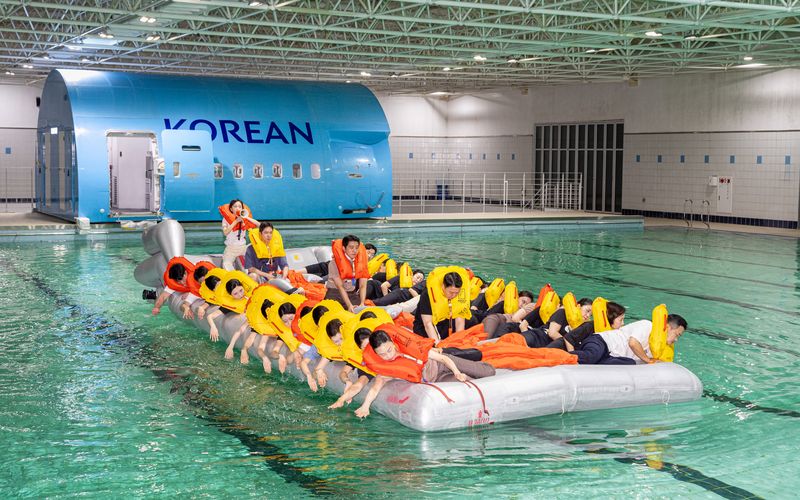
Korean Air and Asiana Airlines proactively standardized their recurrent training programs for flight crews to enhance their safety capabilities. Since the first half of this year, the two airlines have conducted crew education and flight training using the same materials and methods.
In May, the two airlines completed their first joint emergency evacuation demonstration. The exercise was part of the implementation of the integrated Air Operator Certificate approval pursued by the two companies under the supervision of the Ministry of Land, Infrastructure and Transport (MOLIT). Using Boeing 737-900 and Boeing 787-9 aircraft at a Korean Air hangar, they successfully completed an intensive emergency evacuation demonstration. The airlines have also jointly developed and applied a flight simulator program, described as the "flower of training," in actual training.
Joint labor-management safety and health inspections are also conducted every quarter. The executive vice president overseeing safety and health and the union chairman participate directly as the company prepares for the launch of Integrated Korean Air. They have listened to employees' concerns and inspected key maintenance sites, including the engine support unit, hangars, airframe repair workshops, and an automated warehouse for aircraft parts and materials.
The safety system established through these efforts is receiving international recognition. Korean Air was selected as the airline chairing SkyTeam's Safety, Security and Quality (SSQ) advisory group and is leading aviation safety policies.
A representative example of its safety policy is the thorough management of power banks, which have caused in-flight fires. In-flight fires caused by power banks have occurred recently as well. According to Lee Yong-seon, a lawmaker from the Democratic Party of Korea who sits on the Land, Infrastructure and Transport Committee of the National Assembly, security screenings from January through August this year detected 267,983 rule-violating or unapproved power banks.
In response, Korean Air has prohibited the use of power banks on board since January 26. Passengers are allowed to bring only power banks equipped with short-circuit prevention measures, and their use on board is strictly prohibited.
Aviation safety policies are being pursued not only by Korean Air but also through the combined efforts of aviation-related affiliates of Hanjin Group. Hanjin Group's Safety Roundtable includes Korean Air, Asiana Airlines, Jin Air, Air Busan, Air Seoul, Korea Airport, and Asiana Airport. The group is establishing a safety management system and developing response measures at the group level.
[email protected] Kim Yun-ho Reporter