A Villa Neighborhood Transformed into Han River-View Apartments... Oh Se-hoon: "First Fruits Four Years After Moa Housing Was Introduced"
- Input
- 2026-09-28 15:57:22
- Updated
- 2026-09-28 15:57:22
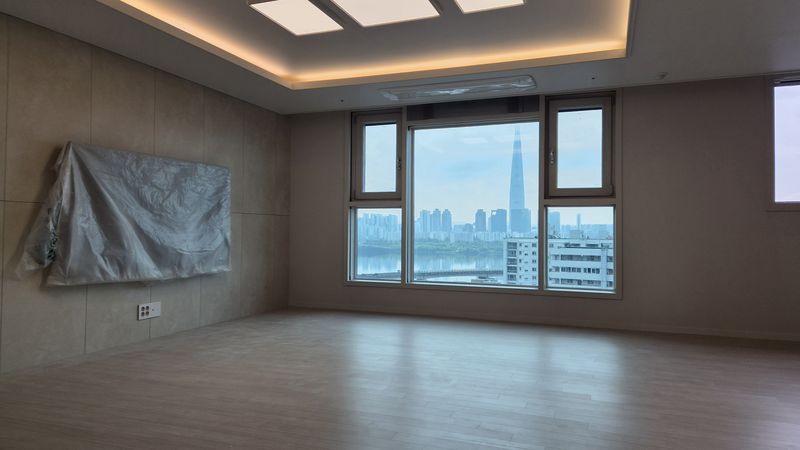
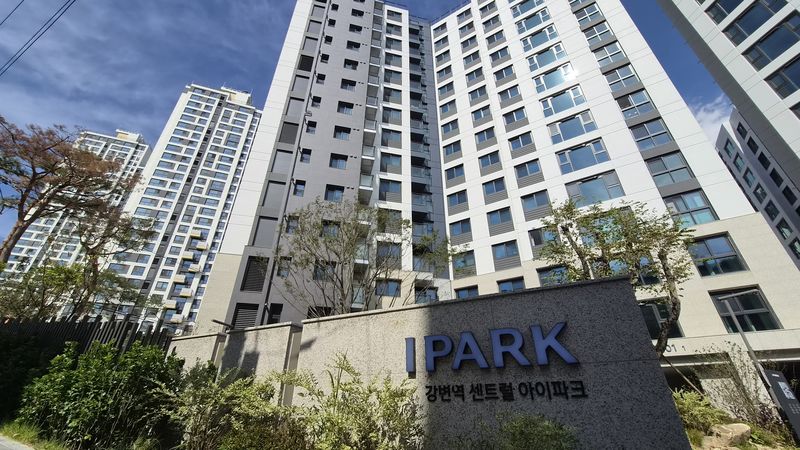
Oh Se-hoon, mayor of Seoul, visited the site of Hanyang Yeonrip in Seoul's Gwangjin District, the first Moa Town project, on the 28th. He said, "This is the first successful case of a complex being built quickly in Seoul, where the housing shortage is severe." Hanyang Yeonrip passed the integrated review in June 2023 and was completed last month under its new name, Gangbyeon Station Central IPARK. Residents began moving in early this month. Through the Moa Housing system, 99 units in aging low-rise homes were transformed into an apartment complex with up to 15 stories, four buildings and 215 units, resulting in a net increase of 116 units.
Introduced by Seoul in 2022, Moa Housing is a small-scale housing improvement model that allows landowners to combine their parcels and quickly build multifamily housing in aging low-rise residential areas that are difficult to redevelop because they do not meet the requirements for redevelopment or reconstruction. The area had an aging rate of 94%, and 70% of all homes were semi-basement units. Illegal parking continued along six-meter-wide roads, while parking spaces and communal rest areas were also lacking. In particular, the district covered 9,877 square meters, falling short of the 10,000-square-meter threshold for redevelopment and making it difficult to pursue a large-scale improvement project.
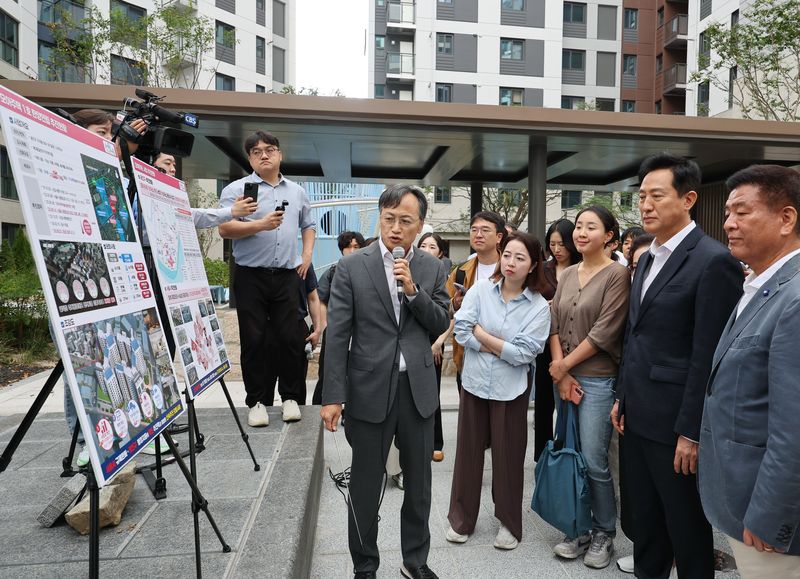
The city says these small-scale housing improvement projects will have a positive impact on Seoul, which is facing a housing shortage. Oh said, "Large complexes can take 10 or 20 years to improve, but smaller complexes have the advantage of moving more quickly and nimbly." He added, "Rents, housing deposits and home prices are all continuing to rise in a triple surge. I hope all 138 Moa Town projects will pick up speed so residents can reduce their financial burden."
According to the city, 168 sites have completed the establishment of associations since the Moa Housing and Moa Town systems were introduced. Of these, 14 sites, comprising 2,200 units, have begun construction, while 27 sites, comprising 3,800 units, have received approval for their project implementation plans and are preparing to begin construction. In July, the city also abolished the "average 13-story" standard for Class 2 general residential areas, which had been limited to seven stories, to promote Moa Housing. When a project is pursued on a block-by-block basis in an area adjoining another Class 2 or higher residential area, apartments of medium or greater height can now be supplied without a story limit after review by a committee, with surrounding conditions and the landscape taken into consideration. Oh said, "We will begin construction on 40,000 Moa Housing units by 2031 to strengthen housing stability for citizens."
[email protected] Jeon Min-kyung Reporter