China Includes U.S. Coal in Reciprocal Tariff Cut Package, Plans to Expand Imports
- Input
- 2026-09-28 12:12:24
- Updated
- 2026-09-28 12:12:24
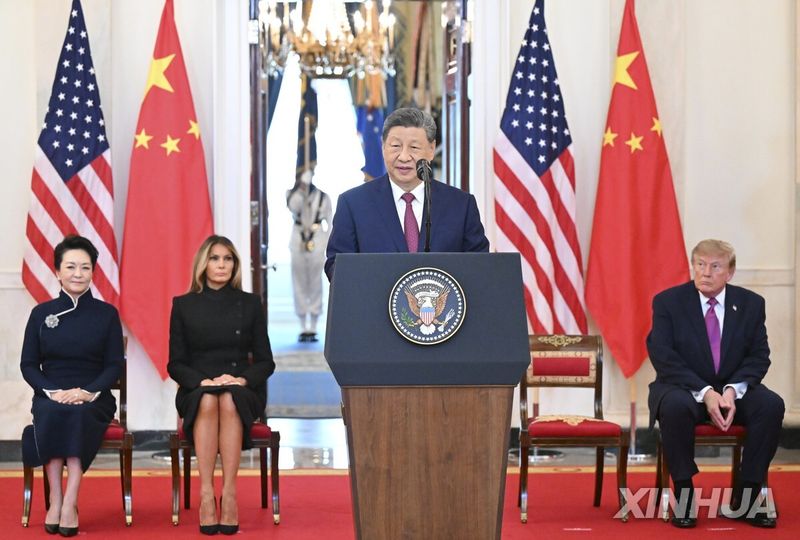
[Financial News] China has decided to include U.S. coal in the roughly $30 billion reciprocal tariff reduction package between China and the United States and pursue expanded imports.
As a follow-up to the two countries' previous agreement to include some agricultural products in the tariff reduction package, they also agreed to hold the first meeting of an agricultural working group this year to discuss agricultural market access and regulatory issues.
The Ministry of Commerce of the People's Republic of China (MOFCOM) announced this on the 28th in briefing materials on the results of the eighth round of economic and trade negotiations between China and the United States, held from the 20th to the 23rd in New York and Washington, D.C.
According to MOFCOM, the economic and trade teams of China and the United States agreed to include tariffs on coal imported by China from the United States in the $30 billion reciprocal tariff reduction package.
MOFCOM emphasized, "This measure will help expand China's imports of U.S. coal in 2027 and 2028," adding, "Imports of U.S. coal will supplement China's domestic coal market while providing stable revenue and jobs for the U.S. coal industry."
The two countries also finalized an agreement on reciprocal tariff reductions.
MOFCOM said the two sides agreed to reduce tariffs on approximately $30 billion worth of imports from each other's markets, with tariffs on about 90% of the products covered on each side to be lowered to most-favored-nation (MFN) tariff levels.
The specific products covered will be announced later.
In agriculture, the two sides agreed in principle last May to include some agricultural products in the tariff reduction package and have now decided to launch a specific consultative mechanism.
The two countries will establish an agricultural working group under the U.S.-China Trade Council, jointly led by the Ministry of Commerce of the People's Republic of China and the Office of the United States Trade Representative (USTR), and hold its first meeting before the end of this year.
MOFCOM said it would continue urging the U.S. side to address China's concerns in the agricultural sector through meetings of the working group.
The two sides also reached an agreement in principle in the financial services sector.
China will review applications from foreign financial-service institutions, including U.S.-based financial institutions, to conduct business and establish branches in China under relevant laws and regulations, and decide whether to approve them.
China said it also asked the U.S. side to provide Chinese financial institutions with a fair, transparent, and stable policy environment.
Regarding the U.S.-China Investment Council, the economic and trade teams of the two countries agreed to hold regular discussions on potential investment opportunities and investment barriers, enhance policy transparency and predictability, and address companies' reasonable concerns.
The two countries also exchanged views on expanding direct passenger flights between China and the United States and agreed to continue communicating on increasing flights and other related issues.
They also agreed to hold the next meeting of the artificial intelligence (AI) dialogue before the end of November.
Regarding the decision to extend the "trade truce," which was scheduled to end on November 10, by two months to January 10 next year, MOFCOM emphasized that the two sides would continue discussing the possibility of a further extension.
The Ministry of Commerce of the People's Republic of China said, "This extension provides time to review the implementation of the existing agreement and consider how to advance economic and trade relations in the future," adding, "We will seek a further extension through high-level economic and trade consultations by the end of the year."
[email protected] Lee Seok-woo, International Affairs Specialist Reporter