Criminal Justice System Overhaul D-4: Police to Add Personnel and Improve the 'Completeness' of Supplementary Investigations
- Input
- 2026-09-28 12:03:51
- Updated
- 2026-09-28 12:03:51
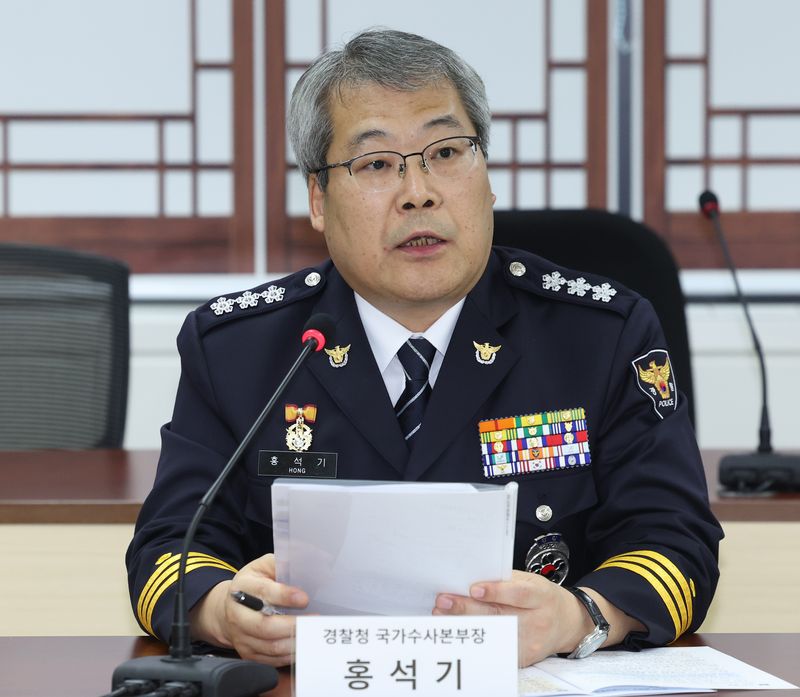
[Financial News] Four days before the revised Criminal Procedure Act of the Republic of Korea takes effect, police rejected concerns about an so-called 'police behemoth,' saying their changing role stems from an overhaul of the criminal justice system rather than an expansion of investigative powers. Police are also preparing for additional investigations, including 46 cases transferred by the comprehensive special prosecutor team and long-pending cases from prosecutors. They plan to deploy more than 2,100 additional investigators and establish a dedicated system for supplementary investigations.
Hong Seok-gi, chief of the National Office of Investigation, said at a regular press briefing on the 28th, "With the establishment of the Serious Crimes Investigation Agency, the scope of cases investigated solely by police has actually become narrower. Police have already operated under the system for five years since their independent investigative authority was expanded in 2021."
He emphasized, "What is changing this time is that prosecutors' direct authority to conduct supplementary investigations will be removed, and investigations must be completed through requests for supplementary investigations. The completeness of police investigations has therefore become even more important."
Police are also reinforcing their investigative workforce to align with the system overhaul. After assigning about 1,900 investigators to investigative departments in the first half of the year, they allocated more than 2,100 additional personnel to city and provincial police agencies in the second half. Personnel are being assigned to integrated investigation teams, women's and youth affairs investigation departments, and criminal affairs departments based on the number of cases received and requests for supplementary investigations. Training on the revised system and investigative practices is also underway for 38,000 investigators nationwide.
Police are also preparing for cases requiring additional investigations. They are reviewing the 46 cases transferred by the comprehensive special prosecutor team, including whether they overlap with existing cases as well as their complexity and investigative workload. Based on the review, police plan to decide soon whether to establish a separate special investigation headquarters or assign the cases to individual city and provincial police agencies.
Long-pending cases currently under investigation by prosecutors may also be transferred to the police or the Serious Crimes Investigation Agency once the 90-day grace period under the Criminal Procedure Act of the Republic of Korea ends. The exact number of cases to be transferred has not yet been determined. However, police plan to classify the cases with the Serious Crimes Investigation Agency as soon as they receive the case list from prosecutors.
Separately, work is underway to convert about 2,100 cases in which prosecutors obtained warrants and placed suspects on wanted lists into police wanted cases. As of the 21st, 1,570 cases had been transferred to the police.
Police are also establishing a dedicated system to review cases involving requests for supplementary investigations. For cases that are legally complex or require additional review, a dedicated department will examine the investigative direction before sending the cases to frontline investigation teams.
Hong said, "The police's responsibility does not end when a case is referred. We must actively cooperate wherever necessary through the indictment and trial processes. For cases that only the police can investigate, we will improve the thoroughness of investigations and handle them without causing inconvenience to the public."
Police are also developing new staffing criteria that reflect investigators' workloads and the difficulty of cases. Based on the findings of a study commissioned from the Police Policy Research Institute, they are reviewing the personnel and workload required for each case. To enhance investigative expertise, police plan to establish a competency-based personnel system that excludes unsuitable personnel from investigative departments and provides outstanding investigators with awards and personnel-related benefits.
Regarding concerns about insufficient checks on the excessive concentration of investigative powers, police said they would strengthen existing safeguards. External control procedures are already in place, including requests for reinvestigation of cases not referred for prosecution and objections filed by complainants. After the revised Criminal Procedure Act of the Republic of Korea takes effect, the number of requests for reinvestigation will also increase from once to up to twice.
[email protected] Lee Dong-hyuk Reporter