20 Billion Won Jeju Local Company Growth Fund Launched; At Least 2 Billion Won to Be Invested in Five or More Local Companies
- Input
- 2026-09-28 11:17:09
- Updated
- 2026-09-28 11:17:09
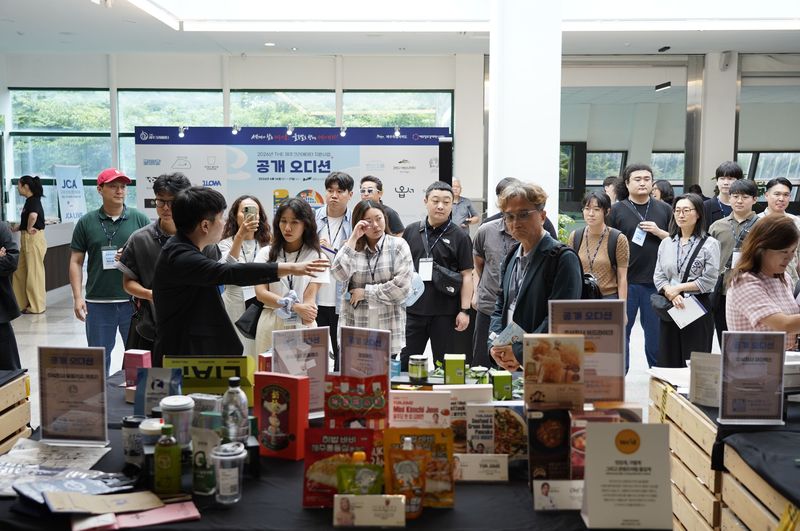
[Financial News, Jeju = Jung Yong-bok] A 20 billion won fund investing in the expansion of production, mass production of new products and securing export volumes for local companies in Jeju will begin operating at the end of this month. At least 2 billion won of the total fund will be mandatorily invested in five or more local companies in Jeju.
Jeju Special Self-Governing Province said on the 28th that it had selected BNK VENTURE CAPITAL as the manager of the Jeju Local Company Growth Fund, with full-scale investment scheduled to begin at the end of September.
The fund is worth 20 billion won. Jeju Special Self-Governing Province contributed 1 billion won, which was combined with money from the Agriculture, Forestry, Fisheries and Food Fund of Funds and private capital.
The key issue is the amount of investment that will actually reach Jeju-based companies. The fund manager must invest at least 2 billion won—twice Jeju Special Self-Governing Province's contribution—in five or more local companies in the province.
The mandatory investment in Jeju-based companies accounts for at least 10% of the fund's total 20 billion won. However, 2 billion won is only the minimum, so the actual amount invested in Jeju companies could increase depending on the investment targets and their growth potential.
The investment methods will not be limited to conventional equity acquisitions. Alongside investing directly in companies to acquire equity stakes, the fund will also pursue project investments by providing money for specific businesses and receiving a share of the revenue they generate.
For example, the fund could invest in an individual project if a Jeju company has developed a new product but lacks the money needed for mass production, or if it has secured an overseas export contract but does not have sufficient funds to produce the contracted volume.
Local companies broadly refer to businesses that grow based on a region's resources, culture, food and tourism content. After launching their businesses locally and building their brands, these companies often seek to expand their sales channels nationwide or overseas. Securing growth capital for production facilities and operating expenses is considered a key challenge in that process.
Jeju Special Self-Governing Province included project investments in the fund with these characteristics in mind. A traditional venture investment model, in which equity is invested after assessing a company's value, may not be sufficient to meet the temporary production-funding needs of local companies in the early stages of growth.
Jeju Special Self-Governing Province will also connect the fund with its existing programs for fostering local companies. After identifying new companies with strong competitive potential, it will link them to investments needed to expand production and their businesses based on their brand value and growth prospects. Even after the investment, the province plans to support product competitiveness and sales growth by connecting the companies with expanded online and offline sales channels and support programs operated by related organizations.
For the fund to lead to actual growth among local companies, follow-up results will be as important as the number of companies receiving investment. The industries and companies that receive the minimum 2 billion won in mandatory Jeju investment, as well as the resulting increases in sales, exports and employment, are expected to serve as benchmarks for evaluating the fund's performance.
Kang Ae-sook, director of the Economic Vitality Bureau of Jeju Special Self-Governing Province, said, "Growth capital must be supplied when local companies need it if they are to turn their products' potential into actual business expansion. We will link investment with business development and sales-channel support so that these companies can grow into representative companies of Jeju."
[email protected] Jung Yong-bok Reporter