Hallasan Trail Entry Cutoff Times to Move Up by Up to Three Hours as Winter Schedule Takes Effect in October
- Input
- 2026-09-28 11:11:23
- Updated
- 2026-09-28 11:11:23
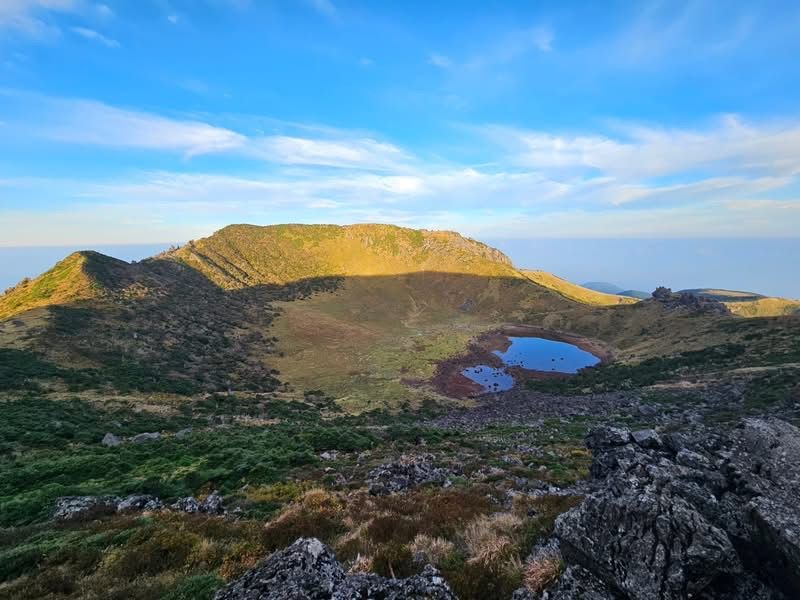
【Financial News Jeju=Jung Yong-bok, reporter】 Starting next month, the entry cutoff times for Hallasan's major trails will be moved up by as much as three hours compared with the summer season. Hikers planning a late trek should take note, as entry to the Seongpanak and Gwaneumsa courses leading to the summit of Baengnokdam Crater Lake will not be permitted after 11:30 a.m.
According to the Hallasan National Park Office of Jeju Special Self-Governing Province on the 28th, winter-season visiting hours will apply to all Hallasan trails from Oct. 1 through March 31 next year. The trail entry opening time will remain 5 a.m.
The biggest change will affect the Eorimok and Yeongsil Trails. During the summer season, hikers can enter until 3 p.m., but the cutoff will be moved up by three hours to noon during the winter season.
The entry cutoff time at the entrances to the Seongpanak and Gwaneumsa Trails, which lead to the summit of Baengnokdam Crater Lake, will be moved up by one hour, from 12:30 p.m. to 11:30 a.m. The cutoff for the Donnaeko Trail will also be moved up by one hour, from 11 a.m. to 10 a.m.
Hikers can enter the shorter Eoseungsaengak and Hallasan Seokgulam Trails until 5 p.m.
The time by which hikers must begin descending will also be earlier. At Baengnokdam East Ridge Summit, hikers must begin their descent by 1:30 p.m. The final descent time is 3:30 p.m. at Jindallaebat Field Shelter on the Seongpanak course and Samgakbong Shelter on the Gwaneumsa course.
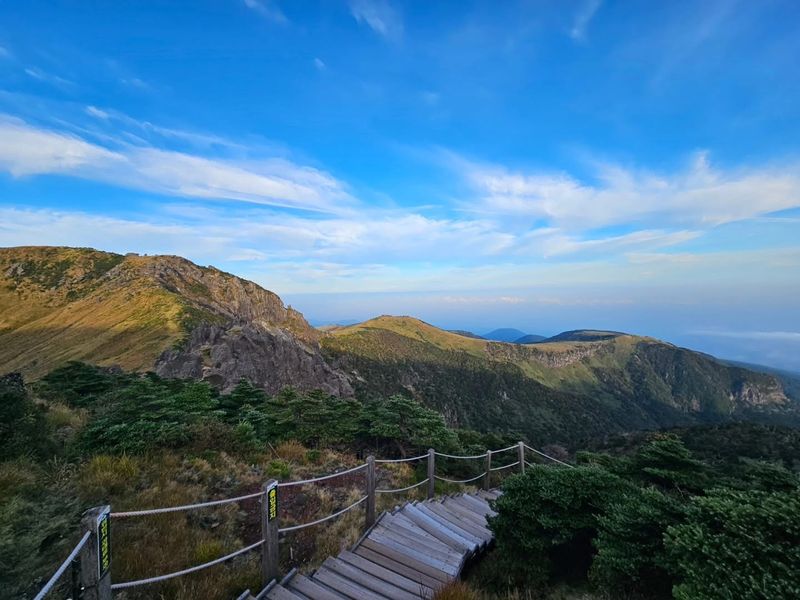
Hikers must begin descending from Witse Oreum by 3 p.m. and from Nambyeok Junction by 2 p.m. Compared with the summer season, the time for Witse Oreum is two hours earlier, while those for Baengnokdam East Ridge Summit, Jindallaebat Field Shelter, Samgakbong Shelter and Nambyeok Junction are each one hour earlier.
The entry cutoff time is the latest time visitors may pass through the entrance to a given trail, while the latest descent start time is when they must begin descending from designated points such as the summit or a shelter. Even if hikers entered a trail in the morning, they will not be allowed to continue toward the summit or upper sections after passing the control time at a designated point.
Winter hours are applied separately because weather conditions can change rapidly in Hallasan's high-altitude areas. After autumn begins, daylight hours become shorter and temperatures near the summit drop sharply. Strong winds combined with snow can also cause the perceived temperature to fall significantly. Descending after sunset increases the risk of accidents, including icy trails and hypothermia.
In particular, the Seongpanak and Gwaneumsa courses leading to Baengnokdam Crater Lake require long hikes, so visitors should check weather conditions and trail restrictions before setting out. They should also prepare winter gear, including warm clothing, crampons, spare clothes, hot water and emergency food.
Kim Hyungeun, head of the Jeju World Heritage Headquarters, said, "Winter has shorter daylight hours and severe weather changes, increasing the risk of safety accidents. Please follow the control times for each course and prepare sufficient cold-weather gear for a safe visit."
[email protected] Jung Yong-bok Reporter