"Run If You See a 'Black Stain' on Your Mattress"... Why You Should Never Scratch a Bedbug Bite [Health Issue]
- Input
- 2026-09-28 13:39:52
- Updated
- 2026-09-28 13:39:52
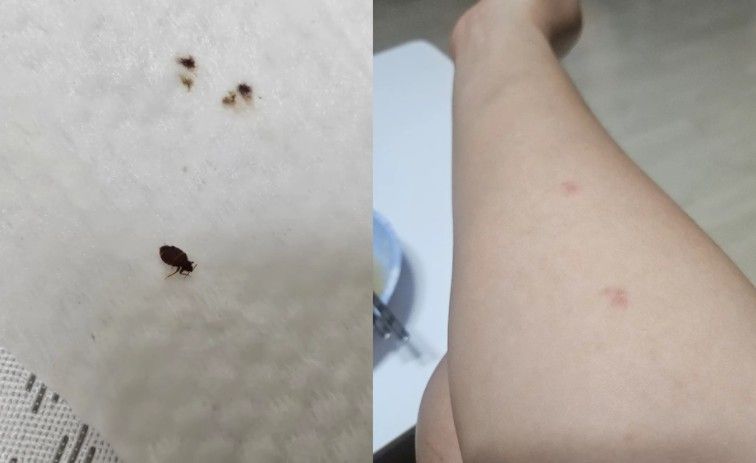

[Financial News] Recently, reports have poured in that bedbugs have multiplied in large numbers at a major jjimjilbang in Busan, a popular tourist destination in South Korea, and spread to visitors' homes. The development has raised serious concerns about public hygiene and personal health. Although bedbugs do not transmit infectious diseases, they are notorious pests that can disrupt daily life by causing extreme itching, secondary bacterial infections, and severe sleep disturbances.
Skin Care and Pest-Control Guidelines as Busan Jjimjilbang Faces a 'Massive Bedbug Outbreak'
A video released on the 26th by insect YouTuber Dahuk showed bedbugs inside a jjimjilbang in Busan. After inspecting the mattresses, gaps in the walls, and areas around the rest spaces, Dahuk reported finding eggs, nymphs, and adults together.
Dahuk said, "Even though it was early evening with all the lights on, bedbugs came out so easily when I looked around the mattresses and gaps in the walls," adding, "They are forming a colony with everything from eggs to nymphs and adults."
Black stains were also found in various places on the walls, including the wallpaper. Dahuk suspected they were bedbug droppings and said, "I've visited many infested sites, but this is the first time I've ever seen so much bedbug feces." Dahuk then warned, "They bite people and lay eggs in various places, while clinging to people's clothes and bags and being carried home, gradually spreading to new areas."
Earlier, on the 10th, a social media user reported finding bedbugs after traveling to Busan. The user claimed, "I visited that jjimjilbang on the 30th of last month and found bedbugs at home on the 7th of this month," adding, "Even though I had traveled abroad many times, I had never seen bedbugs before. But I brought them home after returning from my trip to Busan."
The user said they disinfected the bed with disinfectant, ran a bedding cleaner, and reported the jjimjilbang to the district office with jurisdiction over it.
Do not scratch. Wash the area with running water and soap, then apply a cold compress.
The most common symptoms of bedbug bites are intense pruritus, or itching, and wheals, which are red, hive-like swellings. When bedbugs feed on blood, they secrete saliva containing substances that prevent blood clotting and have anesthetic properties. These substances stimulate the body's immune response, causing itching that is far more intense and lasts much longer than the itching caused by mosquito bites.
Bedbugs move along the skin in search of blood vessels and typically bite three or four spots in succession, either in a straight line or a circular pattern. If the affected areas are scratched aggressively with the fingernails, the skin barrier can be damaged, leading to secondary skin infections caused by bacteria such as Staphylococcus, including cellulitis and impetigo. In severe cases, pigmentation or permanent scars may remain.
If you are bitten by bedbugs, do not scratch. Immediately wash the affected area with running water and soap to prevent secondary infection. When the itching is severe, use a cold compress to reduce swelling. Depending on the symptoms, it may also be safe to take an antihistamine or apply a thin layer of steroid ointment obtained from a pharmacy or prescribed by a doctor.
Shake out your suitcase at the entrance, and put your clothes through a high-heat dryer cycle.
The problem lies in bedbugs' ability to reproduce and hide. They hide and breed in mattress seams, gaps in walls, and corners of bedding at heavily used facilities such as jjimjilbangs and lodging establishments. They also frequently enter homes after hiding in travelers' clothes or the gaps in their suitcases.
The Korea Disease Control and Prevention Agency (KDCA) and dermatologists recommend checking walls and the corners of bedding for dark red, dot-shaped 'fecal traces' when using lodging facilities or public bathhouses.
After returning home from an outside lodging facility, do not bring your suitcase or the clothes you wore directly into the room. Shake them out at the entrance instead. Because bedbugs are highly vulnerable to heat, clothing and bedding suspected of being contaminated should be washed in water heated to at least 60°C and then treated in a high-heat dryer cycle for at least 30 minutes. This can completely kill the eggs and adult bedbugs.
[email protected] Moon Young-jin Reporter