Supreme Court: "Insufficient Proof That Supply Contract Information Was Used"... Former EcoPro BM Executive's Acquittal Finalized
- Input
- 2026-09-28 10:24:51
- Updated
- 2026-09-28 10:24:51
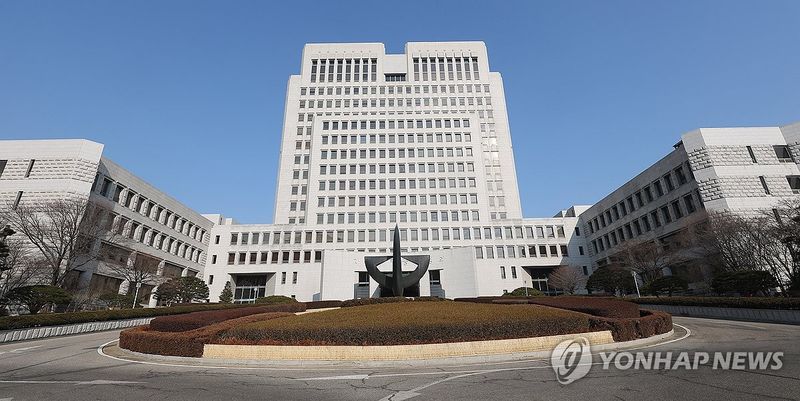
According to legal circles on the 28th, the Supreme Court Third Division, with Justice Oh Seok-joon presiding, dismissed both the prosecutor's appeal and the appeal filed by former EcoPro BM executive A, who was in charge of business planning, and former EcoPro HN CEO B. The appeals concerned charges of violating the Act on the Capital Market and Financial Investment Business.
A was accused of purchasing EcoPro BM shares before the disclosure of a second long-term supply contract for high-nickel cathode materials for electric vehicles and making approximately 1.40747 billion won in illicit gains. He was also charged with earning 221.95 million won by using information on EcoPro's second-quarter operating results.
B was indicted for purchasing shares before the July 2021 disclosure after learning of EcoPro HN's planned bonus issue, thereby making 78.05 million won, and for obtaining approximately 540.43 million won in illicit gains by using EcoPro BM's third-quarter sales information. The charges also included purchasing shares related to the bonus issue between late June and early July of the same year, as well as using information on EcoPro's third-quarter operating results.
The key issues at trial were whether a disclosure stating that the company was "considering proceeding with a bonus issue" meant the information had been made public to an unspecified number of people, and when the material nonpublic information should be deemed to have been created. The parties also disputed whether sales figures constituted material information that could significantly influence investment decisions.
The first and second trials reached different conclusions regarding A. The first trial found A guilty of using the supply contract information and sentenced him to 18 months in prison, a 2.2 billion won fine, and the forfeiture of approximately 1.40747 billion won. The appellate court, however, overturned that part of the ruling and acquitted him, saying it was difficult to find that the prosecution had proven beyond a reasonable doubt that A had obtained the illicit gains alleged in the indictment by purchasing shares using material nonpublic information related to the supply contract.
The two courts reached the same conclusion regarding B. The first trial found him guilty of the charges related to the bonus issue and sales figures, sentencing him to 18 months in prison, a 1.5 billion won fine, and the forfeiture of approximately 618.48 million won. The appellate court upheld the ruling, finding that the information became public when the specific schedule and ratio for the bonus issue were finalized and a second disclosure was made. A first disclosure merely stating that the matter was under consideration was insufficient to make the information public, the court said.
The Supreme Court rejected both appeals. Regarding the prosecutor's appeal, it stated, "There was no error in the lower court's ruling that either exceeded the bounds of the principle of free evaluation of evidence by violating the rules of logic and experience without conducting the necessary examination, or misunderstood the legal principles governing the establishment of an offense under the Act on the Capital Market and Financial Investment Business."
Regarding B's appeal, the Supreme Court also found no error in the lower court's understanding of the legal principles concerning the concept of material nonpublic information, its use, the identity of the charges, or the exercise of the right to seek clarification. It ruled that B's claim that his purchase of shares on July 7, 2021, did not constitute the use of material nonpublic information could not serve as a valid ground for appeal because he had not raised it during the appellate trial and asserted it for the first time before the Supreme Court.
[email protected] Kim Dong-gyu Reporter