[Exclusive] Police overhaul rally response, reexamine role of dialogue police officers
- Input
- 2026-09-28 14:40:06
- Updated
- 2026-09-28 14:40:06
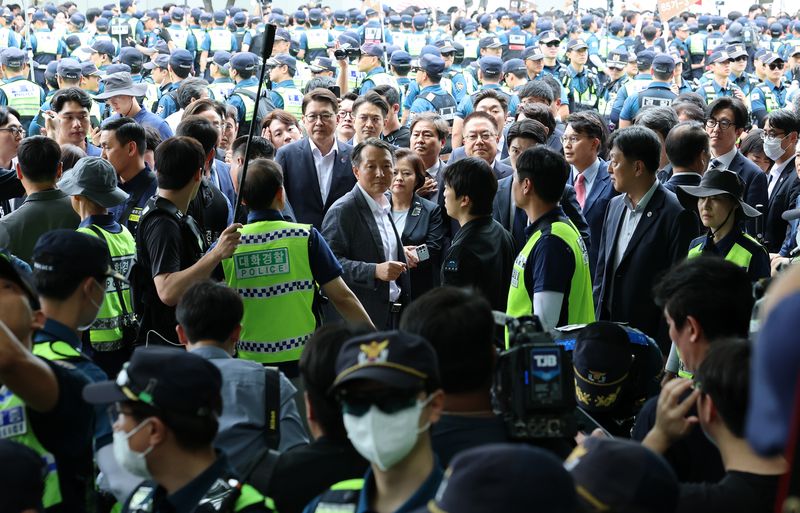
According to Financial News reporting on the 28th, the police plan to establish evaluation criteria to assess the roles and capabilities of dialogue police officers in line with the shift in the rally-response paradigm.
Dialogue police officers are responsible for communication between the police and rally organizers and participants at protest sites. They exchange information with organizers before and after rallies and mediate conflicts and safety issues at the scene. The police first piloted the dialogue-police system at a rally in downtown Seoul on August 15, 2018, before expanding it nationwide on October 5 of the same year.
The police will not stop at evaluating the effectiveness of dialogue police officers; they also plan to reconsider the roles required in a changing rally environment. To objectively assess their effectiveness, the police will examine not only internal figures, such as the number of deployments, but also the views of officers in the field, rally organizers and participants, and ordinary citizens. In particular, they are expected to consider how to define the role and communication methods of dialogue police officers at long-running rallies around Olympic Park in Songpa District, where there is no clear representative.
In a report issued in January, the police said they would shift their response to rallies and demonstrations from preemptive measures centered on riot police units to a precinct-led approach that supports organizers' voluntary maintenance of order. The aim is to minimize riot police deployments and ensure safety while supporting organizers' self-regulation, in light of changes in rally patterns, including the recent decline in illegal and violent demonstrations.
In Seoul, the new response approach was piloted beginning February 19. According to the police, the number of rallies held from February through April was similar to that of previous years, but riot police deployments fell by approximately 62% from the same period a year earlier. No violent or illegal rallies were recorded during the same period.
The change in the response approach has also increased the need to evaluate the roles and activities of dialogue police officers. During downtown rallies on March 1, the police reduced the size of the riot police deployment by approximately 50% compared with similar rallies in the past and deployed 127 dialogue police officers. The rally organizers also deployed 480 personnel to maintain order. At the long-running rallies around Olympic Park, dialogue police officers mediated friction between participants and checked for potential hazards.
Frontline police officers are also becoming increasingly interested in the rallies and demonstrations that have continued for extended periods. Some officers are reportedly keeping a close eye on developments by checking rallies in other areas regardless of jurisdiction and monitoring conditions at the sites. As rallies continue, the size and composition of participants change depending on the time of day, prompting greater concern about how to respond in the field.
The police plan to establish criteria and capability-assessment methods for evaluating the performance of dialogue police officers, while also examining cooperation among police, organizers, participants, and citizens. A police official said, "As the approach to rally response has changed, there is also a need to reassess what role dialogue police officers should play in the field," adding, "We plan to establish a direction by considering opinions from the field and other input."
[email protected] Seo Ji-yoon Reporter