Major Countries Increase Hydrogen Investment, but South Korea Cuts Support, Moving Out of Step
- Input
- 2026-09-28 09:35:38
- Updated
- 2026-09-28 09:35:38
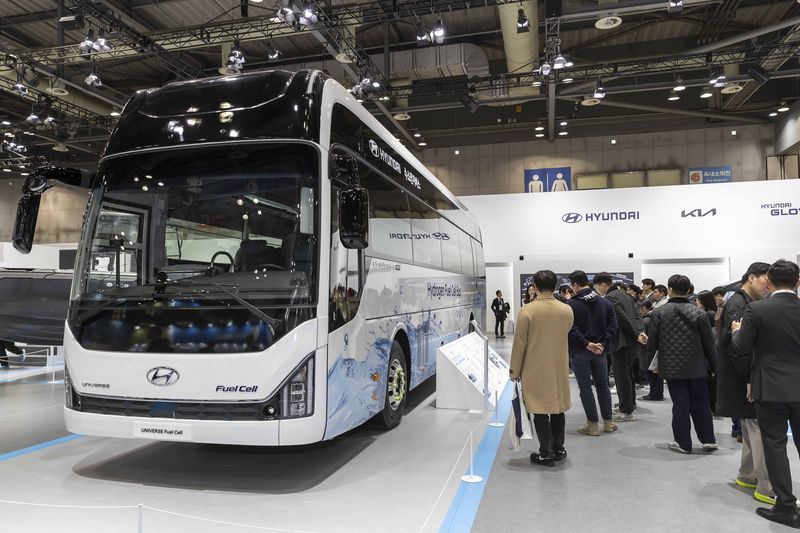
[Financial News] The war in the Middle East has exposed vulnerabilities in energy supply chains, putting hydrogen in the spotlight as an alternative for strengthening energy security. Major countries around the world are working to build hydrogen supply chains through long-term subsidies, but concerns are growing in South Korea as it reduces related budget allocations and power-generation auction volumes. With the country's dependence on energy imports exceeding 90%, experts say it must maintain policy consistency to protect the investment foundation of its hydrogen industry.
■ Major Countries Expand Hydrogen Investment with Long-Term Support
According to the "Global Hydrogen Review 2026," published by the International Energy Agency (IEA) on the 28th, the number of countries with national hydrogen strategies rose from 23 in 2021 to 66 this year. Countries are also moving beyond strategy development toward implementation through institutional reforms and increased fiscal investment.The IEA analyzed that hydrogen can strengthen energy security by reducing dependence on fossil fuel imports. Unlike oil and gas, whose deposits are concentrated in specific regions, hydrogen can be produced domestically using renewable energy, electricity generated by nuclear power, and organic waste.
The agency concluded that countries with high energy import shares and dependence on specific countries, such as South Korea, Germany, and Japan, can replace part of their imports with renewable-energy-based hydrogen and diversify their supply chains. South Korea's dependence on energy imports stood at 93.7% as of 2024.
Major countries are supporting efforts to improve the economic viability of the early-stage market. China has launched a hydrogen pilot program that provides up to 8 billion yuan over four years to five city clusters. Japan will invest 3 trillion yen to cover the price gap between low-carbon hydrogen and fossil fuels for up to 15 years. The European Union also provides subsidies to renewable hydrogen producers for up to 10 years.
According to the "Global Hydrogen Compass 2026," published by the Hydrogen Council this month, cumulative committed investment in clean hydrogen has exceeded $130 billion. More than 570 projects have passed final investment decisions (FIDs), while operating production capacity has reached approximately 1.7 million tons per year, up 70% from the previous year.
■ Investment Uncertainty Grows as South Korea Cuts Subsidies
By contrast, South Korea is set to reduce its support. According to the Ministry of Climate, Energy and Environment's proposed 2027 budget, subsidies for hydrogen electric vehicles will fall by approximately 23%, from 576.2 billion won to 445.7 billion won. Subsidies for hydrogen refueling stations will decrease by approximately 37%, from 189.7 billion won to 119.7 billion won.Tax support will also be reduced. The individual consumption tax reduction for passenger hydrogen electric vehicles will be phased down starting next year and is scheduled to end at the end of 2028. The acquisition tax reduction is set to expire at the end of next year. The VAT exemption for hydrogen electric buses used on urban, village, and rural and fishing-village routes is also scheduled to end at the close of this year.
Demand for power generation has also become more uncertain. The auction volume for general hydrogen power generation fell from 1,300 GWh to 930 GWh, while the volume for clean hydrogen power generation stood at just 500 GWh. Unlike the previous practice of announcing several years' worth of auction volumes in advance, this year only the 2026 volume was finalized, with next year's volume to be determined next year.
For companies that need to make upfront investments in production facilities and supply chains, this has made it more difficult to formulate business plans. The Hydrogen Council also emphasized that stable and consistent policy implementation is important for the growth of the hydrogen ecosystem.
An industry official said, "Hydrogen is an industry that requires long-term investment in production facilities and refueling infrastructure. The government should present medium- and long-term deployment targets and power-generation auction volumes and maintain policy consistency so companies can draw up investment plans."
[email protected] Kim Dong-ho Reporter