The United States' Short- and Long-Term Treasury Yield Spread Narrows Sharply—A Recession Signal?
- Input
- 2026-09-28 09:08:37
- Updated
- 2026-09-28 09:08:37
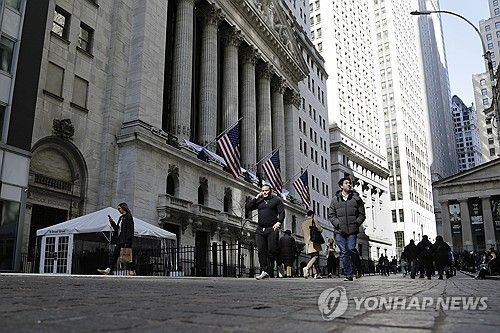
[Financial News] Last week, the spread between short- and long-term Treasury yields in the United States narrowed to its lowest level in a year and a half, prompting speculation that an inversion could be emerging.
Last week, the yield spread between the two-year and 10-year U.S. Treasury notes narrowed to bp (1 bp = 0.01 percentage point). It was the narrowest spread since early 2025.
This narrowing spread increases the possibility that the 10-year yield will fall below the two-year yield.
The development has drawn particular attention because yield-curve inversions have historically been regarded as a strong signal of recession. The United States has experienced eight recessions since the 1960s, and each was preceded by an inversion.
However, some observers say the indicator's predictive power has weakened recently. In 2022, several yield curves inverted and most experts predicted a recession within 12 months, but no recession actually occurred.
Fed Rate Hikes, Economic Contraction
Nevertheless, Bloomberg interpreted an inversion—or a move toward one—as essentially a signal that the bond market sees the Fed's rate hikes as powerful enough to weaken the economy. Such a development could have broad repercussions across financial markets, particularly the stock market, which is near record highs.
Jack Griffith, head of macroeconomic strategy at CreditSights, said, "An inversion or sharp flattening of the yield curve between two-year and 10-year Treasuries raises doubts about the previous perception that the economy is very strong, and these concerns are being reflected in the bond market."
Since 2024, global yield curves have been moving toward normalization as investors demand higher yields as compensation for locking up their money for longer periods.
As recently as last month, long-term yields had surged as confidence in the Fed's ability to curb inflation waned under Chair Kevin Warsh. But after the Fed raised rates in September, the situation reversed. Short-term Treasury yields, which are most sensitive to the Fed's policy rate decisions, rose much faster than long-term yields.
Investors are betting that the Fed will raise rates at least three times over the next year.
Some believe that substantial rate hikes have already been priced into the market, making a yield-curve inversion unlikely in the near term.
Gennadiy Goldberg, head of U.S. rates strategy at TD Securities, said, "The market has already priced in expectations for substantial Fed rate hikes, sharply flattening the yield curve in recent weeks," and predicted, "Given this, the yield curve is likely to move toward steepening again over the next few weeks."
"Yield-Curve Inversion, a 'Policy Mistake Signal,' Some Argue"
A sharp economic contraction is also difficult to anticipate.
Economists have recently raised their forecasts for third-quarter growth in the United States, citing resilient demand.
Others, however, believe the flattening trend will continue.
Ed Al-Hussaini, a portfolio manager at Columbia Threadneedle, said he was positioning for an inversion in the yield curves between two-year and 10-year Treasuries and between five-year and 30-year Treasuries within the next six months as the Fed pursues a tightening policy to cool the economy and inflation.
He said, "The clearest signal that monetary policy is becoming more restrictive is the flattening of the yield curve, and ultimately, an inversion."
Jamie Patton, global co-head of rates at TCW Group, said, "A yield-curve inversion would be 'a signal that the Fed is making a policy mistake,'" adding, "The Fed is raising rates too much and will have to cut them substantially in the future. Therefore, a yield-curve inversion is not a healthy signal for the macroeconomy."
[email protected] Lee Seok-woo, International Affairs Specialist Reporter