Trump Asked Xi Jinping Whether He Wanted to Buy U.S. Weapons... Questions Over Whether Remark Was Genuine
- Input
- 2026-09-28 09:49:14
- Updated
- 2026-09-28 09:49:14
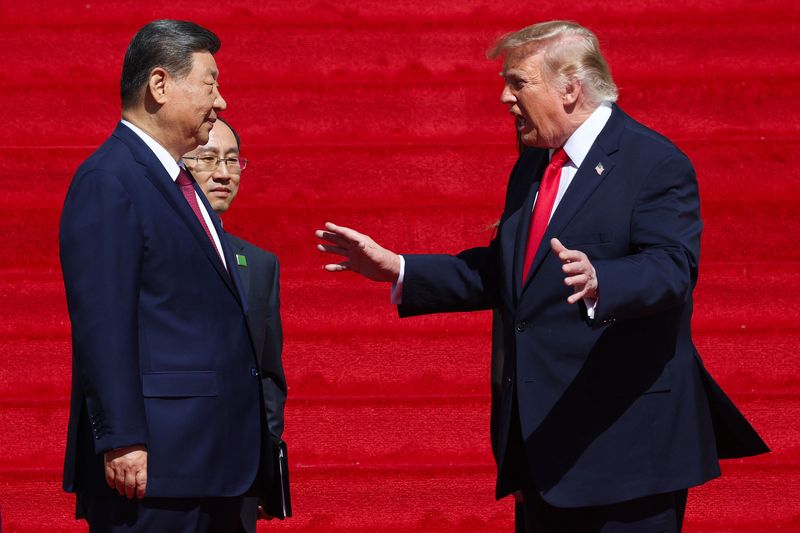
[Financial News] U.S. President Donald Trump, who drew China's ire by approving a large-scale arms sale to Taiwan, asked Chinese President Xi Jinping whether he wanted to buy U.S. weapons. A U.S. government official said the United States had no plans to sell weapons to China.
David Perdue, the U.S. ambassador to China, said no in a Fox News interview on the 27th (local time) when asked whether the United States was delaying arms exports to Taiwan out of consideration for Xi Jinping. Perdue said Trump "has continued to say, 'We are selling weapons to other countries around the world.'" He added, "The president even asked Xi Jinping whether he wanted to buy U.S. weapons someday."
An anonymous U.S. government official told The Wall Street Journal (WSJ) that the government currently had no plans to sell weapons to China. Another official emphasized that U.S. law prohibits arms exports to China and that there were no plans or related offers to sell weapons to the country.
Perdue did not specify whether the offer was made during Trump's visit to China in May or at the U.S.-China summit held in the United States on the 24th of this month.
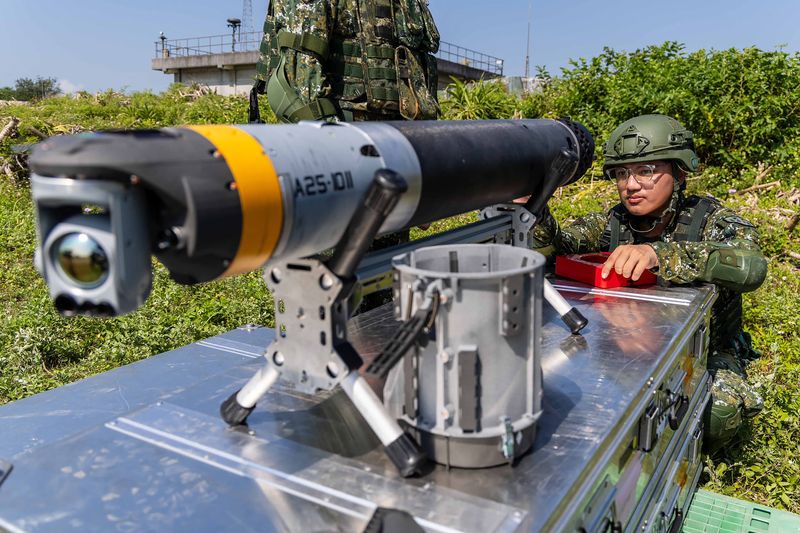
Trump, who had focused on overseas arms sales since his first administration, continued the same policy after his second administration began last year. In the Fox News interview, Perdue emphasized that the United States approved $11.1 billion (about 15 trillion won) in arms sales to Taiwan last December, marking the largest such sale ever. That amount exceeded the $8.4 billion approved by former U.S. President Joe Biden over four years.
The Chinese government immediately protested the sale, which included U.S. drones such as the Altius-600M and ballistic missiles. A Chinese Foreign Ministry spokesperson warned in a statement last December, "If the United States uses force to help Taiwan achieve independence, it will ultimately burn itself."
The Trump administration went further by drawing up a plan to sell Taiwan $14 billion (about 19 trillion won) worth of weapons. The U.S. Congress had already completed a preliminary review in January.
However, the Trump administration is delaying approval of the plan. Hung Cao, the acting U.S. secretary of the Navy, said at a congressional hearing in May that the process for selling weapons to Taiwan was "temporarily suspended" because of procurement problems stemming from the war with Iran. After returning from a visit to China in May, Trump said he had discussed arms sales to Taiwan with Xi Jinping during the flight home. He said the matter was "on hold" and that "the matter depended on China." In an interview on the 27th, Perdue rejected the claim that Trump had delayed approval because of China, saying Trump "takes a harder line on Taiwan than anyone I have ever seen."
Dennis Wilder, who served as the White House's Asia adviser under the administration of former U.S. President George W. Bush, told The Financial Times (FT) on the 27th, "Trump may have been taunting Xi to remind him of the superiority of U.S. weapons." He added, "However, the remark itself is dangerous."
Zack Cooper, a senior researcher at the American Enterprise Institute (AEI), said, "Trump's offer to sell weapons to China is extremely reckless. Xi probably wanted to say, 'I'll buy one of every type.'" He criticized the move, saying, "It is shocking that Trump delayed approval of arms sales to Taiwan while offering China the opportunity to buy weapons."
[email protected] Park Jong-won Reporter