North Gyeongsang Province Expands Support for International Students from Recruitment to Settlement
- Input
- 2026-09-28 09:11:59
- Updated
- 2026-09-28 09:11:59
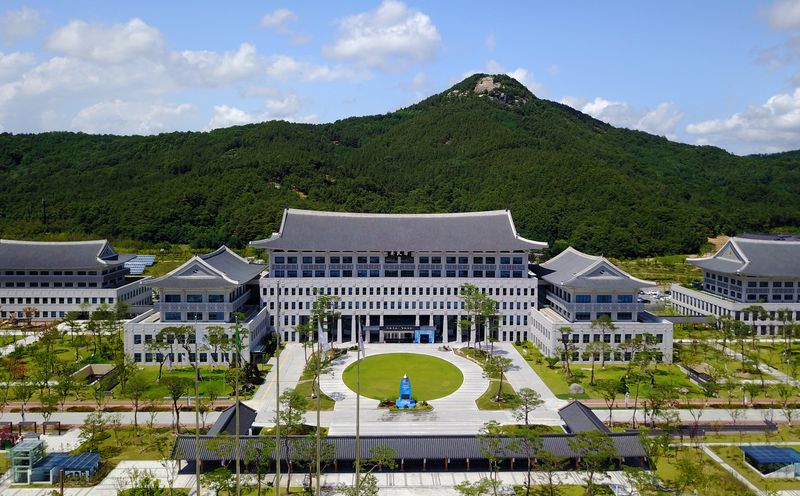
【Financial News, Andong = Kim Jang-uk】 North Gyeongsang Province is stepping up efforts to expand support for international students, from recruitment through education, employment and settlement.
According to the province, the number of international students enrolled in degree programs rose 49.1% in one year. This was twice the national average and the highest growth rate among the 17 metropolitan cities and provinces.
Lee Sang-su, director of the Local Government Strategy Bureau, emphasized, "The fact that we recorded the nation's highest growth in degree-course enrollment while also increasing the number of international students means that we have not neglected either recruitment or quality. We will continue moving toward our goal of attracting 30,000 students, while focusing our policy capabilities on creating a system in which international students study, work and live in North Gyeongsang Province."
According to the 2026 Basic Education Statistics released by the Ministry of Education and the Korean Educational Development Institute (KEDI), North Gyeongsang Province has 22,456 international students. The figure increased by 6,347, or 39.4%, from 16,109 the previous year. The province ranks fourth nationwide after Seoul, Gyeonggi Province and Busan, and has the largest number of international students outside the capital region after Busan.
Among them, the number of students enrolled in degree programs rose 49.1%, from 12,566 the previous year to 18,736 this year. Bachelor’s programs account for 14,333 students, while master’s and doctoral programs, which are centered on research personnel, have 4,403 students, up 51.8% from 201 students the previous year.
Park Sun-young, director of the University Policy Division, stated, "This is the result of increasing the number of recruits while structuring the program around degree courses. Degree-course students are the most likely to move into employment and settlement after graduation, so it is encouraging that more students are choosing North Gyeongsang Province with the goal of earning a degree rather than for short-term language study."
In particular, the province invested considerable effort from the recruitment stage. It operates Gyeongbuk Academy programs in five countries—Vietnam, Uzbekistan, Mongolia, Kyrgyzstan and Indonesia—to teach Korean and Gyeongbuk studies locally in advance and identify prospective international students. The province also holds overseas recruitment briefings and supports exchanges among universities every year.
After admission, students continue their Korean and Gyeongbuk studies through the K-Social Program. The Gyeongbuk-style Invitational Scholarship Program (K-GKS) provides scholarships covering all semesters to international students pursuing master's and doctoral degrees in the natural sciences and engineering, on the condition that they settle in North Gyeongsang Province for three years after graduation.
The province has also broadened pathways to employment and settlement. Its Industry Campus Practical Internship System, now in its second year, connects international students with companies in the province, while the F-2-R Regional Specialized Visa has been linked to cities and counties in areas facing population decline. Under the province-wide visa scheme, employment requirements for Designated Activities under the E-7 visa were eased to create a pathway for extended stay.
[email protected] Kim Jang-uk Reporter