MOLIT Calls for Applications from Four Universities to Train AI and Smart City Talent... At Least Two Outside the Seoul Metropolitan Area
- Input
- 2026-09-28 11:00:00
- Updated
- 2026-09-28 11:00:00
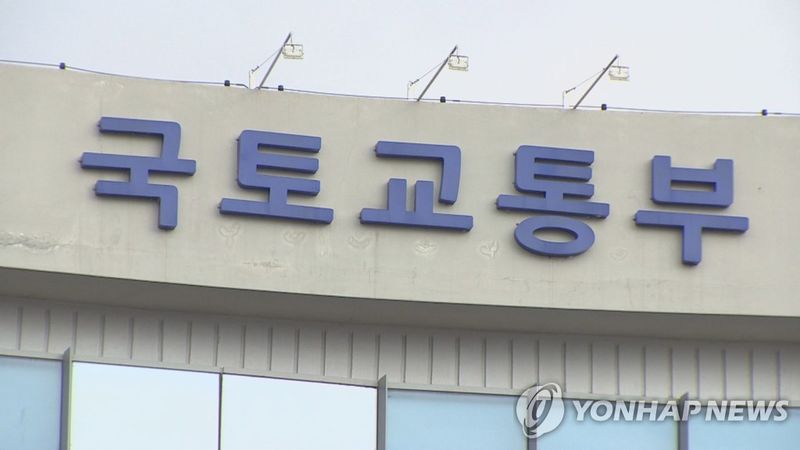
[Financial News] The Ministry of Land, Infrastructure and Transport (MOLIT) will select four universities to train practical specialists in artificial intelligence (AI) and Smart City technologies.
MOLIT announced that it will launch a call for applications on the 29th for four-year universities nationwide under the AI and Smart City Innovation Talent Development Program (2026–2028). The initiative aims to foster key talent capable of strengthening the competitiveness of future cities and driving innovation in the urban industry by combining AI with Smart City technologies.
Since 2009, MOLIT has operated specialized Smart City education programs in three phases. Through last year, the programs produced 10,091 specialists and generated 825 papers and 3,195 academic presentations. The fourth phase will shift its focus toward training practical specialists with integrated AI and Smart City capabilities, reflecting the expansion of AI technology across all areas of urban development.
Eligible applicants are four-year universities that operate departments related to AI or Smart Cities, or that can establish and operate relevant curricula in partnership with two or more departments. Four universities will be selected in total, with at least two places reserved for universities outside the Seoul metropolitan area to foster regional talent. However, the number of selected universities may be reduced—or none may be selected—if no eligible non-metropolitan universities apply or if they fail to meet the criteria.
Selected universities will receive support for scholarships, domestic and international internships, and industry-academia cooperation costs. Each university will receive KRW 280 million this year, while funding from 2027 onward will vary according to the results of annual evaluations. Universities will also be required to cover 25% of the program costs to strengthen their accountability and participation.
The curricula must include courses that apply AI technology to various Smart City fields, accounting for at least 30% of the total coursework. Universities must also operate programs linked to companies and local governments, as well as domestic and international internships and international cooperation programs, to establish a field-oriented education system. Applications will be accepted by the Korea Agency for Infrastructure Technology Advancement from the 28th through the 29th of next month. Detailed information will be available in the announcement on the MOLIT website starting on the 29th.
An MOLIT official said, "AI City is a new model of the future city that advances the Smart City to the next level and is an important field that will determine the competitiveness of countries and cities. Through this program, we will foster convergence talent equipped not only with specialized knowledge but also with the practical skills required in industry, thereby supporting South Korea in securing the initiative in the global AI City competition."
[email protected] Jung Kyung-soo Reporter