"A 25-pyeong jeonse deposit in Gireum-dong is KRW 800 million, while tenants in Mapo pay KRW 1 billion to rent"
- Input
- 2026-09-28 07:59:59
- Updated
- 2026-09-28 07:59:59
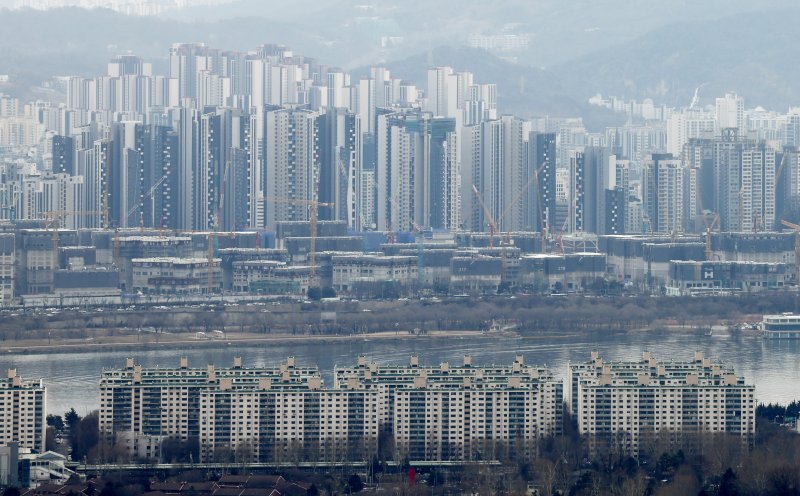
[Financial News] Jeonse deposits for apartments in Seoul's outlying areas are rising sharply. Jeonse deposits for 59-square-meter apartments in Eunpyeong District, Dongdaemun District and Seongbuk District have successively surpassed KRW 800 million, while those in Mapo District have approached KRW 1 billion.
Jeonse listings disappear in Seoul, pushing up prices
According to the actual transaction price disclosure system of the Ministry of Land, Infrastructure and Transport (MOLIT) on the 28th, a 59-square-meter unit at 'DMC Central Xi' in Jeungsan-dong, Eunpyeong District, was leased under jeonse for KRW 800 million last month. That was KRW 50 million higher than the KRW 750 million paid for a unit of the same size in February, marking a KRW 50 million increase in six months.
The trend is appearing across Seoul's outlying areas. A 59-square-meter unit at 'Raemian Gireum Centerpiece' in Gireum-dong, Seongbuk District, was leased for KRW 830 million on the 19th of last month, up KRW 180 million from January. The jeonse deposit for an 84-square-meter unit at 'Lotte Castle Classia' in Gireum-dong also surpassed KRW 1.1 billion last month.
A 59-square-meter unit at 'e-Pyeonhansesang Cheonggye Central Foret' in Yongdu-dong, Dongdaemun District, was leased under jeonse for KRW 820 million, exceeding the KRW 800 million mark after rising KRW 70 million from its January transaction price of KRW 750 million. A 59-square-meter unit at 'e-Pyeonhansesang Mapo River Park' in Yonggang-dong, Mapo District, was leased under jeonse for KRW 997.5 million last month, up KRW 197.5 million from KRW 800 million in March.
Experts: "Impact of owner-occupancy requirements and regulations on multiple-home owners"
Experts say the decline in jeonse listings is one of the main factors driving up jeonse deposits. They explain that the supply of jeonse units has fallen as more homeowners either occupy their properties themselves or refrain from putting them on the rental market because of owner-occupancy requirements and regulations on multiple-home owners. In particular, when jeonse listings are scarce, existing units are more likely to be priced higher, which can push up jeonse deposits.
Seo Jin-hyeong, a professor in the Department of Real Estate Legal Affairs at Kwangwoon University, said, "The decline in jeonse supply resulting from policies focused on one home per household, owner-occupancy requirements and regulations on multiple-home owners is also a cause of rising jeonse deposits. As home prices in Seoul have risen sharply, genuine end-user buyers are moving to relatively lower-priced areas that fit their purchasing power. Demand is becoming concentrated in areas outside Gangnam, and jeonse deposits are rising along with it."
The possibility that this instability in the jeonse market will continue for the time being has also been raised. Seo added, "Tenants unable to afford higher jeonse deposits may move to monthly rentals, which could push up monthly rents as well."
[email protected] Kim Hee-seon Reporter