Iran's Foreign Minister: "We Are Prepared to Face War While Also Ready for Diplomacy and Negotiations"
- Input
- 2026-09-28 06:14:25
- Updated
- 2026-09-28 06:14:25
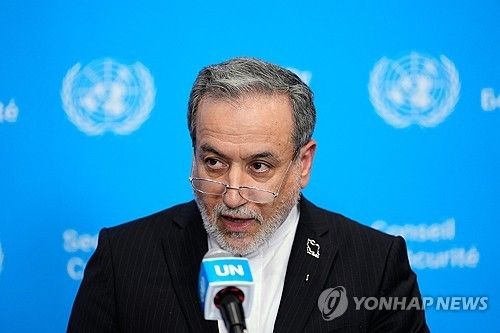
[Financial News] Abbas Araghchi, Iran's foreign minister, said on the 27th (local time) that, regarding the so-called 'seven-day plan' he proposed to reopen the Strait of Hormuz, "I heard that United States President Donald Trump would reject it, but we are still waiting for an official response through a mediator."
In an interview with the National Broadcasting Company (NBC) that day, Abbas Araghchi said, "If they reject it without legitimate reason, that is their fault."
He blamed the United States, saying that efforts to negotiate with it had repeatedly failed because of US attacks on Iran. "But I still believe that no effort for peace should be missed, which is why I am continuing diplomatic efforts," he said.
Abbas Araghchi also said, "We do not care about the United States' midterm elections, nor do we care about anything else. The only thing we care about is our national interest. As we are prepared to face any challenge, we are also ready to negotiate."
He added, "We will firmly confront any attack against us, even if an apocalyptic war comes. At the same time, we are prepared for diplomacy. A very reasonable proposal is on the table."
Earlier, during his attendance at the UN General Assembly in New York, Abbas Araghchi proposed reopening the Strait of Hormuz within seven days if conditions were met, including an end to US hostile actions on all fronts.
However, President Trump told reporters at the White House the previous day, "I rejected their proposal."
Asked in the interview whether he trusted President Trump, Abbas Araghchi avoided a direct answer, saying, "We trust ourselves."
When asked why Iran had enriched uranium to about 60%, he replied, "Enriching uranium to 60% is not illegal. It remains within the framework of the Treaty on the Non-Proliferation of Nuclear Weapons (NPT) and our peaceful program. We enriched it for specific purposes, such as medical applications."
Regarding Ayatollah Mojtaba Khamenei, Iran's supreme leader, who took power last March but remains in hiding, Abbas Araghchi said he has not appeared because of US assassination threats. "He is in complete control. We receive his statements, orders and views, and a national consensus is being reached in the decision-making process," he said.
[email protected] Lee Seok-woo, international affairs specialist Reporter