Switzerland Rejects 'Strengthening Neutrality' Referendum; 70% Vote No
- Input
- 2026-09-28 06:01:12
- Updated
- 2026-09-28 06:01:12
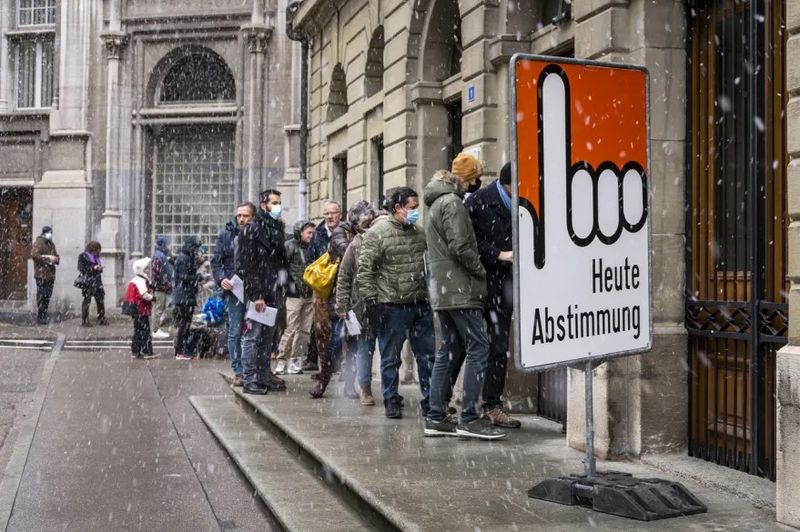
[Financial News] A constitutional amendment to 'strengthen neutrality' in neutral Switzerland was rejected in a referendum. The amendment would have strictly limited cooperation with military and defense alliances as well as participation in unilateral international sanctions.
According to Agence France-Presse (AFP) and other outlets on the 27th (local time), 29.85% voted in favor of the 'strengthening neutrality' referendum held in Switzerland that day, while 70.15% voted against it. Voter turnout was 47.06%.
The referendum centered on enshrining permanent military neutrality in the Constitution and strictly limiting the government's authority to interpret and implement neutrality at its discretion depending on circumstances.
Amendment: "Military cooperation with NATO and other alliances would be allowed only if Switzerland itself came under direct attack"
Had the amendment passed, the Swiss government would have been completely barred from imposing unilateral sanctions over armed conflicts or other reasons unless they were backed by a United Nations Security Council (UNSC) resolution. Cooperation with military and defense alliances such as the North Atlantic Treaty Organization (NATO) would also have been allowed only if Switzerland itself came under direct attack.
Swiss Foreign Minister Ignazio Cassis told reporters after the results were announced, "This result is not a vote against neutrality. Switzerland was neutral yesterday, is neutral today and will remain so in the future."
Switzerland has been recognized as an internationally neutral country since the end of the Napoleonic Wars in 1815. However, its Constitution does not specify how the government must implement that neutrality.
Successive Swiss governments have interpreted neutrality flexibly in response to international circumstances. Switzerland has not joined NATO or the European Union (EU), while taking part on a limited basis in NATO's Partnership for Peace and international peacekeeping missions.
The right-wing Swiss People's Party (SVP), which supports strengthening neutrality, argues that Switzerland's traditional neutral position has been undermined by its participation in sanctions against Russia over the invasion of Ukraine. The campaign in favor of the amendment used the slogan, 'Against war, for neutrality.'
Since the war in Ukraine began in February 2022, the Swiss government has adopted most of the 20 sanctions packages against Russia announced by the EU. This marked a significant departure from Switzerland's decision not to participate in sanctions when Russia annexed Ukraine's Crimea in 2014. Some critics accused Switzerland of taking Ukraine's side and abandoning its principle of neutrality.
Federal government and majority of parties opposed the amendment
By contrast, the Swiss federal government and most political parties had strongly opposed the constitutional amendment.
In a recent television debate, Cassis said, "Neutrality has always been applied with a certain degree of flexibility," adding, "Neutrality does not mean indifference."
After the exit polls were released that day, Green Party lawmaker Sibel Arslan said, "Voters realized what the SVP wanted: to isolate Switzerland internationally and evade responsibility even when international law is being trampled."
Opposition to the amendment also led in several opinion polls conducted before the referendum. A poll by Swiss Broadcasting Corporation (SRG) and gfs.bern found that 34% supported the amendment, while 63% opposed it.
Fabio Wasserfallen, a professor of European politics at the University of Bern, told Reuters, "Swiss voters like neutrality, but this means they also approve of the way the current government implements it."
[email protected] Lee Seok-woo, international affairs correspondent Reporter