U.S. Ambassador to China: "Trump Is Firm on Taiwan; U.S. Position Remains Unchanged"
- Input
- 2026-09-28 05:37:16
- Updated
- 2026-09-28 05:37:16
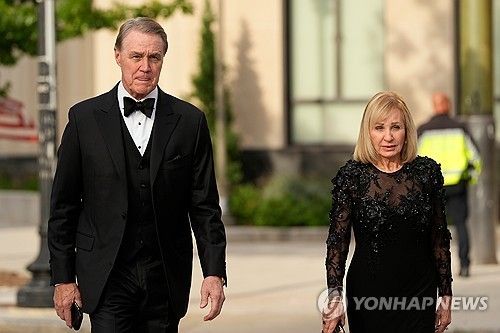
[Financial News] David Perdue, the U.S. ambassador to China, stressed on the 27th (local time) that the U.S. position on Taiwan had not changed.
In an interview with Fox News that day, Perdue said, "President Donald Trump is firmer on Taiwan than anyone I have ever seen. He has made it very clear that the 'one-China policy' has not changed."
Perdue added, "We support the Taiwan Relations Act, the Three Joint Communiqués and the Six Assurances." He was referring to the frameworks for providing Taiwan with defensive weapons. He continued, "Our support has not changed. We do not support Taiwan independence, and we do not support coercion."
Perdue said President Trump had also told Xi Jinping that the United States sells weapons not only to Taiwan but around the world, and asked whether China would buy U.S. weapons.
Perdue's remarks appeared to reaffirm Washington's longstanding position in response to China's demand that the United States change its stance on Taiwan: Washington does not support Taiwan independence but does provide Taiwan with defensive weapons. They were also interpreted as an effort to ease concerns that President Trump might accommodate Xi Jinping's demands in some way.
U.S. Ambassador to China Moves to Ease Concerns Over Demand to Oppose Taiwan Independence
Chinese President Xi Jinping pressed President Trump during their White House meeting on the 24th to "maintain the correct position of opposing Taiwan independence and handle the Taiwan issue with caution."
He was pressing Washington to change its established position of not "supporting" Taiwan independence to one of "opposing" it. Analysts viewed this as a further escalation of pressure compared with Trump's visit to China in May.
Alexander Tah-ray Yui, Taiwan's representative in the United States, also appeared on CBS that day and stressed that Washington's policy toward Taiwan had not changed.
Yui noted, "During Xi Jinping's visit, the United States made it very clear that its position on Taiwan had not changed. Even before the U.S.-China summit, Secretary of State Marco Rubio met with the foreign ministers of Japan and South Korea at the United Nations General Assembly in New York, expressing support for stability in the Taiwan Strait, opposition to coercion, and Taiwan's meaningful participation in international organizations."
Yui said President Trump's statement that the United States and China fought together during World War II was correct, but pointed out that China at the time was the Republic of China.
Yui: The China That Fought Alongside the U.S. Was the Republic of China
He elaborated, "The Communist government did not exist until 1949. The People's Republic of China (PRC) was established in 1949, and a few years later it fought U.S. forces in the Korean War and killed American soldiers."
Both President Trump and Xi Jinping emphasized at the meeting that the United States and China had cooperated during World War II. However, it was the Republic of China, which later moved to Taiwan, that cooperated with the United States, while the PRC was instead an "enemy" that fought the United States during the Korean War.
When asked whether President Trump and Taiwan President Lai Ching-te had spoken by phone, Yui only said that the United States and Taiwan communicate openly and regularly. A call between Trump and Lai could significantly provoke China.+
[email protected] Lee Seok-woo, International Affairs Specialist Reporter