Trump Rejects 'Iran Proposal' Outright, Says "More Talks This Week" ... Leaves Door Open to Dialogue
- Input
- 2026-09-28 01:07:18
- Updated
- 2026-09-28 01:07:18
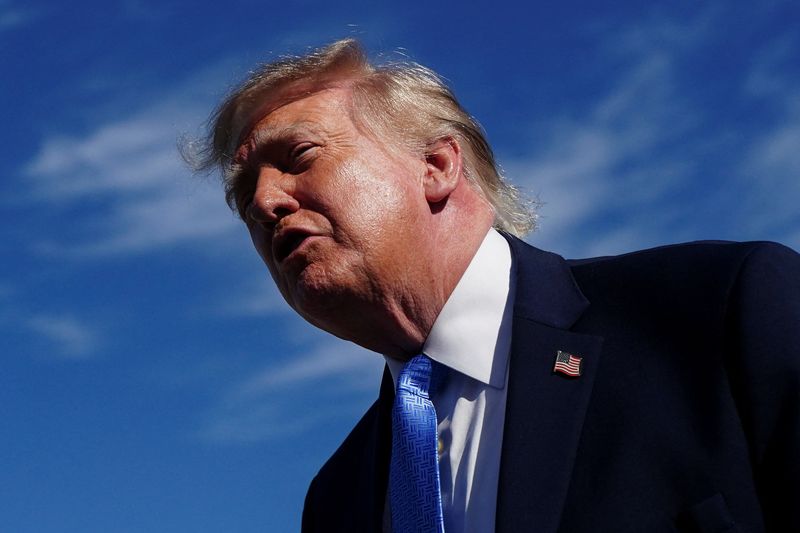
[Financial News] U.S. President Donald Trump signaled the possibility of resuming dialogue with Iran just one day after rejecting its negotiating proposal, which was conditioned on reopening the Strait of Hormuz.
In an interview with Axios on the 27th, President Trump said, "This week, I expect the U.S. negotiating team to hold additional talks with Iran," adding, "They want to make a deal." Middle East sources predicted that indirect talks between the two sides could resume as early as the 28th.
A day earlier, on the 26th, President Trump made clear that he was rejecting Iran's "seven-day plan," saying, "I like making deals too, but I can't accept that proposal." Iran's offer called for the United States to lift its maritime blockade, remove sanctions on oil sales, and restore regional ceasefires. In return, Iran would reopen the Strait of Hormuz within a week and resume nuclear talks.
The Trump administration has demanded that Iran first agree to nuclear-related concessions, dismissing its current proposal as "an excessive demand that might have been agreed to a year ago." Iranian Foreign Minister Abbas Araghchi said in an NBC interview, "I heard that President Trump rejected it, but we are waiting for an official response through the mediating countries."
Behind-the-scenes contacts between the two countries have accelerated around the United Nations General Assembly held recently in New York. On the 22nd, Special Envoy Steve Witkoff and President Trump's son-in-law Jared Kushner held indirect talks with an Iranian delegation led by Foreign Minister Abbas Araghchi through Qatar's mediation. Iran's "seven-day plan" was delivered to the U.S. side during the meeting.
The decision to reject Iran's proposal while maintaining shuttle diplomacy is being interpreted as a political calculation ahead of the November midterm elections. In his Axios interview, when asked about resuming attacks on Iran, President Trump said, "I am always thinking about it," while emphasizing that more than 20 million barrels of oil—the largest volume since the war with Iran began over the weekend—had passed through the Strait of Hormuz.
With an oil price surge caused by a prolonged war posing the biggest threat to the election, the strategy is seen as an attempt to avoid an actual escalation of tensions and manage the situation through negotiations while keeping military options available as leverage.
[email protected] Park Ji-hyun Reporter