[Editorial] In a Chaotic Global Economy, National Interests Must Come Before Partisan Interests
- Input
- 2026-09-27 18:20:39
- Updated
- 2026-09-27 18:20:39
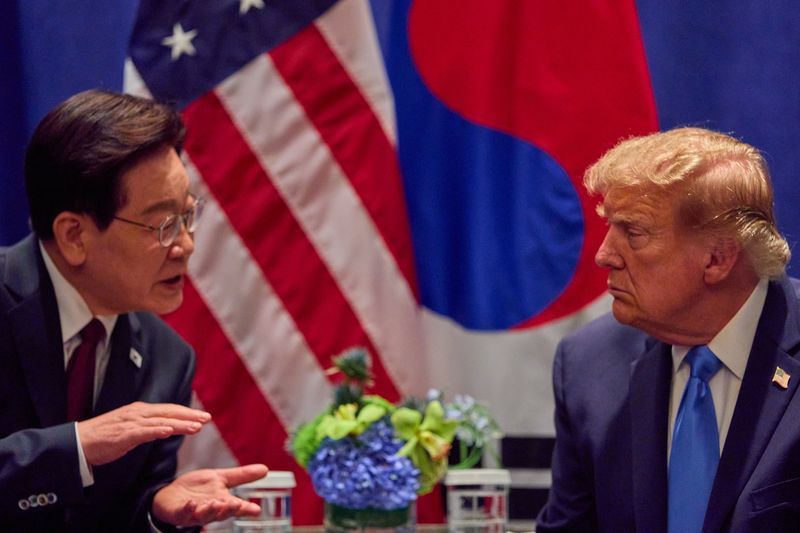
However, the transactional relationship between South Korea and the United States should be viewed as only just beginning. The tug-of-war over investment terms between the two countries so far has been merely a preview. Numerous hurdles lie ahead before the actual investment destinations are finalized, funds are disbursed, and additional investments are decided. Tasks requiring further consultations also remain, including nuclear power plant construction and liquefied natural gas (LNG) development in Alaska.
Above all, the issue of “commercial rationality,” which will serve as a criterion for selecting investment targets, is likely to remain a subject of debate between the two countries. Because the term itself is unfamiliar and ambiguous, the United States could interpret it in a self-serving manner at any time and seek to advance its own interests.
The South Korea–United States summit has laid the groundwork for negotiations, but we must not forget that a great deal remains to be done. For example, details from a recent confidential National Assembly briefing on the progress of investment in the U.S. were illegally recorded and circulated outside the legislature. If ongoing negotiations between the two countries are exposed, the country's leverage in external negotiations will decline. The more a matter involves the national interest and security, the more firmly the principle of confidentiality must be upheld.
A decline in our negotiating leverage is not merely a national issue. It concerns taxpayers' money and is directly linked to investment by South Korean companies. Accordingly, the National Assembly's oversight function and the government's duty to explain are more important than ever.
The global economy, diplomacy, and security are passing through a chaotic period with no predetermined answers. Even the United States and China, which were waging an all-out trade war until yesterday, moved to manage their relationship at the recent Washington, D.C. summit by reaffirming their “strategic stable relationship.” The two countries, which agreed earlier this year to mutual tariff cuts worth $30 billion each and to launch a trade committee, are speeding up follow-up implementation. Although they continue their tense rivalry over core interests such as Taiwan and artificial intelligence (AI), they are seeking practical points of convergence where tangible interests are involved. Even yesterday's adversaries are showing that they know how to moderate their pace when national interests are at stake.
This is a chaotic era in which the landscape changes by the day. Domestic unity must come first, particularly on matters involving security and the economy. Political leaders must face the reality that while they are mired in partisan logic and obstructing one another, the resulting harm falls entirely on the people and businesses. When the national interest is at stake, there is no distinction between the ruling and opposition parties. In an unpredictable global order, the path to survival is to unite our domestic strength and build greater self-reliance in economic security.