Too Expensive and Boring? Even Foreigners Are Falling for Japan's 'Rejuvenated Kabuki' [Global Report]
- Input
- 2026-09-27 18:07:36
- Updated
- 2026-09-27 18:07:36
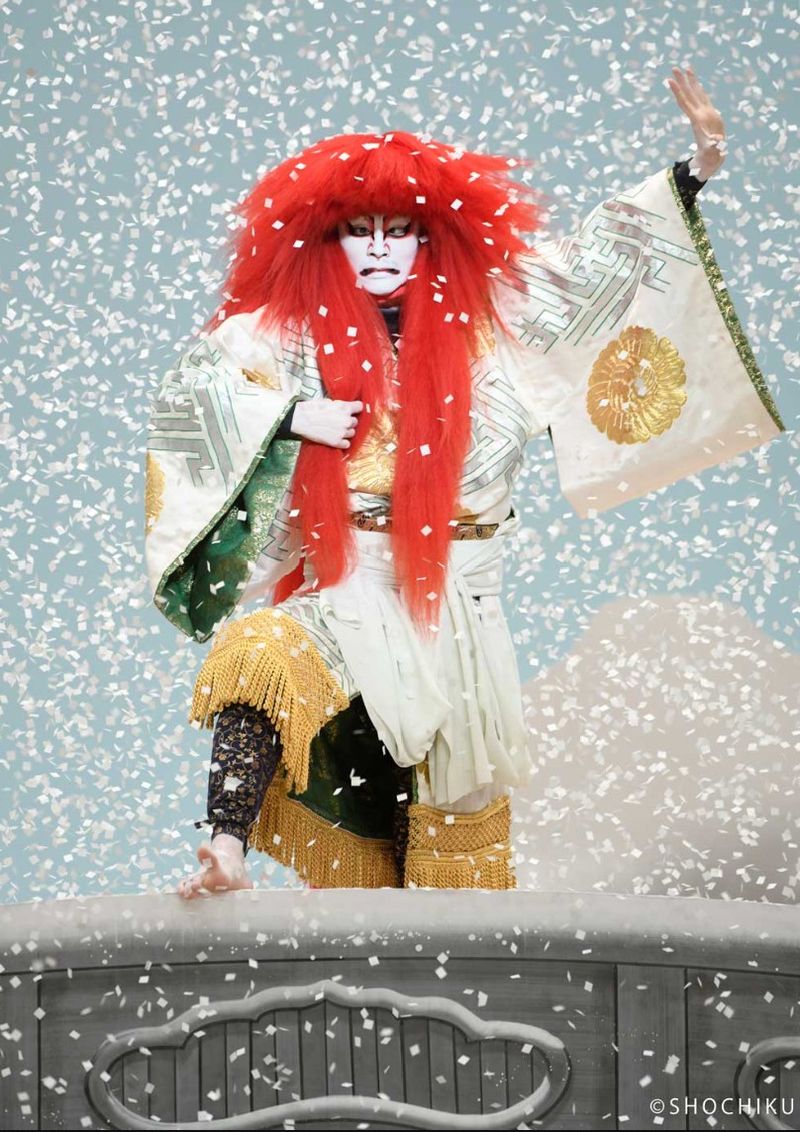
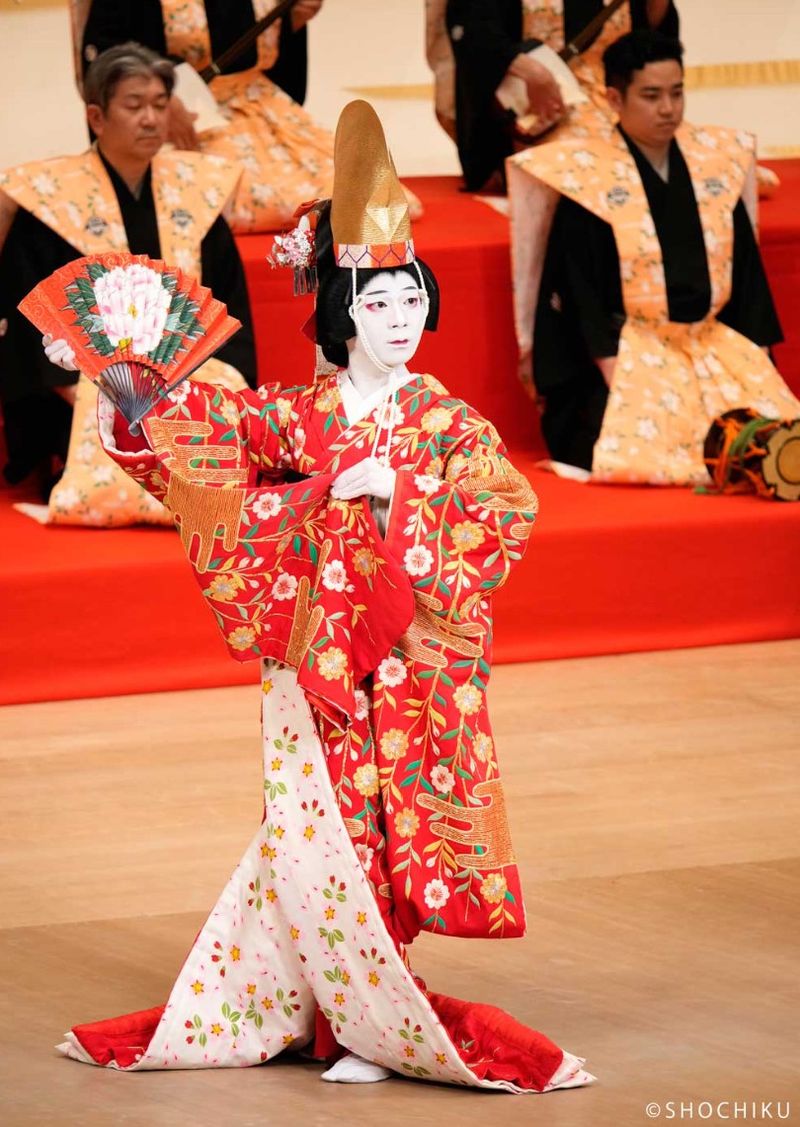
Foreign audience members sitting nearby alternated between watching the stage and a portable electronic device displaying an English script and scene descriptions. They burst out laughing whenever the doll comically imitated Jingoro's movements and applauded enthusiastically when the dance ended.
This was a scene from the Kabuki production "Kyo Ningyo," which took the stage at 7:02 p.m. on the 17th at the Kabukiza Theatre in Tokyo's Ginza district. The roughly 30-minute comedy uses dance and acting to portray the commotion between the carver Jingoro and the doll he created.
New audiences are discovering Japan's Kabuki, a traditional theater that has continued for more than 400 years. Interest has grown after director Lee Sang-il's film Kokuho, released last year, became the highest-grossing Japanese live-action film of all time. Shochiku, the producer and promoter of Kabuki performances, is lowering the barriers for young people and foreign visitors. Without changing the performances themselves, it is attracting new audiences by reducing price and language barriers while once again exploring overseas markets.
■ New audiences double after Kokuho's success
Kabuki is Japan's signature traditional theater, combining singing, dancing and acting, with all roles performed by male actors. Although it has a history of more than 400 years and is designated as UNESCO Intangible Cultural Heritage of Humanity, its archaic dialogue and long performances can be barriers for first-time audiences.
The film Kokuho was one factor that brought in new audiences. Released last June, Kokuho was first unveiled to the world at Directors' Fortnight at the 78th Cannes Film Festival. It went on to enjoy a long theatrical run, surpassing 20 billion yen (approximately 172.8 billion won) in box-office revenue and becoming the highest-grossing Japanese live-action film of all time.
About 25,000 people visited the Kabukiza Theatre for the first time from July through December last year. The number of new visitors, which had previously stood at about 2,000 per month, nearly doubled to an average of around 4,000 per month. Including other theaters, the number of new visitors during the same period exceeded 30,000.
However, not all of this can be attributed to the "Kokuho effect." Large-scale hits also continued last year, including a succession performance for Onoe Kikugoro VIII commemorating Shochiku's 130th anniversary and performances of Kabuki's three major classics. Manabu Senda, manager of the Kabukiza Theatre, explained in a March interview with Toyo Keizai Online, "As these major hits were drawing attention to Kabuki, Kokuho made the buzz even bigger."
To turn the increased interest into actual attendance, Shochiku is lowering price and language barriers. It operates "Hitomaku-miseki," seats for viewing a single act of a long performance, and began selling remaining same-day seats at half price to people aged 25 and under last October. The program was expanded to people aged 30 and under starting in June this year.
English commentary is also available for foreign audiences. The portable electronic devices used by audience members that day displayed an English script and scene descriptions in sync with the performance. The aim is to lower price and language barriers while maintaining the traditional form of the performances themselves.
Actors in their 20s who are expected to lead the next generation of Japanese Kabuki will take the stage in London next year. They are Ichikawa Somegoro VIII and Onoe Tatsunosuke III, whom we met that day at "Take," a rehearsal room on the fourth floor of the Kabukiza Theatre. Born in 2005 and 2006, respectively, the two will make their overseas stage debuts together in London next January.
Somegoro said he has no plans to change Kabuki itself for the overseas performance. "For now, I have no plans to make any special changes just because it is overseas," he said. "I am looking forward to seeing how audiences respond when we show them the Kabuki we usually perform, just as it is."
■ "If it's boring, they don't come back": London after 17 years
The actors also have high expectations about meeting overseas audiences in person. Tatsunosuke said, "Even if Japanese audiences think a performance is boring, they continue to remain in their seats, but overseas audiences sometimes do not return to their seats after the intermission if they find it boring."
He added, "When they enjoy it, they respond with tremendous applause. As an actor, I appreciate that they clearly show when something is entertaining and when it is not."
Shochiku is expanding its overseas performances. In April, it held a European tour introducing Kabuki in Paris, Rome and Cologne. The next stop is the United Kingdom. On January 30 and 31 next year, Somegoro and Tatsunosuke will present three works — "Fuji Musume," "Yukino Shakkyō" and "Meoto Dojoji" — at Sadler's Wells Theatre in London. This will be Shochiku's first London Kabuki performance in about 17 years, since 2010. It will also be the first overseas stage appearance for both actors.
[email protected] Seo Hye-jin Reporter