Gonghang-ro District-Unit Plan Revised; Restrictions on Apartment Housing Eased
- Input
- 2026-09-28 08:28:46
- Updated
- 2026-09-28 08:28:46
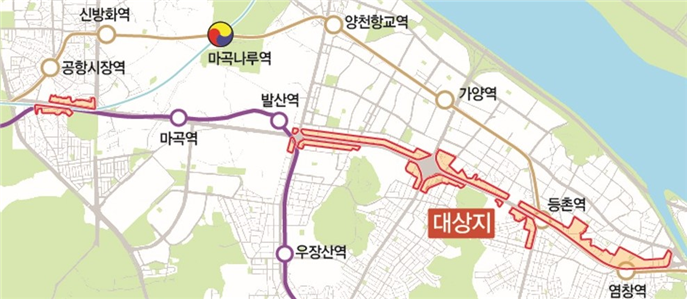
The Seoul Metropolitan Government announced on the 27th that it had approved, with revisions, the proposed change to the Gonghang-ro district-unit plan at the 16th Urban Planning and Architecture Joint Committee meeting held on the 22nd.
The target area is a transportation corridor connecting Yeouido and Gimpo International Airport. It has developed commercial and business functions serving areas around Seoul Subway Lines 5 and 9 and surrounding residential areas. The plan is being revised in response to changing development conditions in the surrounding area, including the recent Magok Urban Development Project, Gangseo Miracle Medi Special Zone and Daejang–Hongdae Line.
First, the framework of the existing district-unit plan areas divided by the creation of the Magok Urban Development District will be reorganized. The plan calls for stronger links with adjacent areas, including the Gangseo Miracle Medi Special Zone and Deungchon Housing Site Development District, and the application of consistent management standards.
Building-use regulations will also be revised. In commercial areas, the non-residential-use ratio requirement separately established under the district-unit plan will be removed, and the relevant ordinance will apply. The non-residential-use ratio previously applied to residential areas will be abolished.
Apartment housing will be removed from the list of prohibited uses. This will allow the Seoul Metropolitan Government to reflect changing housing demand and local conditions in development plans.
Existing development-lot plans and joint-development designations will also be revised in light of actual development feasibility and land ownership relationships. Plans with low feasibility will be adjusted, while landowners will be encouraged to pursue joint development voluntarily.
The Seoul Metropolitan Government’s overhaul of the district-unit plan floor area ratio system will also be incorporated. Standards and allowable floor area ratios by zoning category, along with the incentive structure, will be revised. Relevant provisions will be established so that projects introducing cultural facilities and other amenities lacking in the area can receive benefits.
A shaded pedestrian environment plan will be applied around Gonghang-daero and subway stations. Trees, landscaping and shade structures will be installed mainly along stretches and at intersections and subway entrances where shade is insufficient, reducing pedestrians’ exposure to sunlight and creating a continuous shaded environment.
[email protected] Choi Ga-young Reporter