Final day of 30.93 million-person travel rush: Jeju Airport to handle 513 departures and arrivals
- Input
- 2026-09-27 14:42:58
- Updated
- 2026-09-27 14:42:58
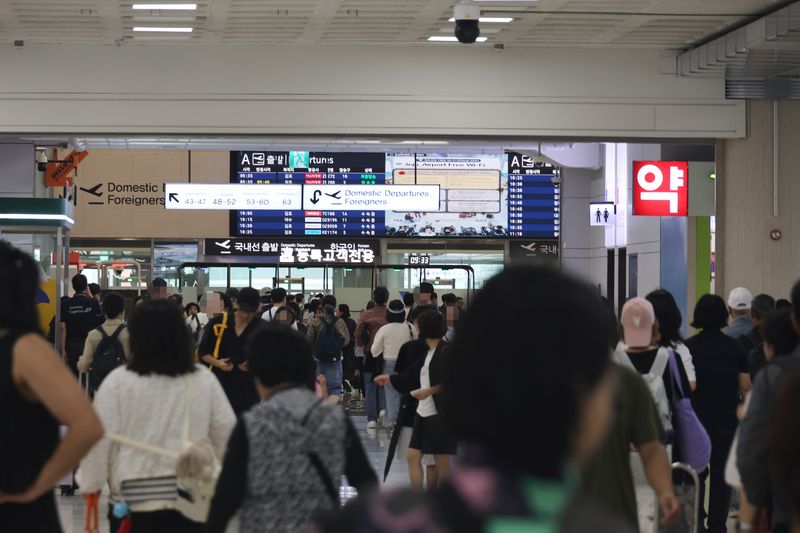
【Financial News, Jeju — Jung Yong-bok, Reporter】A total of 513 flights are scheduled to depart from and arrive at Jeju International Airport on the 27th, the final day of the Chuseok special transportation measures period, during which 30.93 million people are expected to travel nationwide. Despite a 16% year-on-year decline in seat capacity on the Gimpo–Jeju route in September, travel through Jeju's air routes continued until the end of the holiday.
According to a count of Korea Airports Corporation (KAC) data on Jeju Airport's departure and arrival information, excluding duplicate codeshare flights, there were 513 flights on the 27th: 257 departures and 256 arrivals.
The final update for the 26th, counted in the same manner, listed 503 flights—251 departures and 252 arrivals. The number of listed departures and arrivals on the 27th increased by 10 flights, or about 2%, from the previous day.
This year's Chuseok air routes to Jeju are accommodating holiday demand amid reduced domestic flight capacity compared with last year.
The Jeju Tourism Association counted 1,105 domestic flights bound for Jeju from the 23rd through the 27th, down by 38 flights, or 3.32%, from the 1,143 flights during the same Chuseok holiday period last year.
Domestic seat capacity stood at 208,865, down by 15,449 seats, or 6.89%, from last year's 224,314. Since the decline in seat capacity was roughly twice as large as the reduction in the number of flights, not only the number of flights but also the seating capacity of the aircraft deployed is a factor determining access to Jeju by air.
The decline in supply is even larger on a monthly basis. OAG data showed that scheduled seat capacity on the Gimpo–Jeju route in September totaled 1,084,920 seats in both directions, down 16% from the same month last year.
The overall domestic seat supply planned for Jeju Airport during this year's summer flight season is also 17,153,208, which is 651,394 seats, or 4%, fewer than the 17,804,602 seats actually supplied last year.
Jeju Island is not connected to other regions by land, so a reduction in flight supply directly affects not only tourist travel but also residents' right to mobility. Since travelers leaving Jeju to return home and those returning to the island are also heading to the airport on the final day of the holiday, the actual level of congestion must be assessed alongside the number of departing passengers, aircraft load factors and possible delays.
Maritime routes are currently operating without any route under operational restrictions. According to the 27th's operating information from the Korea Maritime Transportation Safety Authority, the operating plan for routes under Jeju's jurisdiction covers three routes and eight vessels. All three routes were classified as operating normally; six vessels were operating and two were listed as not operating.
The government designated the five-day period from the 23rd through the 27th as the Chuseok special transportation measures period and forecast that 30.93 million people would travel nationwide. Although the peak of the nationwide return-trip congestion has passed, aircraft and passenger ferries are effectively the main means of transportation between Jeju and other regions. This is why actual flight operations, available seats, delays and cancellations must be checked through the final day of the holiday.
[email protected] Jung Yong-bok Reporter