Oh Se-hoon: "Lee has gone from an 'actual-residence obsession' to an 'actual-cultivation obsession'"... Criticizes comprehensive survey of all farmland
- Input
- 2026-09-27 14:28:50
- Updated
- 2026-09-27 14:28:50
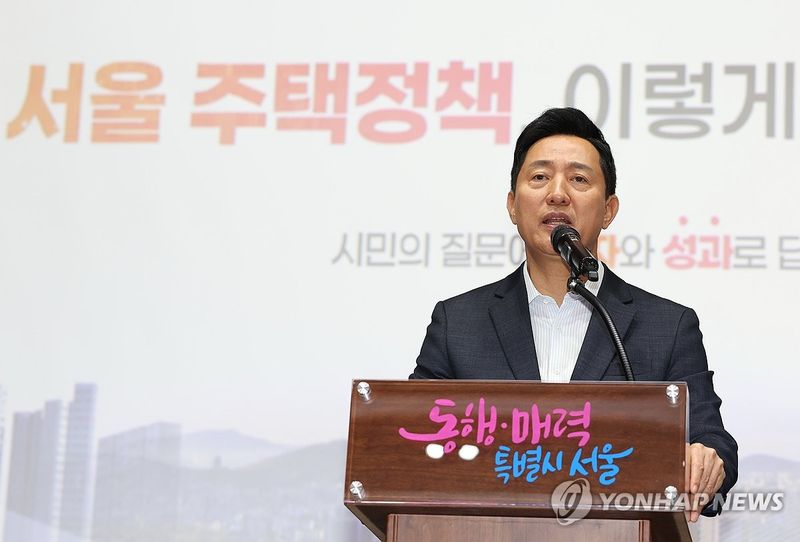
In a post uploaded to his personal social media account that day, Oh said, "The problem is the policy direction that, under the pretext of preventing speculation, judges people's complex lives by a single standard and treats those who depart from that principle with suspicion, as if they were potential speculators."
Oh said, "The public has already experienced the side effects of the Lee Jae-myung administration's real estate policies over the past year. By putting the principle of 'actual residence' first, it pushed through stringent regulations and added exceptions and supplementary measures whenever they clashed with reality. The policies became increasingly patched together, while confusion in the field only deepened."
He continued, "Something similar is happening with farmland. The government first introduced the principle that 'failure to farm the land oneself equals speculation,' but as concerns grew that it did not reflect rural realities, it now says it will distinguish unavoidable circumstances such as old age, illness and inheritance."
He sharpened his criticism, saying, "Every individual has their own unavoidable circumstances. It is arrogance and self-righteousness for the administration to presume that it can examine each of those countless circumstances and perfectly distinguish 'speculation' from 'good-faith holders.'"
He identified the "absence of a national governing vision" as the cause of these policy problems. Oh stressed, "The president should show the public how South Korea will make a living in the future, how it will build competitiveness amid the sweeping transformation brought by AI and advanced industries, and what future it will open up for young people."
He also said, "Stop looking among the people for targets to crack down on. The adversaries the president should fight are the rapidly changing security environment, the reshaping of the global economic order, low growth and a low birth rate, the crisis in industrial competitiveness, and the disappearing opportunities for young people. Don't fight the people; fight for the people."
[email protected] Choi Ga-young Reporter