Korea's Miracle Equestrian Gold After Edging China by 0.140 Points... Kim Su-ji and Kim Na-hyun Make a 'Silver Splash' [Nagoya AG]
- Input
- 2026-09-27 14:41:37
- Updated
- 2026-09-27 14:41:37
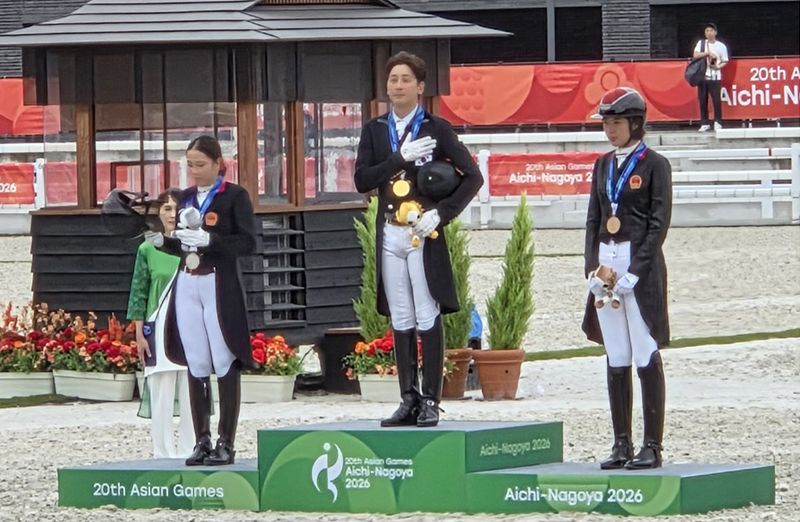
[Financial News] The national anthem echoed over the sands of Tokyo Equestrian Park for the first time in 12 years. Korean equestrian sport, pushed to the brink after suffering a medal-less showing at the previous Games, made a spectacular comeback on the strength of the sweat shed by a 37-year-old veteran rider. Nam Dong-hyeon, an unlucky ace who had been forced to give up his spot just before the previous Games, conquered the highest podium in Asia after three grueling years of waiting.
Nam Dong-hyeon displayed perfect chemistry with Leonidas in the dressage individual final at the 2026 Asian Games held at Tokyo Equestrian Park in Tokyo, Japan, on the 27th. He recorded a final score of 75.190 points to claim the gold medal. It was Korea's first dressage individual title in 12 years, since the 2014 Incheon Games.
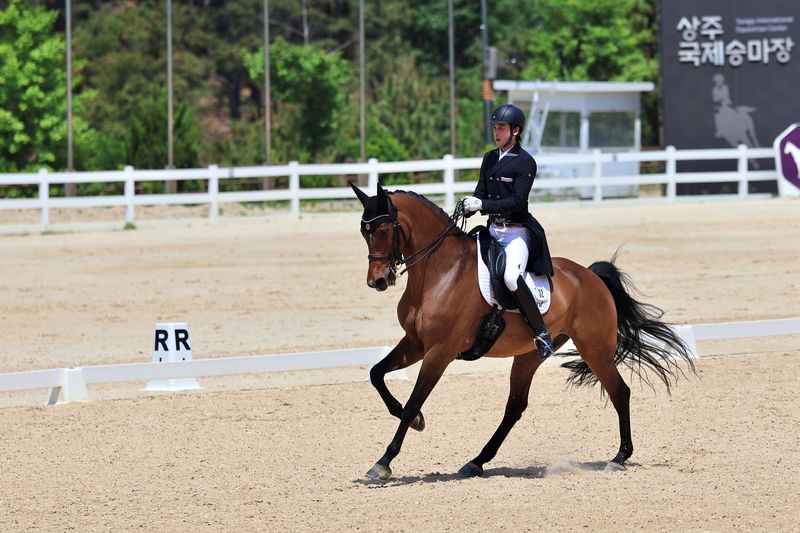
Known as "ballet on horseback," dressage is a demanding mental sport in which the bond between rider and horse, along with the precision and artistry of their movements, is scored as a percentage. On a stage where the slightest hesitation can lead to a fatal deduction, Nam Dong-hyeon orchestrated Leonidas like a conductor leading an orchestra. The result was a thrilling victory by just 0.140 points. He narrowly held off China's fast-charging Wei Zai, who scored 75.050 points, and also defeated Lao Zai, who won bronze with 74.935 points, single-handedly stopping China's relentless assault.
This gold medal carries a story far bigger than a simple victory. From the 1998 Bangkok Games through the 2014 Incheon Games, Korea was the undisputed powerhouse in dressage, sweeping five consecutive gold medals. But its gold-medal streak ended at the 2018 Jakarta Games. At the previous Games in Hangzhou in 2022, Korean equestrian sport suffered the humiliation of winning no medals for the first time since the event was introduced in 1986.
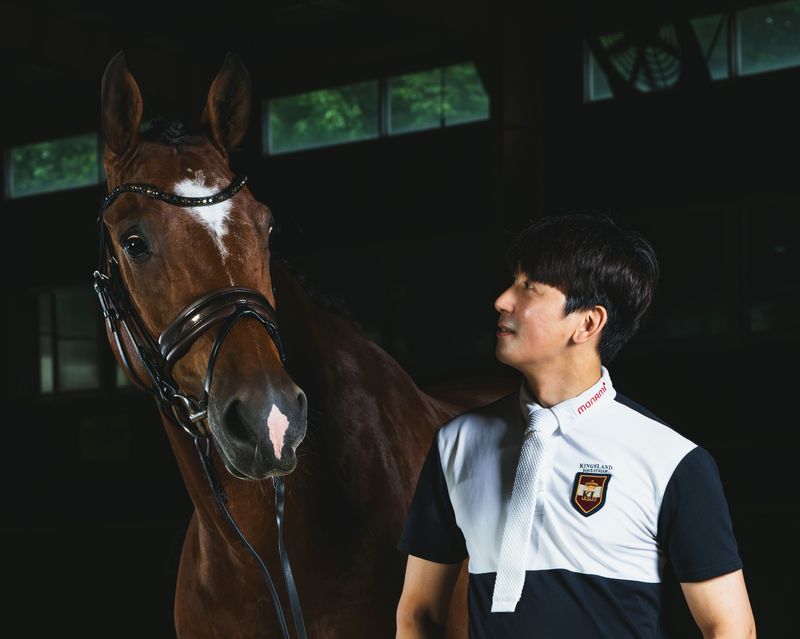
No one was more devastated than Nam Dong-hyeon himself. At the Hangzhou Games, he suffered the heartbreaking misfortune of being unable to compete after First Edition, the horse with which he had partnered for a long time, suddenly suffered an injury. But he did not give up. He trained relentlessly for three years while building a bond with his new partner, the 10-year-old Leonidas. After recording the highest score among all competitors in the team event on the 25th, with 70.559 points, and leading Korea to the silver medal, he finally capped his individual campaign with gold and personally restored 12 lost years for Korean equestrian sport.
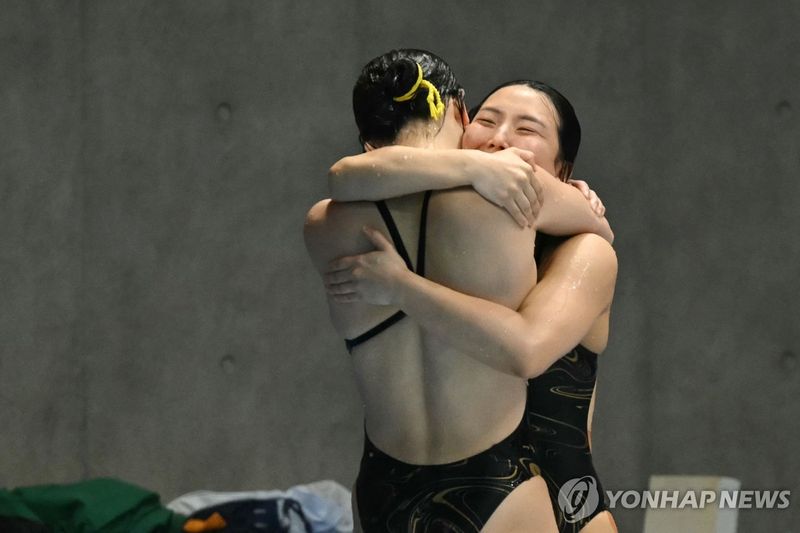
The excitement at the equestrian park continued as a "silver splash" at the Tokyo Aquatics Center. Korean diving standouts Kim Su-ji of the Ulsan Metropolitan Sports Council and Kim Na-hyun of the Gangwon State Government combined for a valuable silver medal in the women's synchronized 3m springboard final, scoring 254.70 points across dives one through five. China’s Chen Yiwon and Chen Jia, who displayed overwhelming skill, took the gold with 328.56 points.
It was a contest that showcased both athletes' ability to manage adversity. Kim Su-ji and Kim Na-hyun made a bright start in second place, each scoring 46.80 points on their first dive, a forward dive, and their second dive, an inward dive, both with a difficulty level of 2.0. They continued smoothly with 59.40 points on the third dive, two-and-a-half backward somersaults with a difficulty level of 3.0. However, they faced a crisis after making a painful mistake on the fourth dive, two-and-a-half reverse somersaults, scoring only 44.10 points.
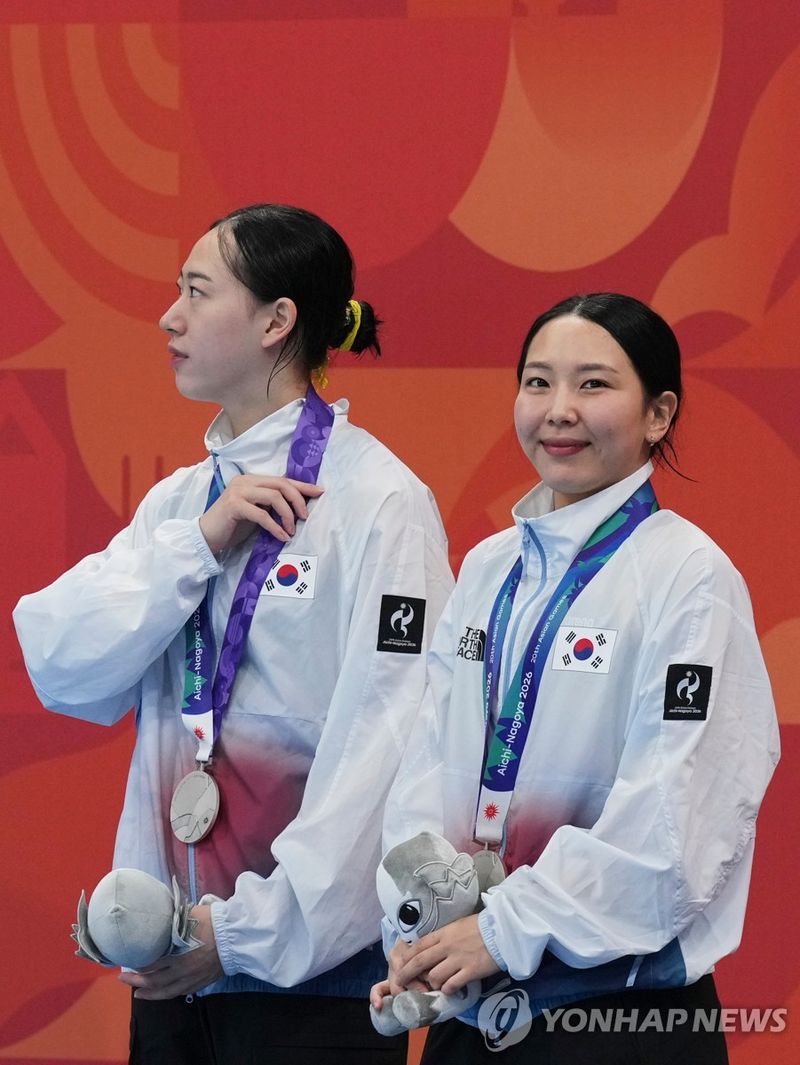
But the Korean pair showed fierce resolve under the national flag. In the decisive fifth and final dive, two-and-a-half forward somersaults with one twist, the two athletes steadied themselves and soared from the board. Their clean performance and flawless entries into the water earned them 57.60 points, allowing them to fend off Malaysia's pair, who scored 243.72 points for bronze, and firmly secure second place.
Kim Na-hyun, who won bronze in the synchronized 10m platform event the previous day, enjoyed the double celebration of securing her second medal of the Games.
[email protected] Jeon Sang-il Reporter