"I switched loans, only to be asked to pay more interest?" Mortgage refinancing rates were higher at 11 banks
- Input
- 2026-09-27 14:49:30
- Updated
- 2026-09-27 14:49:30
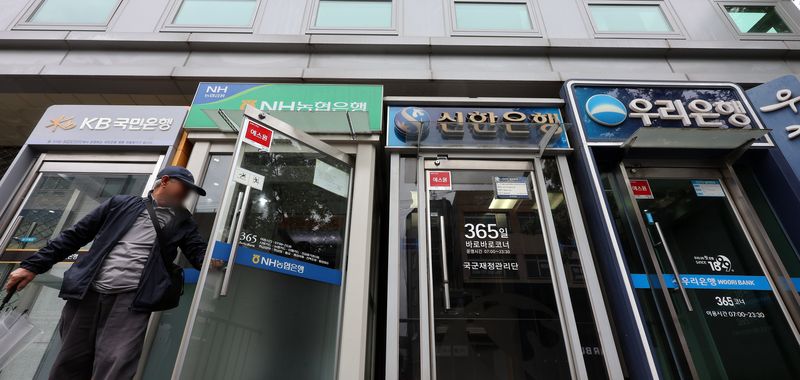
[Financial News] Some banks were found to be offering refinancing loans at higher rates than regular new loans. Critics say this undermines the purpose of refinancing loans, which were introduced to reduce borrowers' interest burdens.
According to data submitted by the Financial Supervisory Service to Park Sung-hoon, a People Power Party lawmaker on the National Policy Committee, 11 of the 16 banks whose mortgage rates could be compared had higher average refinancing rates than average rates for regular newly originated mortgages as of July this year.
The gap was largest at iM Bank, where the average rate was 2.33 percentage points higher for refinancing loans than for newly originated mortgages. The average rate for new mortgage loans was 4.84%, compared with 7.17% for refinancing loans. Jeonbuk Bank followed, with refinancing loans priced at 5.59% versus 5.06% for regular new mortgages, a difference of 0.53 percentage points. Jeju Bank's rate rose from 4.66% to 5.13%, a gap of 0.47 percentage points; Busan Bank's rose from 4.00% to 4.46%, a gap of 0.46 percentage points; and Suhyup Bank's rose from 4.31% to 4.70%, a gap of 0.39 percentage points.
The same rate reversal was also found at the five major commercial banks. Woori Bank's average rate for new mortgages was 4.34%, compared with 4.71% for refinancing loans, a difference of 0.37 percentage points. NongHyup Bank reported rates of 4.25% and 4.49%, respectively, a gap of 0.24 percentage points, while Hana Bank recorded rates of 4.29% and 4.47%, respectively, a difference of 0.18 percentage points.
Credit loans showed a similar pattern. Among the 16 banks that could be compared as of July, 10, or 62.5%, had higher average refinancing-loan rates than average rates for regular new credit loans. Kwangju Bank recorded the largest gap: its rate for new credit loans was 8.21%, while its refinancing-loan rate was 9.50%. Toss Bank's rate rose from 6.13% to 7.36%, while Busan Bank's rose from 5.56% to 6.78%, with a difference of 1.22 percentage points in each case.
Hana Bank's average rate for new credit loans was 4.70%, but its refinancing-loan rate was 5.72%, or 1.02 percentage points higher. iM Bank's rate rose from 6.99% to 7.92%, a gap of 0.93 percentage points; NongHyup Bank's rose from 4.91% to 5.59%, a gap of 0.68 percentage points; Shinhan Bank's rose from 5.26% to 5.83%, a gap of 0.57 percentage points; and KB Kookmin Bank's rose from 4.91% to 5.36%, a gap of 0.45 percentage points.
The refinancing-loan system was introduced to promote interest-rate competition among financial companies and reduce borrowers' interest burdens. However, refinancing rates were higher than regular new-loan rates at more than half of the banks for both mortgage and credit loans.
Banks maintain, however, that regular new loans and refinancing loans involve differences in borrowers' creditworthiness, collateral values and product structures. Therefore, they say it is difficult to conclude solely from the rate gap that refinancing loans were deliberately priced higher.
Park Sung-hoon emphasized, "Financial authorities should not stop at simply expanding refinancing volumes. They must examine the reasons for rate gaps among banks and thoroughly assess how much refinancing loans are actually reducing borrowers' interest burdens."
[email protected] Seo Ji-yoon Reporter