Public Officials to Build Disaster Safety Tools Themselves with AI
- Input
- 2026-09-27 13:07:18
- Updated
- 2026-09-27 13:07:18
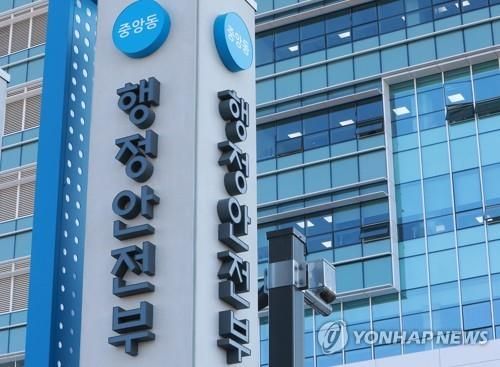
[Financial News] The Ministry of the Interior and Safety (MOIS) is seeking examples of public officials who used generative artificial intelligence (AI) to develop programs needed for disaster and safety work themselves. The evaluation will focus on cases that were not merely developed as programs but were also applied in actual work, reducing work hours or errors.
MOIS announced on the 27th that it would hold the 2026 Competition for Best Practices in Developing and Using Vibe Coding-Based Work Systems in the Disaster and Safety Sector together with the National Information Society Agency (NIA) and the Korea Local Information Research & Development Institute (KLID).
Vibe Coding is a method of creating programs by instructing AI in natural language without specialized development knowledge. MOIS explained that its potential is growing because public officials directly responsible for disaster and safety work can implement the functions they need themselves.
Eligible participants are public officials from central government ministries and local governments who have developed work systems for the disaster and safety sector using Vibe Coding. They may participate individually or as teams. Submitted systems must already be in actual use before the document review and must remain capable of being maintained and managed afterward.
The evaluation will focus on practical results. Reviewers will examine reductions in work processing time, manual tasks, and errors, as well as improvements in the efficiency of data collection and analysis and the system's effectiveness in supporting disaster situation assessments and decision-making. Whether the systems can also be used by other agencies or departments will be evaluated as well.
Entries must be submitted by email or official letter by 6 p.m. on November 10. MOIS will select eight cases through a document review and then choose four final best practices through a presentation evaluation. One Grand Prize winner will receive an award from the MOIS minister, two Excellence Award winners will receive awards from the NIA president, and one Honorable Mention recipient will receive an award from the KLID president.
MOIS plans to consider sharing the best practices that demonstrate strong practical results and high potential for wider adoption so they can be used by other agencies and in additional disaster and safety work.
Park Hyeong-bae, head of MOIS's Safety Prevention Policy Office, said, "Generative AI is a new means by which officials who best understand problems in the field can directly create the work tools they need and improve their work." He added, "We will identify and expand cases in which the use of AI leads not merely to a technical experience but to actual improvements and results in the workplace."
[email protected] Lee Bo-mi Reporter