93,000 Tons of Lithium, 2.7 Million Tons from a U.S. EAF: Steel Giants POSCO and Hyundai Steel Accelerate Profit Diversification
- Input
- 2026-09-28 07:29:00
- Updated
- 2026-09-28 07:29:00
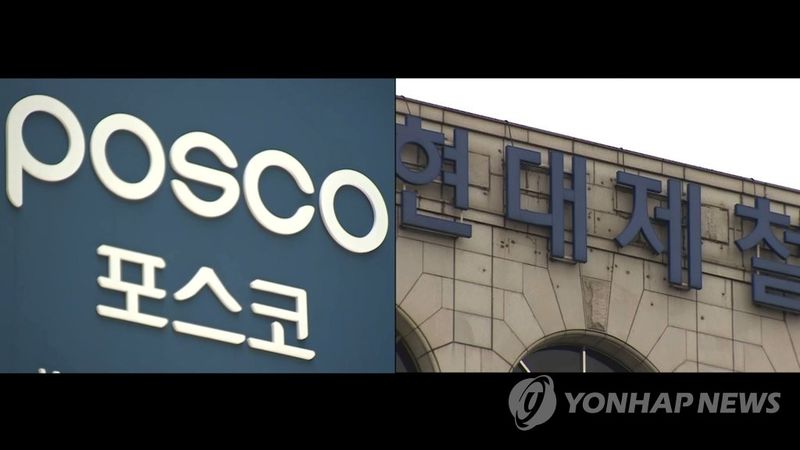
[Financial News] As a full-fledged recovery in the steel industry is delayed, POSCO and Hyundai Steel are stepping up efforts to diversify their revenue through new businesses and overseas production bases. POSCO's lithium business has begun contributing to earnings, while Hyundai Steel is building a large-scale electric arc furnace production base for automotive steel sheets in the United States. Along with a recovery in the profitability of their existing steel businesses, the pace at which new investments translate into actual profits is expected to be a key factor in their future performance.
According to the Financial Supervisory Service's electronic disclosure system on the 28th, POSCO Holdings posted consolidated revenue of 37.1348 trillion won and operating profit of 1.5258 trillion won in the first half of this year. The figures were up 6.1% and 29.8%, respectively, from the same period a year earlier.
The lithium business has begun contributing to earnings. POSCO Argentina's Plant 1 saw its operating rate rise to the 70% range in March and turned to an operating profit, posting second-quarter operating profit of 11 billion won. NH Investment & Securities forecast that POSCO Holdings' lithium business operating profit would increase from 19 billion won this year to 477.5 billion won in 2027.
The POSCO Group is expanding its lithium production capacity to 93,000 tonnes a year. Argentina's brine-lithium Plants 1 and 2 each have capacity of 25,000 tonnes, while ore-based lithium production capacity stands at approximately 43,000 tonnes. Argentina's Plant 2 is scheduled for completion in the fourth quarter of this year, while POSCO Lithium Solution in South Korea is set to be completed in the first quarter of next year. Through these projects, the group aims to increase annual lithium production capacity to 173,000 tonnes by 2033.
The group is also pursuing asset efficiency measures. From 2024 through the first half of this year, POSCO Holdings secured a cumulative 2.2 trillion won in cash by restructuring non-core and low-profit businesses. The POSCO Group also plans to adjust its stakes in listed operating companies, including POSCO International, to levels that allow it to retain management control. Eugene Investment & Securities estimated that the move could generate approximately 3.5 trillion won in cash.
Hyundai Steel is pursuing localization investments targeting the U.S. market. Its consolidated revenue in the first half of this year was 11.847 trillion won, while operating profit stood at 73.4 billion won. Securities firms forecast that third-quarter consolidated operating profit would rise to between 100 billion and 130 billion won as the effects of price increases for flat products, including automotive steel sheets and shipbuilding plates, are reflected in earnings.
The core of the companies' earnings diversification strategy is HYUNDAI-POSCO Louisiana Steel (HPLS), a Hyundai Steel–POSCO electric arc furnace steel mill in the United States. Hyundai Steel held a groundbreaking ceremony for HPLS in Louisiana this month. Hyundai Steel holds a 50% stake, POSCO 20%, and Hyundai Motor and Kia 15% each. The total project cost is $5.8 billion, or approximately 8 trillion won. Annual production capacity will be 2.7 million tonnes, including 1.8 million tonnes of automotive steel sheets, with mass production targeted for 2029.
Securities firms estimated U.S. hot-rolled steel prices at approximately $1,300 per tonne. That is higher than the levels of $950 in Europe, $680 in South Korea, and $500 in China. Hyundai Motor Securities forecast that, once HPLS is fully operational, it would generate annual revenue of 5.5 trillion won, EBITDA of 1.2 trillion won, and net income of 610 billion won. Hyundai Steel's annual equity-method profit was projected to increase by approximately 300 billion won.
Steel industry conditions are being shaped by conflicting trends in price recovery and supply pressures. After the government imposed anti-dumping measures on Chinese and Japanese hot-rolled products starting June 23, domestic hot-rolled distribution prices rose from the low 800,000-won range per tonne at the end of last year to approximately 950,000 won at the end of August. Meanwhile, Chinese steel exports returned to year-on-year growth in June. Analysts say that continued growth in Chinese exports could limit the extent of a recovery in global steel industry conditions.
An industry official said, "With the recovery in domestic steel demand being delayed, relying solely on existing production bases limits growth. For POSCO, the operating rates of new lithium facilities and lithium prices, and for Hyundai Steel, management of investment costs for its U.S. electric arc furnace and local operating rates will be variables in diversifying mid- to long-term earnings."
[email protected] Kim Mi-hee Reporter