Yun Ho-jung Shares Social and Solidarity Economy Policies at the United Nations (UN), Signs MOUs with Spain and Senegal
- Input
- 2026-09-27 12:43:17
- Updated
- 2026-09-27 12:43:17
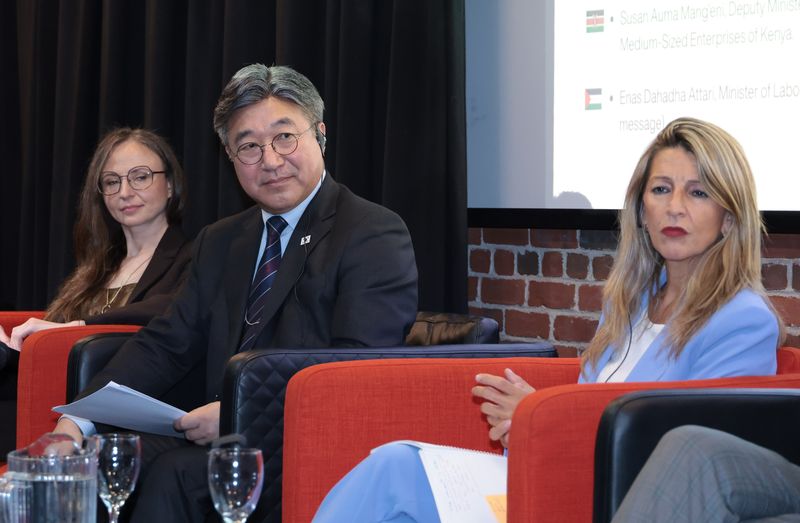
[Financial News] Yun Ho-jung, South Korea’s Minister of the Interior and Safety, traveled to New York City to introduce the country’s social and solidarity economy policies at a UN high-level meeting and sign memorandums of understanding (MOUs) with Spain and Senegal. Following the enactment of the Framework Act on Social and Solidarity Economy, the visit focused on sharing Korea’s institutionalization experience with the international community and expanding policy cooperation with European and African countries as well as the UN.
The Ministry of the Interior and Safety said on the 27th that Yun visited New York City from the 24th to the 26th and discussed the direction of social and solidarity economy development with ministers from 10 UN member states. Yun signed separate MOUs with Yolanda Díaz Pérez, Spain’s second deputy prime minister and minister of labour and social economy, and Alioune Dione, Senegal’s Minister of Microfinance and Social and Solidarity Economy.
The meeting was held during the high-level week of the UN General Assembly. It featured the release of a report on the implementation of UN General Assembly Resolution 79/213 on promoting the social and solidarity economy for sustainable development. Participants also discussed adopting the third UN General Assembly resolution on the social and solidarity economy in 2027.
At the meeting, Yun introduced Korea’s policies, including the enactment of the Framework Act on Social and Solidarity Economy and the establishment of a comprehensive plan. He emphasized the role of the social and solidarity economy in filling gaps in essential services caused by population decline and aging. As an example, he cited Sunlight Income Village, where residents form cooperatives, use revenue from solar power generation to operate village buses, and provide free meals to older adults. He also noted the need to establish a foundation for the growth of social and solidarity economy enterprises through support for social and solidarity finance and public procurement, while expanding the participation of local governments and young people.
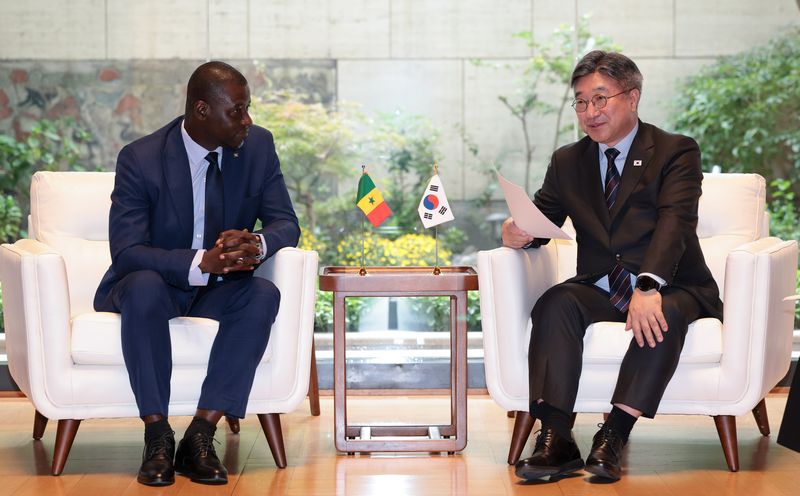
Yun held a bilateral meeting with Spain’s Díaz and signed an MOU on cooperation in the social and solidarity economy. The two countries agreed to cooperate in nine areas, including improving laws and institutions, policy development and joint research, developing social value measurement systems and indicators, the care economy and social housing, rural development, renewable energy, the circular economy, sustainable transportation, green and digital transformation, and social and solidarity finance. They will also pursue the sharing of policy cases, personnel exchanges, and joint research.
Korea also signed an MOU with Senegal on social and solidarity economy cooperation. Yun and Dione agreed to share the two countries’ policy experiences and cooperate in international discussions on the social and solidarity economy.
Yun met with Li Junhua, Under-Secretary-General of the UN Department of Economic and Social Affairs (DESA), to discuss expanding existing cooperation in public administration and digital government into the social and solidarity economy sector. In meetings with The Korea Society President Abraham Kim and Vice President Seo Ji-young, he proposed expanding Korea-U.S. community exchanges so that social and solidarity economy organizations, nonprofit civic groups, and volunteer organizations can share their experiences in resolving local issues.
Yun said, "Good policies and examples are not the exclusive property of any one country; they are shared assets that the international community should share and develop together. We will work closely with each country and international organization."
[email protected] Lee Bo-mi Reporter