Cardiac Arrest's 'Golden Window' Is Just Four Minutes... Yet Fewer Than Half Receive Chest Compressions Within Two Minutes [The Current State of the Cardiac Arrest Response System]
- Input
- 2026-09-28 15:19:27
- Updated
- 2026-09-28 15:19:27
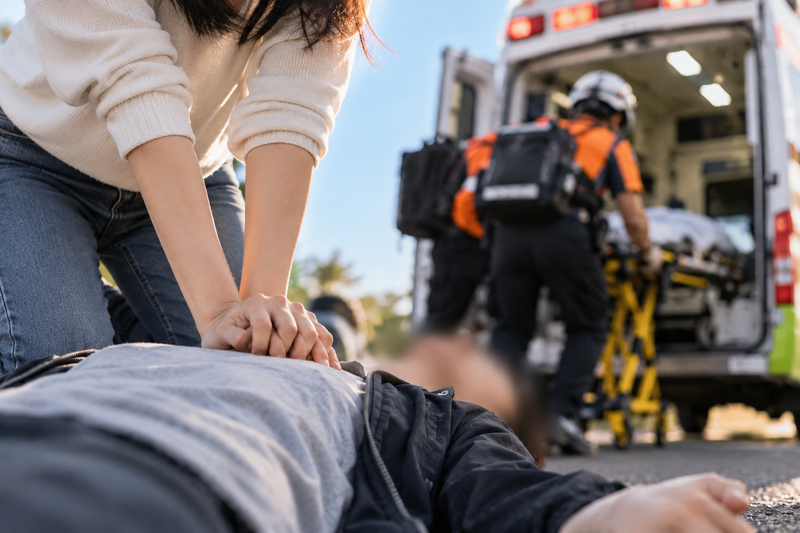
[Financial News] Even a few minutes can determine life or death for cardiac arrest patients, but prehospital response—from the initial chest compressions to transport to the hospital—was found to take a considerable amount of time. Fewer than half of patients received chest compressions within two minutes of an emergency call, while it took a median of seven to eight minutes to travel from the scene to the hospital. As people aged 71 and older account for more than half of cardiac arrest patients transported and some regions have recorded low resuscitation rates for years, the importance of an early response to secure the golden window is growing.
According to the data on cardiac arrest patients transported by 119 emergency services, which the office of Kang Myung-gu, a People Power Party lawmaker on the National Assembly's Security and Public Administration Committee, obtained from the National Fire Agency (NFA) on the 28th, 88,657 of the 164,358 cardiac arrest patients transported from 2021 through August of this year were aged 71 and older, accounting for 53.9%.
By region, some areas recorded single-digit resuscitation rates for several consecutive years. South Gyeongsang Province remained in single digits throughout the six-year period, rising only from 8.1% in 2021 to 8.8% in January–August this year. Busan fell from 8.7% in 2022 to 6.8% in January–August this year, while South Jeolla Province declined from 9.7% to 7.8% over the same period, with both recording single-digit rates for five consecutive years. Ulsan remained in single digits for five consecutive years, falling from 7.0% in 2021 to 6.0% in 2025 before rising to 11.6% in January–August this year.
Brain damage can begin if four to five minutes or more pass after cardiac arrest without appropriate treatment, which is why the first four minutes are known as the so-called golden window. Securing this window before a cardiac arrest patient reaches the hospital is crucial. The Korea Disease Control and Prevention Agency (KDCA) also explains that rapid recognition, a prompt call for help, immediate bystander CPR and defibrillation should follow to improve the chances of survival for cardiac arrest patients.
However, actual indicators of initial response show that it often took time for chest compressions to begin after an emergency call. According to the National Fire Agency's "2025 119 Emergency Medical Service Quality Management Report," telephone-assisted resuscitation guidance was provided within 90 seconds (one minute and 30 seconds) of the call in 39.7% of cases. Among patients who received telephone-assisted resuscitation guidance, 46.3% received chest compressions within two minutes of the call, falling short of half. Bystanders performed CPR before paramedics arrived in 60.5% of cases. Bystanders attached an automated external defibrillator (AED) in 4.0% of cases, while actual defibrillation was performed in 0.9%.
The rate of return of spontaneous circulation before hospital arrival also differed depending on whether a bystander performed resuscitation. Of the 17,201 patients who received bystander resuscitation, 2,364, or 13.7%, regained spontaneous circulation before reaching the hospital. Among the 15,470 patients who did not receive bystander resuscitation and instead received resuscitation from paramedics, only 1,443, or 9.3%, regained spontaneous circulation.
The journey from leaving the scene to arriving at the hospital also took a considerable amount of time, with the median ranging from seven to eight minutes over the past five years (2020–2024). In 2024, 27.1% of patients arrived at the hospital within four minutes, while the largest share, 34.2%, arrived within five to eight minutes. The figures were 16.4% for nine to 12 minutes, 8.6% for 13 to 16 minutes and 10.1% for 17 to 30 minutes.
Experts emphasize the need to expand CPR education for the general public and make greater use of 119 telephone guidance to accelerate the initial response at the scene. Lee Young Ju, a professor in the Department of Fire and Disaster Prevention at Kyungil University, said, "In the case of CPR, the chances of survival increase when it is already underway before 119 paramedics arrive." Lee added, "Public education and training should be expanded so that people can perform CPR, and the public should be informed that even if they do not know how, they can call the 119 emergency number and perform CPR with telephone guidance."
[email protected] Kim Ye-ji Reporter