"Should I Jump In Now?" Meta Adds 280 Trillion Won in a Day, Leaving Retail Investors Sleepless Over Missing Out [Money Signal]
- Input
- 2026-09-27 11:00:00
- Updated
- 2026-09-27 11:00:00

[Financial News] Market capitalization surged by 280 trillion won, or approximately $200 billion, overnight. An astronomical sum equivalent to more than half of Samsung Electronics' entire market value effectively appeared in the stock market in a single day.
The beneficiary of this surreal windfall is Meta Platforms (Meta), the parent company of Facebook and Instagram.
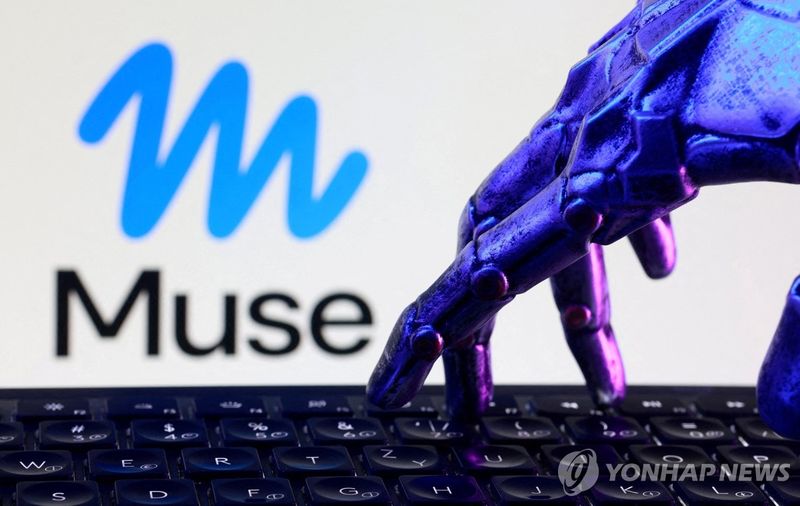
The main force behind the stock's more than 11% surge on the 21st, which sent Wall Street into a frenzy, was not social media. It was Muse, the personal artificial intelligence (AI) agent that Meta ambitiously unveiled on the 8th.
What exactly did investors see in Muse to become so excited?
◇ "Don't just give me the answer—do it yourself": AI evolves from assistant to agent
Consider the conventional AI experience. Ask ChatGPT, "Plan a four-day, three-night trip to Jeju Island," and it will produce an impressively detailed itinerary.
But that is where it ends. People still had to use the itinerary to search for flights, book a hotel, find restaurant recommendations and complete the payments. Conventional AI was a smart but hands-free "adviser," whereas Meta's Muse is an "agent" that eliminates this final, tedious step altogether.
Muse opens a browser, fills out online forms, sends emails and books flights on its own. Tell it, "Prepare my trip to Jeju Island next week," and it will move between numerous websites, compare options and ask for approval only before making the purchase. Wall Street's smart money has begun making a massive bet on this difference: understanding what users say and taking action.
The response was immediate.
According to market research firm Sensor Tower, Muse recorded 2.8 million downloads within two weeks of its launch, pushing ChatGPT out of the top spot to become the No. 1 free app in both the U.S. and Canadian app stores.
◇ A threat or an opportunity for platforms? Stock prices diverge sharply
For investors, the more intriguing development was the dramatic "butterfly effect" created by Muse. As Meta's shares soared, the stocks of major incumbent platform companies suffered sudden plunges.
What happens if AI finds the cheapest and best product and handles the payment as well? Consumers would have little reason to visit airline, hotel and delivery apps one by one. The fear of "platform bypassing" had arrived.
In fact, during the week when the Muse frenzy took hold, travel stocks such as Tripadvisor and Booking Holdings fell more than 6%. Financial stocks including Charles Schwab and JPMorgan Chase were hit, as were Uber, DoorDash and fitness club operator Planet Fitness, whose shares dropped 17%.
One party's crisis became another's opportunity. Shopify, which entered into a payment-processing partnership with Muse, soared 11% in an instant. PayPal also welcomed the news that it would join the Muse ecosystem. A new investment paradigm has emerged, with the value of platforms chosen by AI diverging from that of platforms left behind.
◇ Zuckerberg's powerful advantages: distribution and the subscription model

Just a few years ago, Meta CEO Mark Zuckerberg was the target of ridicule.
He increased Meta's accumulated losses by pouring astronomical sums into the metaverse and was judged to have fallen behind OpenAI and Google in the AI race. But after recruiting Alexandr Wang of Scale AI and regrouping, Zuckerberg overturned the game in an instant with Muse.
The reason Meta has disruptive power on a different scale from other AI companies is clear. It controls an overwhelming distribution network: Facebook, Instagram and WhatsApp, which billions of people around the world access every day.
Unlike startups that must attract users from scratch, Meta only needs to integrate AI into its vast, already-established infrastructure. The plan announced at the Meta Connect event on the 23rd to install Muse in smart glasses is only part of the unsettling blueprint Meta is drawing.
Meta plans to spend up to $145 billion, or approximately 200 trillion won, on AI infrastructure by 2026. Muse also contains a way to recoup this massive investment. Basic features are free, but the company has introduced paid subscription plans costing $20 and $100 per month. Meta has seized the opportunity to equip itself with a massive AI subscription cash cow beyond simple advertising revenue.
◇ No room for rosy expectations: Quality and security remain challenges
Of course, stock markets do not rise forever on expectations alone. Meta shares were around $613 on Muse's launch date, the 8th, but touched $779 intraday on the 24th to set a 52-week high. On the 25th, however, profit-taking after the short-term surge sent the stock down 3% to $751 as it took a breather.
A sober reality check is also necessary. Reports that some of Muse's phone-related tasks were handled by real people during internal testing, in what was described as a "human concierge" arrangement, suggest that the road to a fully capable AI assistant remains long. Security concerns over handing AI full access to personal information and payment authorization are another hurdle to overcome.
Even so, there is no doubt that Wall Street's perspective has changed.
The question "Isn't Meta too late?" has now changed to "If billions of people use Muse, who will lose money and who will make money on the internet?" In the age of AI that takes action, the stock market's fierce contest to identify the true winners has only just begun its second act.
[email protected] Jeon Sang-il Reporter