Seoul apartment jeonse deposits jump by 80 million won in two years amid a shortage of listings
- Input
- 2026-09-27 09:38:59
- Updated
- 2026-09-27 09:38:59
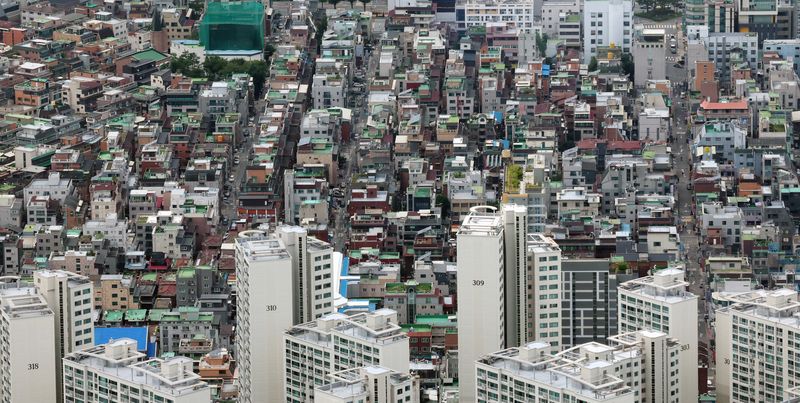
[Financial News] Tenants whose apartment jeonse contracts in Seoul have expired must now raise their deposits by more than 80 million won from two years ago to find a new jeonse home or renew their contracts, a survey found. The average jeonse deposit for apartments in Seoul has surpassed the previous record high set in the early days of the introduction of the two rental-lease laws. Monthly rent has risen even more sharply than jeonse deposits, adding to tenants' housing costs.
According to the Korea Real Estate Board's (KREB) National Housing Price Trend Survey on the 27th, the average jeonse deposit for an apartment in Seoul stood at 636.62 million won last month, up 82.68 million won, or 14.9%, from 553.94 million won in August 2024, two years earlier.
In other words, tenants whose contracts signed two years ago have expired must raise an additional average deposit of more than 80 million won to find a new jeonse home. They effectively need to save an additional 40 million won a year for their deposits, making life in Seoul difficult not only for lower-income households but also for the middle class.
The median jeonse deposit also rose to 560 million won last month, up 80 million won, or 16.7%, from 480 million won two years earlier.
During the same period, the increase in Seoul's average jeonse deposit far outpaced those in Gyeonggi Province, at 11.4%, and Incheon, at 8.5%. A shortage of newly built apartments available for occupancy, Seoul's designation as a land transaction permit zone, stringent lending regulations and a tax reform plan focused on owner occupancy have led to a severe shortage of new jeonse and monthly-rent listings.
The current average jeonse deposit for apartments in Seoul is at an all-time high. It has also surpassed the 634.243 million won recorded in January 2022, when jeonse prices peaked after surging following the implementation of the two rental-lease laws in late July 2020.
By district, the average jeonse deposit in Songpa District was 941.371 million won, up 24.3% from 757.344 million won two years earlier. This means tenants renewing a jeonse contract in Songpa District must add more than 184 million won to their deposits compared with two years ago.
The average jeonse deposit in Gangdong District rose 20.6%, or 102.927 million won, to 603.751 million won over the past two years. Seongbuk District saw its average reach 532.633 million won, an increase of 18.7%, or 84.005 million won, while Yeongdeungpo District recorded 643.258 million won, up 18.3%, or 99.541 million won.
For deposit-backed monthly rent, the average deposit fell while the monthly payment increased over the past two years. Last month, the average deposit for monthly-rent apartments in Seoul was 195.652 million won, down 492,000 won, or 0.3%, from 196.144 million won two years earlier. Monthly rent, however, rose from 1.32 million won to 1.641 million won, an increase of 321,000 won, or 24.3%.
Looking only at monthly payments, the rate of increase was higher than that of jeonse deposits. As lending regulations and the decline in jeonse and monthly-rent listings accelerated the shift toward monthly rent in Seoul's apartment market this year, many tenants are believed to have opted for higher monthly payments instead of increasing their deposits.
Monthly rent rose most sharply in the three Gangnam districts (Gangnam, Seocho and Songpa) and the Han River Belt. In Songpa District, the average deposit fell by 31.631 million won, or 9.7%, while monthly rent rose by 848,000 won, or 56.2%. The median monthly rent in Songpa District increased by 910,000 won, or 69.2%, with no change in the deposit.
Monthly rent also rose sharply in Seocho District, by 37.5% (766,000 won); Yeongdeungpo District, by 35.5% (404,000 won); Gangdong District, by 34.1% (372,000 won); Yongsan District, by 28.9% (632,000 won); Dongjak District, by 28.4% (340,000 won); Seongdong District, by 27.4% (544,000 won); and Gwangjin District, by 26.5% (432,000 won), in that order.
[email protected] Lee Hwan-joo Reporter